

You're reviewing a remote receptionist's résumé between patient calls. The candidate has healthcare experience, speaks English and Spanish, and knows medical terminology. What you still don't know is whether they can schedule within your providers' rules, document a patient message accurately, or recognize when a request needs clinical escalation.
Skills assessment tools help you evaluate those capabilities before hiring, but the right platform depends on the job. For schedulers, patient coordinators, insurance verification specialists, and billing support staff, practical exercises and language testing usually deserve more attention than coding tests or broad personality scores. Technical platforms become relevant when you're hiring someone to build reporting workflows, maintain integrations, or develop software.
The key distinction is job relevance. The EEOC's guidance on employment tests and selection procedures emphasizes that assessments must fit the particular position and purpose. A polished interview or strong general test score doesn't establish that someone can handle your practice's patient queue.
Preparation matters, too. Just as interview preparation for senior cardiology roles addresses a specific professional context, administrative candidates should receive clear expectations about the work they'll demonstrate.
The platforms below cover administrative, language, technical, and behavioral screening. They aren't ranked by universal quality. Compare their workflow fit, pricing structure, applicant tracking system compatibility, and suitability for Latin American candidates, then confirm current terms before purchasing.
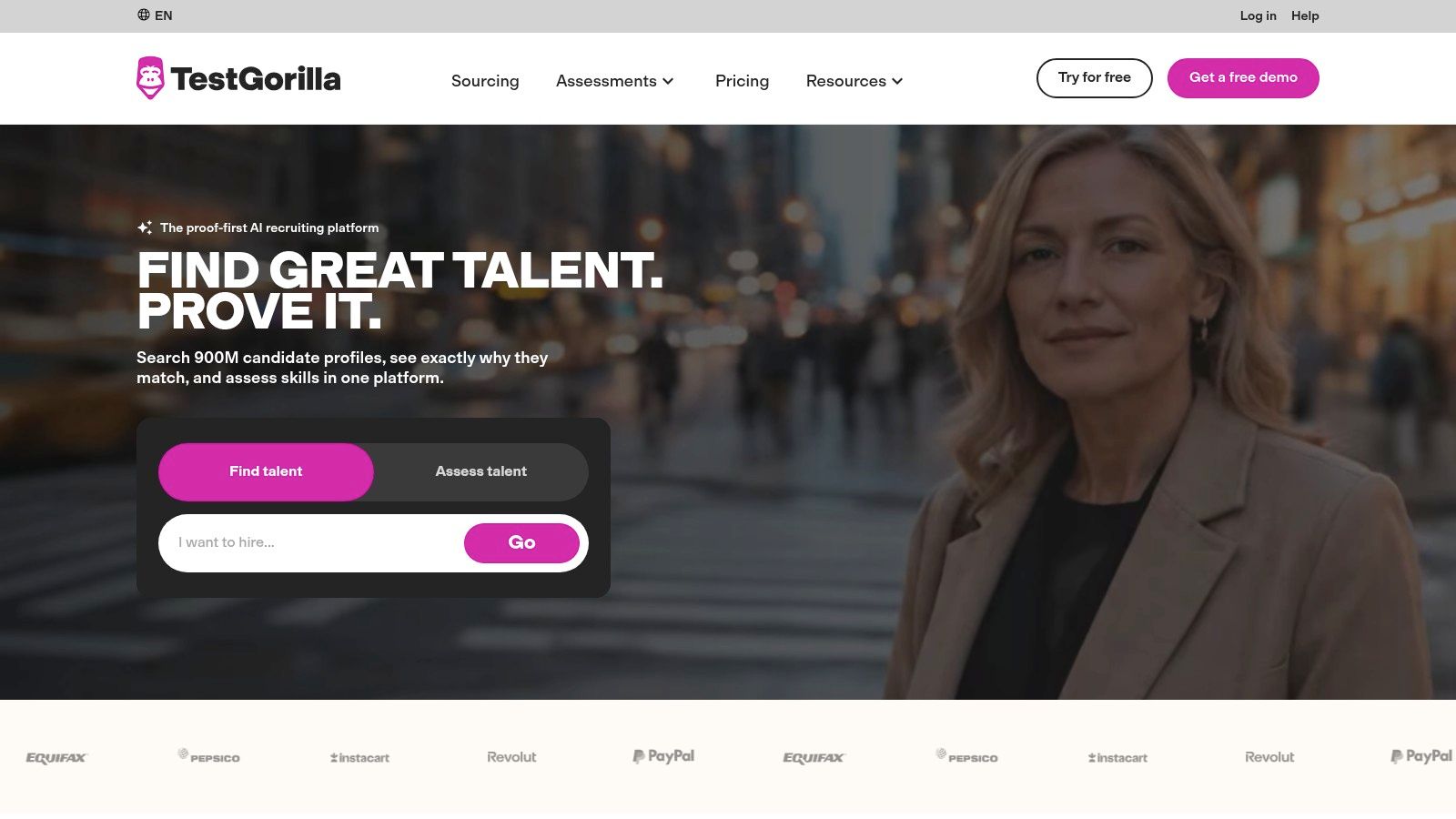
TestGorilla is worth considering when your practice hires across several administrative job families. A practice recruiting a receptionist, billing assistant, and operations coordinator may prefer a shared assessment platform rather than separate systems for each role.
The platform combines standardized assessments with custom questions, candidate comparisons, résumé scoring, and video responses. TestGorilla lists more than 350 skills tests, a free plan, and paid assessment plans starting at $215 per month per account when billed annually. Features, credits, AI interviews, ATS integrations, and API access depend on the subscription.
Use foundational tests to establish computer literacy or written communication, then add a fictional scheduling exercise. For example, ask a candidate to resolve a conflict between an appointment request, provider availability, and a supplied scheduling policy.
The main trade-off is breadth versus realism. A general assessment can help narrow a pool, but it won't necessarily reveal whether someone documents an unresolved insurance question appropriately.
A sensible pre-employment skills testing process keeps the standardized screen short and reserves detailed workflow evaluation for candidates who remain under consideration. Forecast costs using expected assessment starts, not just the number of roles you intend to fill.
Don't buy HackerRank to screen appointment schedulers. Its purpose is technical hiring, so it belongs on a medical practice's shortlist only when the position involves software development or comparable engineering work.
An illustrative fit would be a healthcare organization hiring a developer to maintain an internal reporting application. You could assess coding and debugging, then separately evaluate how the candidate communicates changes to nontechnical practice staff.
HackerRank's published Starter plan costs $165 per month billed annually with 120 attempts per year, while Pro costs $375 per month billed annually with 300 attempts. Its offering includes coding assessments, technical interviews, a question bank, multi-file project questions, and plagiarism detection, with additional integrity and administrative features on eligible plans.
A relevant technical skill assessment should resemble the actual engineering work. If the employee will troubleshoot data transformations, don't substitute an unrelated algorithm puzzle just because it's easy to score.
A billing support employee who works inside practice software and a developer who builds that software need different assessments.
For LATAM hiring, confirm browser requirements, candidate instructions, scheduling flexibility, and the consequences of an interrupted session. Spanish-language patient communication still requires separate evaluation if the position includes it.
The limitation is straightforward: HackerRank doesn't replace a patient-facing administrative simulation. Higher-tier ATS integrations and permissions may support a larger technical recruitment program, but attempt limits and additional-attempt charges deserve attention before committing.
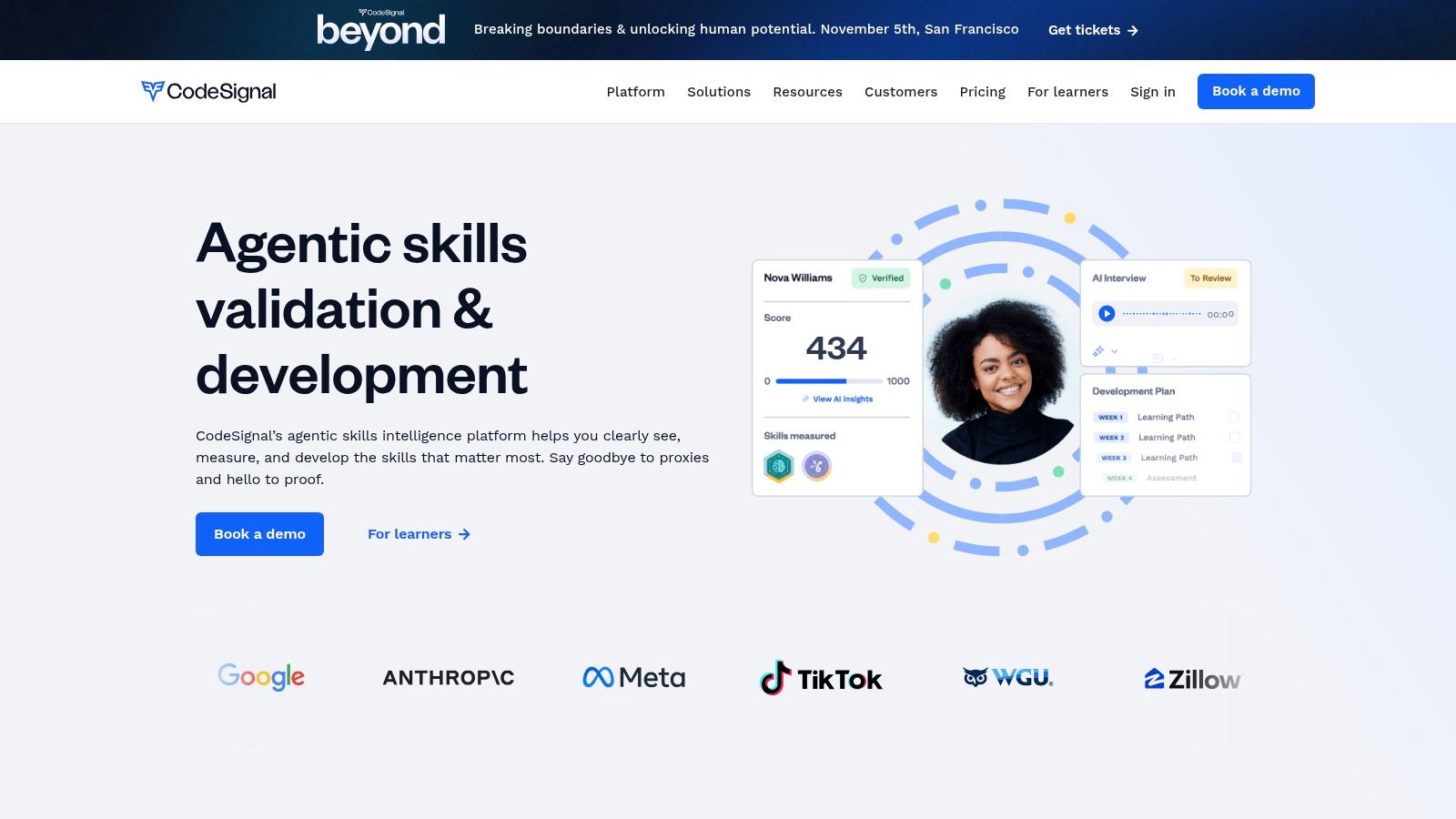
A candidate who can write code may still struggle to explain a failed report to your billing manager. CodeSignal is most useful when you need structured technical evidence alongside an interview, rather than an administrative screening substitute.
The platform provides a coding environment where applicants can write, run, and debug code. Its assessment offering also extends to professional areas such as product, design, sales, customer success, and marketing on certain plans.
CodeSignal lists Hire Build at $79 per month billed annually or $99 monthly, and Grow at $479 per month billed annually or $599 monthly. Credits are consumed when a candidate starts an assessment or interview rather than when an invitation is sent.
For a healthcare reporting or automation role, ask the candidate to work with synthetic operational data. A suitable exercise might involve identifying why an appointment report contains duplicate entries, followed by an explanation suitable for a practice manager.
Before purchasing, ask which nontechnical assessments are included in your proposed plan. A broad professional-role catalog isn't evidence of medical administrative coverage.
For LATAM applicants, test the candidate journey yourself. Confirm time-zone handling, interruption policies, and whether identity checks accept the documents candidates can reasonably provide.
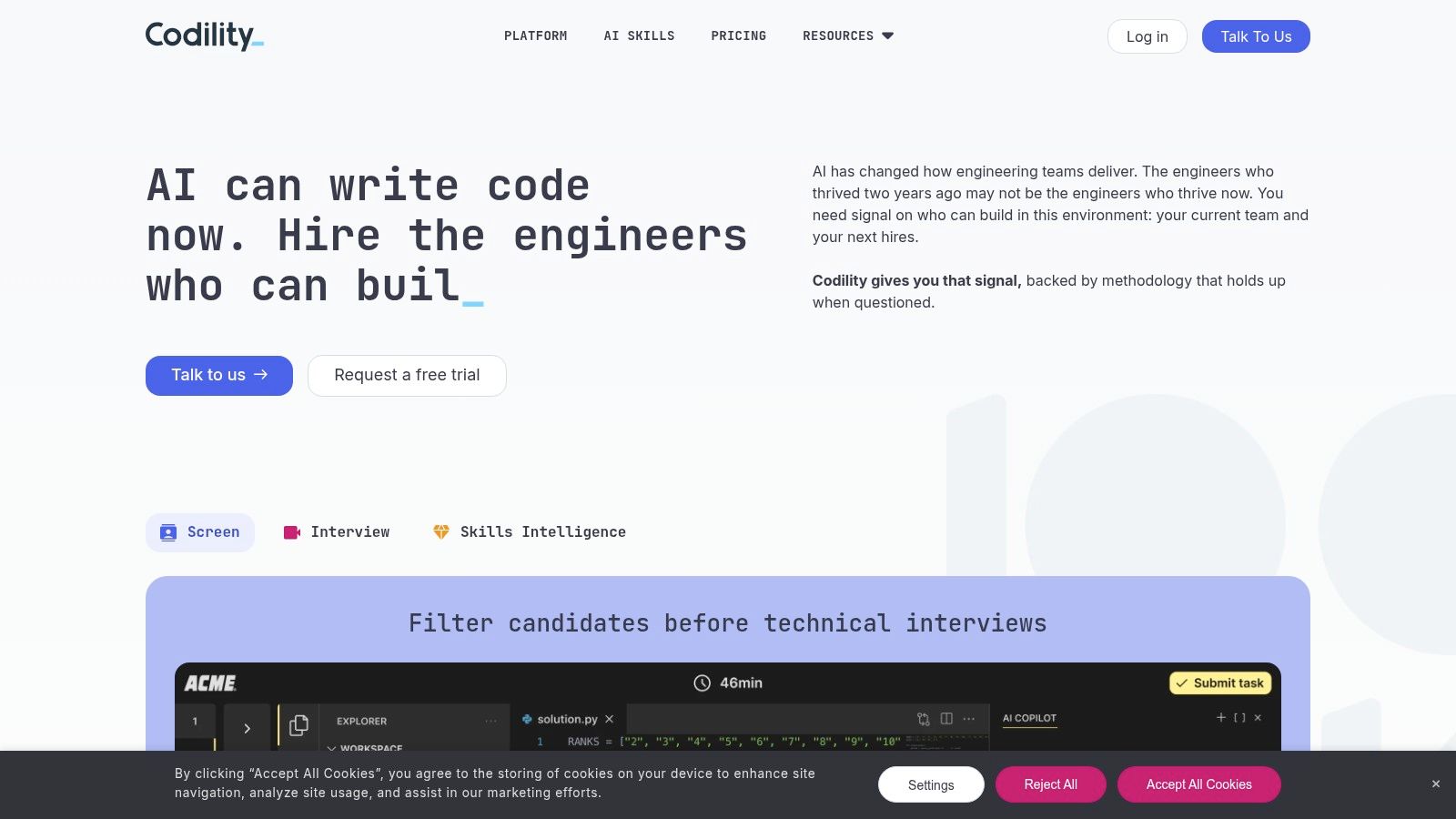
Codility suits engineering hiring, not routine medical administration. Consider it when your organization needs someone to write software, query databases, or solve technical implementation problems. It's a poor match for screening receptionists solely because they'll use an EHR.
The platform offers coding, SQL, multiple-choice, and AI-skill tasks, along with engineering simulations, interview workflows, integrity signals, and ATS integrations. Codility's Starter plan is listed at $1,200 annually with up to 120 invite credits and one platform user, and it offers a two-week team trial without a credit card.
Suppose you're hiring an analyst whose responsibilities genuinely include SQL. Provide a fictional appointment database and ask the candidate to identify records that don't meet a supplied reporting definition, then explain the query's limitations.
That exercise is more defensible than requiring a prior-authorization assistant to solve database problems they'll never encounter. Keep the test aligned with essential responsibilities, not your most technically demanding employee's preferences.
Before committing, establish:
Spanish proficiency needs a separate work-relevant assessment when applicable. For a small practice making occasional administrative hires, Codility's specialization is a reason to exclude it, not a limitation you need to work around.
TestDome's prepaid invitation model deserves attention if hiring is intermittent. A practice replacing an occasional administrative employee may not want an ongoing subscription during months without recruitment.
TestDome publishes pack pricing ranging from $20 per candidate for five candidates to $7 per candidate for 600, and states that unused invitations don't expire. Its catalog includes more than 130 skills and 2,000 questions, with support for more than 30 coding languages and frameworks.
The practical attraction is the ability to combine technical and nontechnical questions within an assessment. Automated scoring, reports, candidate comparisons, custom questions, and proctoring can support a repeatable process, while certain integration and API capabilities are enterprise features.
For insurance verification support, build an illustrative task around a fictional eligibility response. Ask the candidate to identify missing information, document what remains unconfirmed, and draft a clear internal handoff without promising coverage.
Purchasing rule: Compare the cost of assessing your realistic applicant pool with the cost of the subscription you would otherwise buy.
Invitation-based pricing still creates a cost for broad screening. Decide when candidates receive the assessment and clarify how incomplete attempts affect your balance.
For bilingual roles, confirm whether suitable Spanish assessment content is available or whether you'll need custom exercises reviewed by a qualified bilingual evaluator. Don't treat translated instructions as proof that the tool measures Spanish proficiency.
Also establish whether your plan supports your ATS directly. A manual report transfer may be acceptable for occasional hiring, but assign responsibility so completed assessments don't get overlooked.
Start with the work your coordinator will do: review a patient message, identify missing details, apply supplied instructions, and prepare a handoff. Vervoe's task-based approach is relevant when generic quizzes don't capture those responsibilities.
Vervoe offers more than 300 role-specific assessment templates, a custom assessment builder that can use a job description, written and video response formats, coding exercises, AI-assisted grading, and ATS/API integrations. Pricing is quote-based, with an enterprise-focused pricing presentation.
Work samples have meaningful supporting evidence, but they aren't perfect predictors. A meta-analysis of 54 studies involving 10,469 participants found an observed correlation of 0.26 between work-sample scores and job performance, increasing to 0.33 after correction for criterion unreliability.
For medical administration, use templates as a starting point rather than assuming they're validated for your position. A general customer-service exercise may miss scheduling restrictions, unresolved payer questions, or the boundary between administrative messaging and clinical judgment.
Vervoe's trade-off is setup effort. Custom exercises can provide more relevant evidence, but someone must write clear instructions, define acceptable responses, and review ambiguous answers.
For LATAM hiring, avoid grading regional language differences as errors unless they materially affect the job. Evaluate whether the message is accurate, understandable, appropriately courteous, and within the employee's authority.
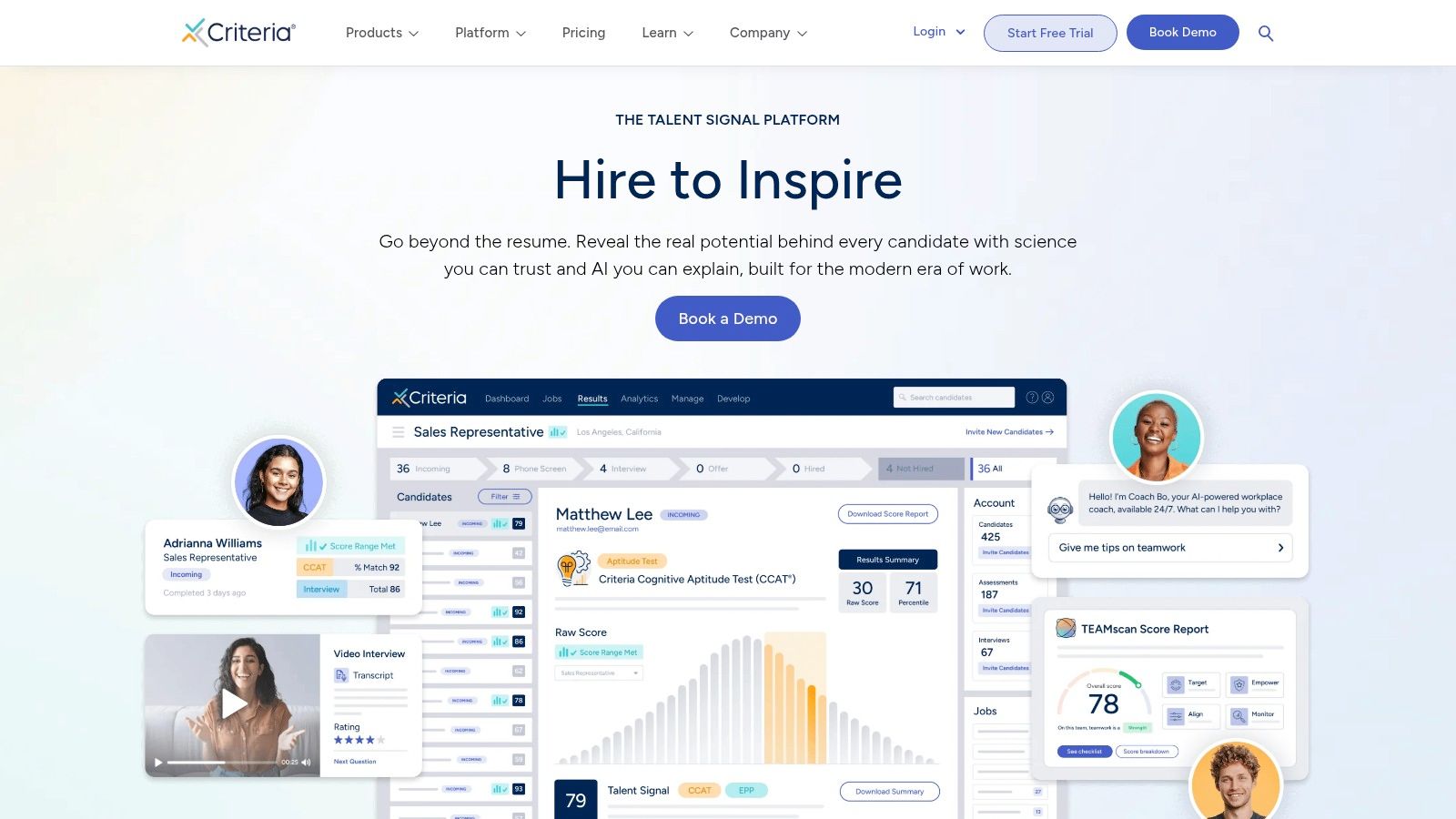
Criteria is a practical starting point for foundational administrative and language screening. Its assessment categories align more directly with receptionist, scheduling, and data-entry responsibilities than an engineering-first platform does.
Criteria offers typing, data entry, computer literacy, Microsoft Office, basic workplace skills, English and Spanish language assessments, cognitive measures, and personality assessments. It also provides TestMaker for custom tests, candidate management, and ATS integrations, with pricing offered through a customized flat-fee subscription.
For a bilingual patient coordinator, evaluate both languages in job-relevant situations. Ask the candidate to explain a scheduling policy, request missing administrative information, and summarize the exchange for another staff member.
Language proficiency alone doesn't establish that a candidate knows when to escalate a patient message. Conversely, a capable coordinator shouldn't be rejected for lacking vocabulary that your role doesn't require.
Keep initial testing proportionate. Criteria's guide reports approximately 80% completion for professionally developed assessments taking 40 minutes or less, which supports keeping early screening brief and explaining the expected duration beforehand.
Before requesting a quote, distinguish:
Criteria's breadth is useful, but don't assign every available test. For billing support or insurance verification, pair foundational scores with a fictional work sample that tests accuracy and acknowledgment of uncertainty rather than speed alone.
A multisite healthcare organization may need consistent hiring stages across locations, reviewers, and recruiting teams. HireVue Assessments is more relevant to that scenario than to a small practice filling an isolated administrative vacancy.
HireVue's assessment offering covers skills, job readiness, coding, language, cognitive abilities, and behavioral evaluation, including game-based formats and integration with broader interviewing workflows. Assessment pricing isn't published on that page, so request module-specific costs and minimum commitments.
The benefit is breadth within a larger hiring suite. The risk is purchasing more platform than your managers can use consistently.
A behavioral assessment can support evaluation of workplace tendencies, but it shouldn't replace evidence that a candidate can carry out essential duties. For a patient coordinator, ask how they would handle a frustrated caller, then review the actual wording they use in a simulated interaction.
Don't let a polished video response outweigh an inaccurate patient message.
For Spanish-speaking roles, verify the specific language assessment available in your proposed package. Ask whether it measures spoken interaction, listening, writing, or a combination, and whether reviewers can inspect the underlying response.
For cross-border recruitment, confirm ATS compatibility, candidate support hours, recording practices, retention controls, and alternatives when an applicant can't complete the default format. Game-based or automated measures deserve particular scrutiny if your team can't explain why the result relates to the job.
Before signing, ask the vendor to demonstrate the complete candidate journey and the exact report a practice manager will receive.
Mercer | Mettl belongs on the shortlist when assessment requirements vary across roles, regions, or languages. Its configurable approach may suit a healthcare organization building a broader remote recruitment program, provided the selected content fits medical administrative work.
Mercer | Mettl offers job-skill assessments, simulations, customized packages, assessment management, and multilingual support; the vendor reports customers in more than 100 countries and support for more than 20 languages. Pricing is personalized through consultation, and free sign-up is available.
Those international capabilities are a starting point, not proof that a particular assessment works for English/Spanish medical-practice hiring. Ask for a demonstration of the exact language, question type, and scoring method you intend to use.
An appointment scheduler and a prior-authorization support employee need different evidence. The scheduler might interpret a provider template, while the authorization support candidate might organize fictional submission requirements and identify missing documentation.
Cross-border fairness also requires attention to access. A review of AI-supported recruitment identifies risks involving digital resources, opaque scoring, accessibility, and inadequate adjustments.
For LATAM applicants, ask how the platform handles connection interruptions and whether candidates can request an alternative format. Standardized instructions are useful, but they don't eliminate differences in testing conditions.
iMocha combines hiring assessments with a broader skills-intelligence offering. That makes it worth evaluating when a healthcare organization wants to assess applicants and understand workforce capabilities, rather than purchase a tool for occasional screening alone.
iMocha's offerings include technical and professional skills assessments, remote proctoring, CEFR-aligned English-language assessments, and interview-related capabilities. Pricing and exact assessment coverage should be confirmed with the vendor rather than inferred from the breadth of its catalog.
For medical administrative hiring, the English assessment may support evaluation of communication foundations. It doesn't independently establish that someone can write an appropriate patient response, follow your scheduling rules, or document an unresolved eligibility issue.
For a billing support applicant, combine relevant foundational screening with a fictional account follow-up exercise. Ask the candidate to summarize the account status, identify the missing information, and draft the next administrative action without making unsupported assurances.
Validity and reliability are different requirements. The NCBI overview of assessment validity and reliability distinguishes measuring the intended capability from producing consistent results.
Apply that distinction during vendor evaluation:
For remote LATAM candidates, confirm device requirements, proctoring expectations, and support availability. If you don't need workforce-wide skills intelligence, compare the proposed package with a narrower assessment service before accepting the additional complexity.
| Platform | Assessment Focus | Standout Features | Best For | Pricing |
|---|---|---|---|---|
| TestGorilla | Technical and non-technical skills | 350+ tests, candidate comparisons, video responses and AI interviews on eligible plans | Hiring across varied roles | Free plan; paid plans from $215/month, billed annually |
| HackerRank | Software engineering | Coding tests, technical interviews, plagiarism detection and optional proctoring | Teams screening developers | Starter: $165/month; Pro: $375/month, billed annually |
| CodeSignal | Technical and professional skills | Real-world coding IDE, certified assessments, AI interviews and proctoring | Structured technical hiring | Hire Build: $79/month annually; Grow: $479/month annually |
| Codility | Software engineering | Coding, SQL and AI-skill tasks; work simulations and interview workflows | Engineering teams | Starter: $1,200/year; two-week team trial available |
| TestDome | Technical and non-technical skills | 130+ skill areas, automated scoring and prepaid invitations that do not expire | Occasional or lower-volume hiring | $20 per candidate for 5; down to $7 for 600 |
| Vervoe | Job-related professional skills | 300+ templates, custom assessments and written, coding or video tasks | Work-sample-based hiring across functions | Quote-based |
| Criteria | Foundational, language and workplace skills | Typing, Office, cognitive and English/Spanish tests; custom test builder | Administrative and operational hiring | Tailored flat-fee subscription; quote required |
| HireVue Assessments | Skills, cognitive, behavioral and job readiness | Coding, language and game-based assessments; integrates with video interviews | Large-scale, high-volume hiring | Not published; request a quote |
| Mercer | Mettl | Job skills and competencies | Custom assessment packages, online management and multiple languages | Organizations with varied assessment programs | Personalized pricing; free sign-up available |
| iMocha | Technical and professional skills | Remote proctoring, CEFR-aligned English tests and skills intelligence | Distributed teams and structured skills programs | Not publicly listed |
Choose skills assessment tools by role first, then by hiring volume and administrative effort. Criteria, TestGorilla, TestDome, and Vervoe warrant consideration for different combinations of foundational screening and custom administrative exercises. HackerRank, CodeSignal, and Codility are more appropriate when the position requires engineering skills, while HireVue, Mercer | Mettl, and iMocha deserve evaluation when broader assessment programs justify their scope.
Shortlist a small group and ask each vendor to demonstrate the same fictional practice workflow. Compare what candidates experience, what reviewers receive, and what your team must do manually, not merely how many assessments appear in the catalog.
Use a realistic exercise with supplied policies so you can distinguish existing knowledge from the ability to follow instructions. These are illustrative options, not requirements for every practice:
Specialty differences should shape the scenario. A cardiology practice can supply visit-preparation instructions, while a behavioral health practice can supply its own scheduling and message-routing policies. Assess whether candidates follow those instructions, not whether they independently make clinical judgments.
Use synthetic patient information throughout testing. Before uploading any sensitive information, have your compliance professional review vendor terms, data handling, access, retention, and applicable obligations; proctoring or identity verification alone doesn't establish that a workflow is appropriate.
Provide clear instructions, expected duration, and an accommodation contact. The EEOC's guidance on disability discrimination and medical inquiries explains restrictions on disability-related questions and medical examinations before a conditional offer, so keep skills testing focused on performing the work.
Compare the full purchasing commitment, including assessment usage, reviewer access, integrations, implementation, and internal grading time. Then pair the work sample with a structured interview using consistent questions and scoring criteria, and review whether assessment results correspond with supervised performance after hiring.
The most useful skills assessment tools help your practice observe relevant work without creating an unnecessarily burdensome hiring process. Start with a role-specific sample, verify language and computer skills where needed, and confirm privacy practices before expanding testing.
Choose a platform your managers can administer and interpret consistently. A broad catalog matters less than a clear connection between the assessment, the employee's responsibilities, and your final hiring decision.
If you'd rather begin with pre-vetted LATAM candidates than administer every screening stage yourself, discuss your hiring needs with LatHire. LatHire can provide a shortlist within 24 hours; share the role's language requirements, working hours, and essential workflows so your interviews focus on practical fit.