
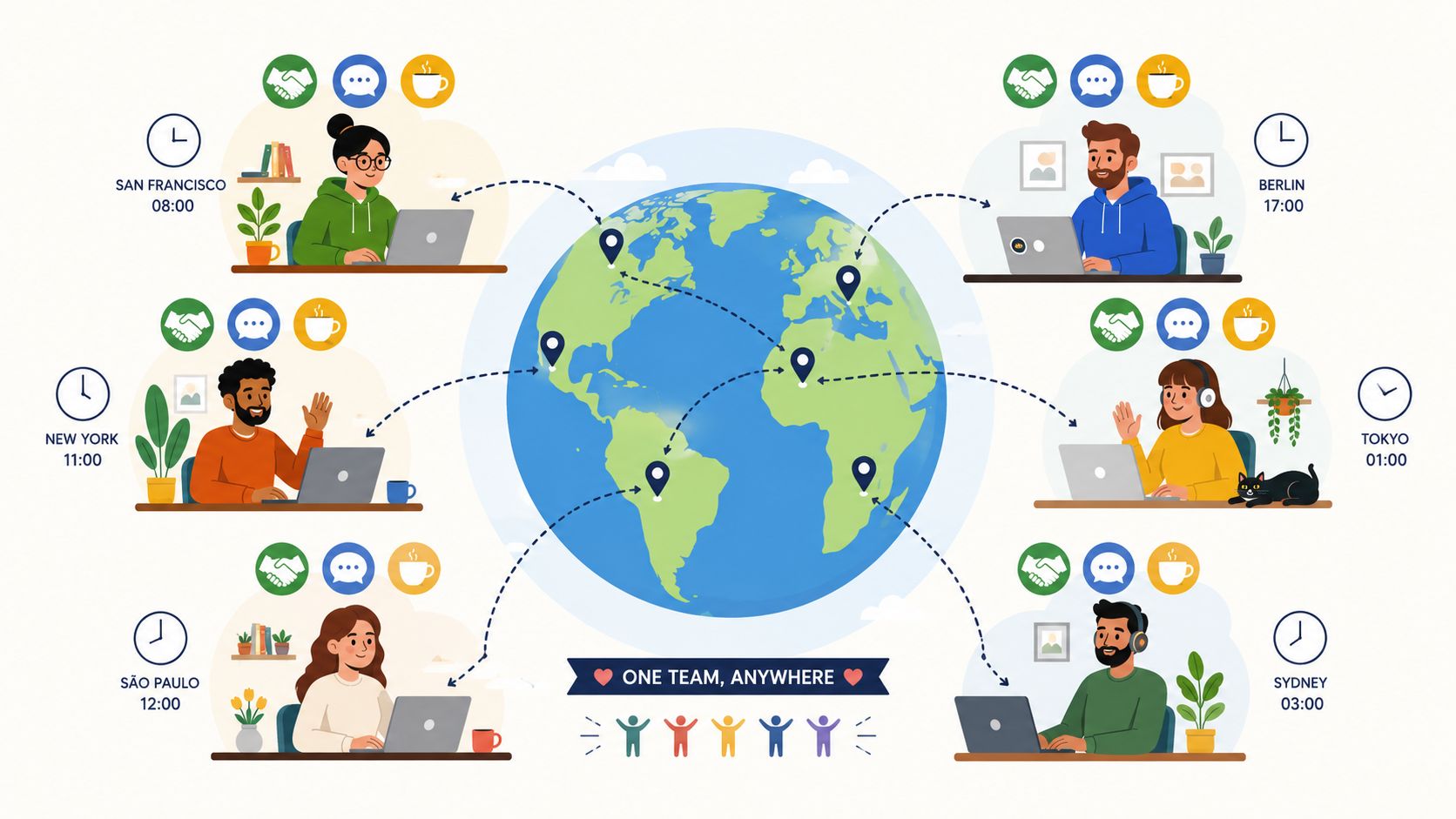
Turns out there's more than one way to build a remote team without mortgaging your office ping-pong table. The bad way is to treat company culture remote like a morale sticker pack, a few happy hours, some vague “we're a family” language, and a retreat nobody remembers by Monday. The useful way is to treat culture like an operating system, where values become visible behaviors, communication has rules, and new hires can tell how work gets done without reading tea leaves in Slack.
That matters because the people at the top already know this isn't fluff. A major 2021 remote-work culture survey found that over 90% of executives said culture and connection were lacking for remote team members, while 72% of workers said they could not socialize enough when working remotely, and 96% of executives said stronger employee connection would improve motivation and productivity, according to Workplace Intelligence's remote-work culture study. In other words, this isn't a “nice-to-have”. It's performance, retention, and coordination, all wearing a fake mustache.
The bigger mistake is pretending remote work is still temporary. It isn't. Statista reports that the share of employees working remotely worldwide rose from 20% in 2020 to 28% in 2023, and 91% of employees preferred either a fully remote or almost remote structure, while Gallup's U.S. hybrid indicator showed that 26% of remote-capable jobs were exclusively remote. The market already voted, and it didn't vote for office theater. It voted for distributed work that has to function on purpose.
If you're building across time zones, especially with Latin American talent in the mix, the bar gets even clearer. You don't need more virtual confetti. You need rules people can follow, rituals that aren't cringe, and documentation that keeps the machine moving when nobody's online at the same time. For a useful complement on morale, see how to enhance remote team morale from Corporate Challenge Events.
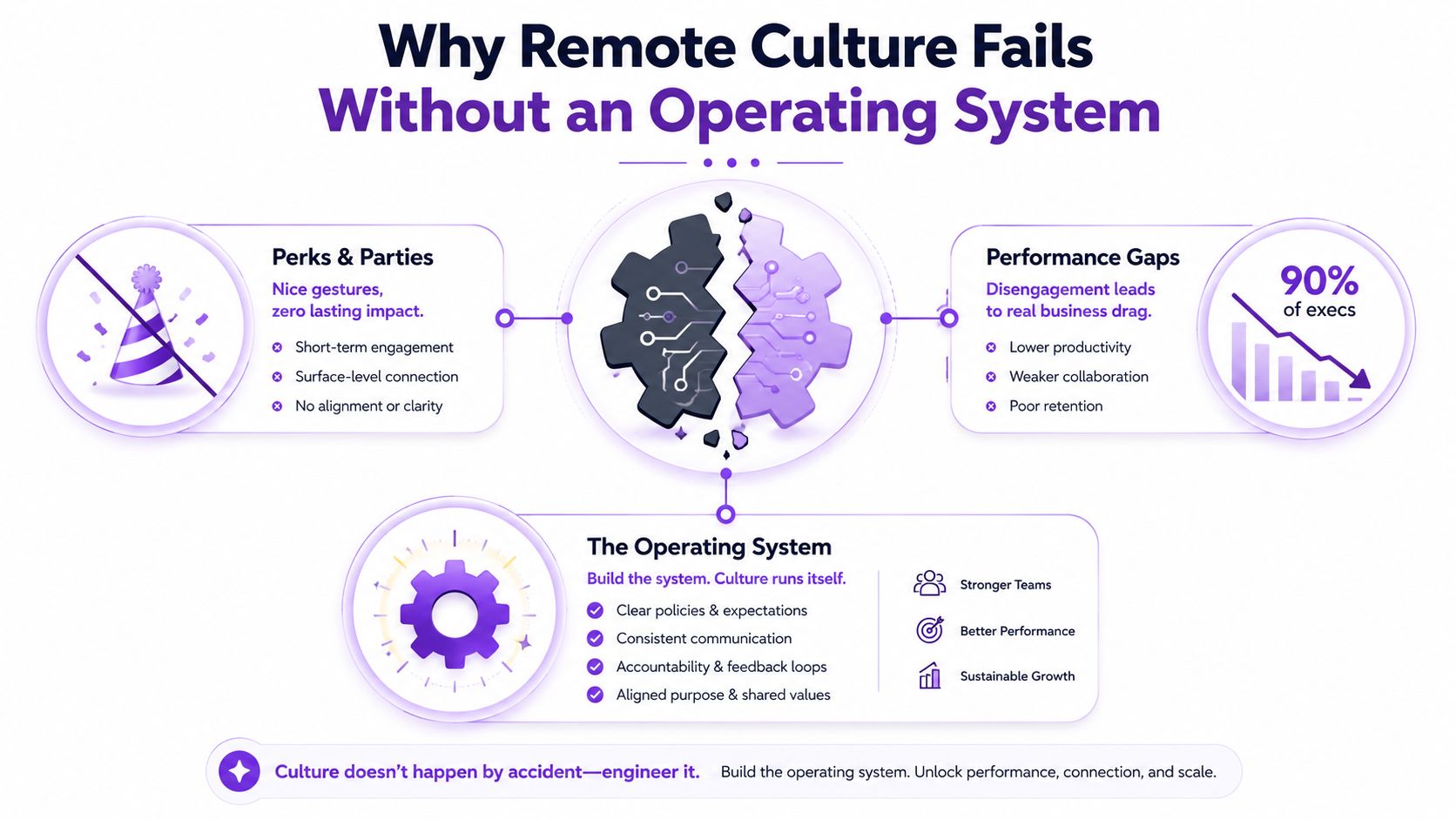
Remote culture usually fails for the same reason a business fails. People confuse activity with design. They add more meetings, more check-ins, more “fun” and call it culture, then wonder why the team still feels fragmented, slow, or weirdly political. That's not culture. That's expensive noise.
The executive data makes the failure obvious. If over 90% of executives are already saying culture and connection are lacking for remote people, the problem isn't that leaders need a better emoji strategy. It's that remote work removes the accidental glue of an office, and if you don't replace that glue with systems, every team invents its own inconsistent version of work, which is how trust gets brittle fast.
A remote company needs three things to function well. First, people need to know what good looks like. Second, they need to know how work moves. Third, they need to know where to find truth when they're not in the room. If those things live only in people's heads, you've got a culture by rumor mill.
That's why the most useful advice in this space is boring in the best way. Remote culture should rest on clear expectations, transparent communication, and intentional routines, not vibes. If your values sit in a slide deck nobody opens, congratulations, you've built a very expensive placebo. The work only becomes real when people can see it in decisions, handoffs, and response norms.
The other problem is that remote work is no longer a temporary workaround. It's the operating environment for a huge chunk of the workforce. That means culture isn't a side project handled by People Ops after the “real work” is done. It's part of the core product of the company, because people experience the company through its norms.
Practical rule: if a remote teammate can't tell how to make a decision, where to document it, or when they're expected to answer, culture has already leaked into chaos.
The tactical answer starts with writing things down. If your team needs a practical reference point for documentation discipline, the standards at documentation standards are the right kind of tedious. Tedious is good here. Tidy beats tribal knowledge every day of the week.
Abstract values create inconsistent behavior across remote teams. “Ownership” means nothing if one manager uses it to reward initiative and another uses it to excuse chaos. “Collaboration” is useless if nobody knows whether it means asking for feedback, sharing docs early, or involving stakeholders before a decision gets baked in. Remote teams need values that show up in behavior, not values people politely nod at in a deck.
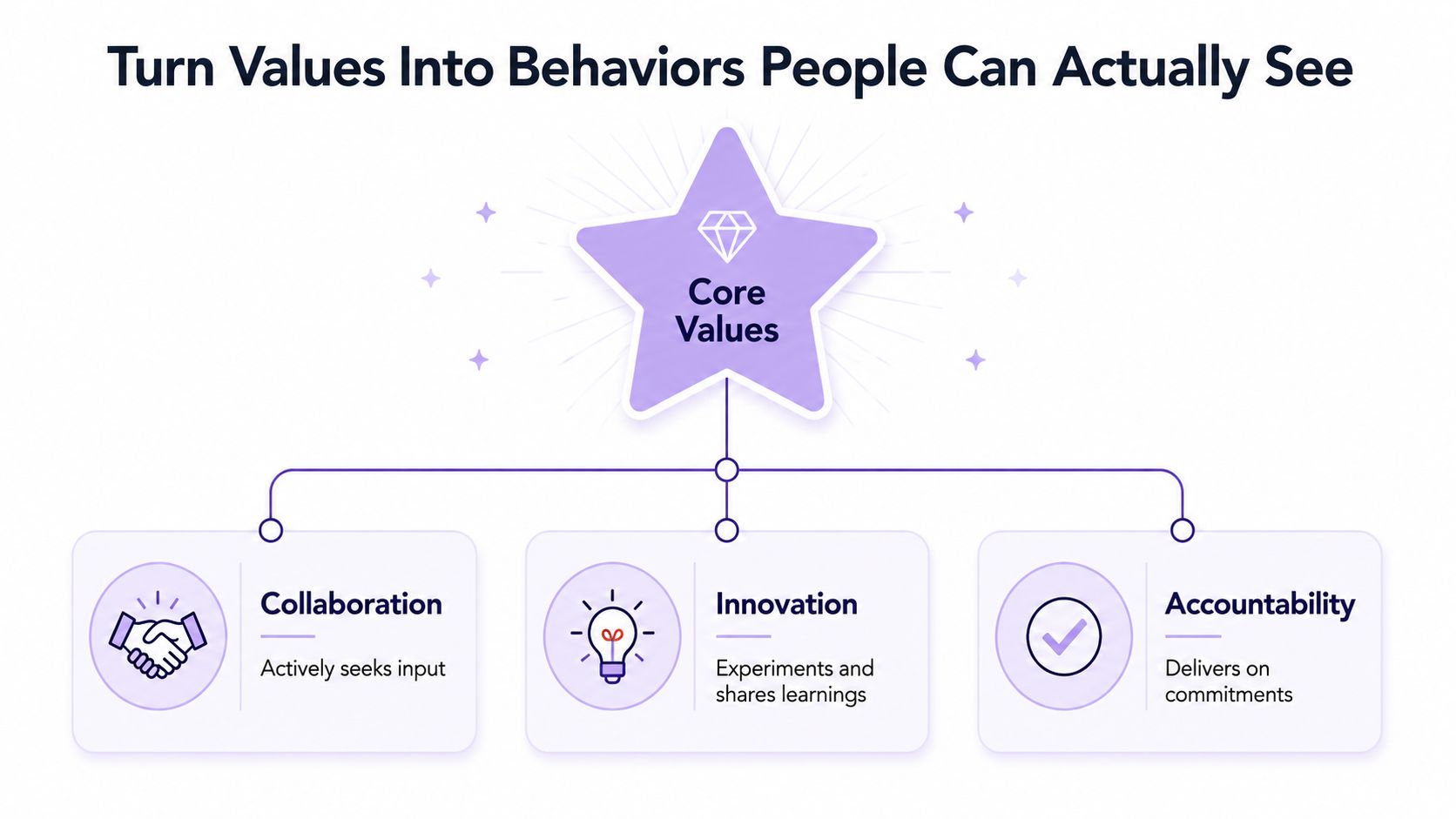
Start by picking 3 to 5 observable behaviors. Not 12. Not 18. Three to five. If a value can't be translated into something a manager can spot in a meeting, a doc, or a project handoff, it doesn't belong in the operating system yet. Cynicism isn't the issue here. Lack of definition is.
For example, instead of “we value accountability,” define what that looks like in practice. Maybe it means people call out risks early, close the loop on decisions in writing, and don't let blockers sit unnoticed for days. Instead of “we value collaboration,” decide whether collaboration means asking for input before a final call, tagging stakeholders in the right channel, or leaving clear notes for async review.
A simple workshop works fine here. Put the leadership team in a room, or a call if the team is distributed, and ask three questions:
That last question matters. A value that doesn't influence hiring or reviews is just corporate wallpaper. If you want a system people remember, tie the behaviors to interview rubrics and feedback loops. That keeps the cultural core intact while the less important rituals change around it.
The same logic applies to remote communication patterns. Built In's description of Remote.com's culture notes asynchronous communication with a 24-hour reply expectation and documentation. That is a norm you can see, teach, and enforce, which is why it works better than “please be responsive” ever will. For a practical recognition structure that reinforces visible behaviors, recognition programs only work if they point to the behaviors you want repeated.
Culture gets transmitted fastest when people join. That's when they decide whether your company is coherent or just well-branded. In remote teams, especially across the U.S. and Latin America, the first two weeks do more culture work than the next two quarters if you get them right.
The remote market has already shifted around this reality. Statista reports that the share of employees working remotely worldwide rose from 20% in 2020 to 28% in 2023, and 91% of employees preferred either a fully remote or almost remote structure. That's not a temporary blip. It means your hiring and onboarding process is part of your culture architecture, whether you've documented it or not. For a tighter operational view, onboarding remote workers should be treated like a product launch, not a welcome packet.
The mistake many teams make is hiring for résumé polish and onboarding with random enthusiasm. The better move is to hire for values alignment with structured interviews, then use onboarding to show people how the machine works. If the first week is just “meet everyone” and “figure it out,” you're teaching new hires to improvise in a system that supposedly values clarity. Cute. Also sloppy.
Give new hires a 30-60-90 plan that isn't a generic HR artifact. It should include the first decisions they'll own, the docs they need to read, and the one or two relationships they need to build first. That matters even more for Latin American teammates working outside headquarters hours, because they lose access to casual hallway learning. The office gossip channel is gone. You have to replace it with structure.
A clean first-two-weeks checklist usually looks like this:
The new hire shouldn't have to infer the rules from a Slack scavenger hunt.
If you want remote culture to feel strong, don't make the new person decode it. Make it legible on day one. That's the difference between belonging and polite confusion.
Most remote teams don't have a communication problem. They have a communication ambiguity problem. Nobody knows which channel is for what, who must answer fast, which decisions need meetings, or whether cameras are optional unless a manager is in a mood. That's how remote work turns into low-grade admin anxiety.
The fix is to write a communication charter and keep it short. Not a policy graveyard. A one-pager. Teams need to know when to use Slack, when to use docs, when to jump on a call, and what “urgent” means. If the rule isn't simple enough to remember on a bad Tuesday, it won't survive contact with the team.
Arizona State University's Phoenix page recommends that managers set up one-to-one meetings with employees every week, because standing meetings let managers check progress without hovering. That's the right idea. Weekly 1:1s create rhythm. They give people a reliable place to raise blockers, discuss priorities, and stay aligned without turning the calendar into a surveillance grid.
The other useful norm is camera policy. Don't make every call a forced-TV performance. Make the rule explicit: which meetings require cameras, which don't, and why. People in different countries, homes, and bandwidth situations need predictable expectations, not guilt.
Here's a simple charter structure that works:
For leaders worried about burnout, there's another useful check. If the team's communication norms are unclear, people start compensating by being always on. That's a fast path to mushy boundaries and annoyed humans. If you want a practical resource that speaks to that pressure, beat burnout with these books is worth a look before someone starts treating email like a kidney donation.
Good async culture is less about more messages and more about fewer surprises. People relax when the rules are obvious.
Rituals are useful only when they reinforce the system. If you use them as a substitute for clarity, they become corporate dress-up. If you use them to make values visible, they become glue. That's the difference between a team that feels coordinated and a team that schedules joy like a dentist appointment.
The biggest trap is culture-by-ritual, where leaders keep adding socials, retreats, and check-ins because they're easier than fixing decision rights or documentation. MIT Sloan's guidance is pretty blunt on this point. The better move is to identify the few cultural elements that matter and reinforce those, instead of trying to preserve every old office habit.
For distributed teams with Latin American talent, the best rituals are lightweight and specific. Shout-outs tied to observable behaviors work better than generic praise. Demo days work when they show decisions, not just pretty slides. Virtual coffees work when they have a purpose, like onboarding, cross-team learning, or problem solving, not when they're another calendar tax.
Recognition should point back to the behaviors you defined earlier. If you said good collaboration means sharing context early, then reward people who do that. If you said accountability means surfacing blockers fast, then recognize the teammate who flagged the issue before it became a fire. Otherwise, recognition turns into applause for being likable, and that's not the same thing.
Cross-cultural inclusion also needs practical respect. Holidays matter. So do communication styles. So does the fact that time zones can make one group feel like second-class citizens if the meeting schedule always favors headquarters. The fix isn't complicated. Rotate meeting times when you can, document decisions so nobody misses the plot, and ask people what helps them participate.
A remote culture becomes sticky when teammates feel like insiders because they understand how things work, not because they were invited to a trivia night. That's especially true across U.S. and Latin American teams, where the cultural gap is rarely about effort. It's usually about access, timing, and whether the company bothered to make norms explicit.
Good ritual, bad ritual: if it creates shared context or trust, keep it. If it just burns time and imitates office life, kill it.
If you don't measure remote culture, you're just narrating your feelings. People will swear things are fine until the turnover or silence shows up, and by then you're already paying for the mess. The better move is to run a simple measurement loop that catches drift early and forces actual decisions.
A practical remote-culture program has three phases. First, baseline culture with stakeholder interviews plus a short pulse survey that covers trust, communication effectiveness, values alignment, and belonging. Second, convert values into 3 to 5 observable behaviors and document channel-specific communication rules. Third, review leading indicators monthly or quarterly using pulse surveys instead of waiting for annual engagement data, which is usually too slow to save you from avoidable nonsense.
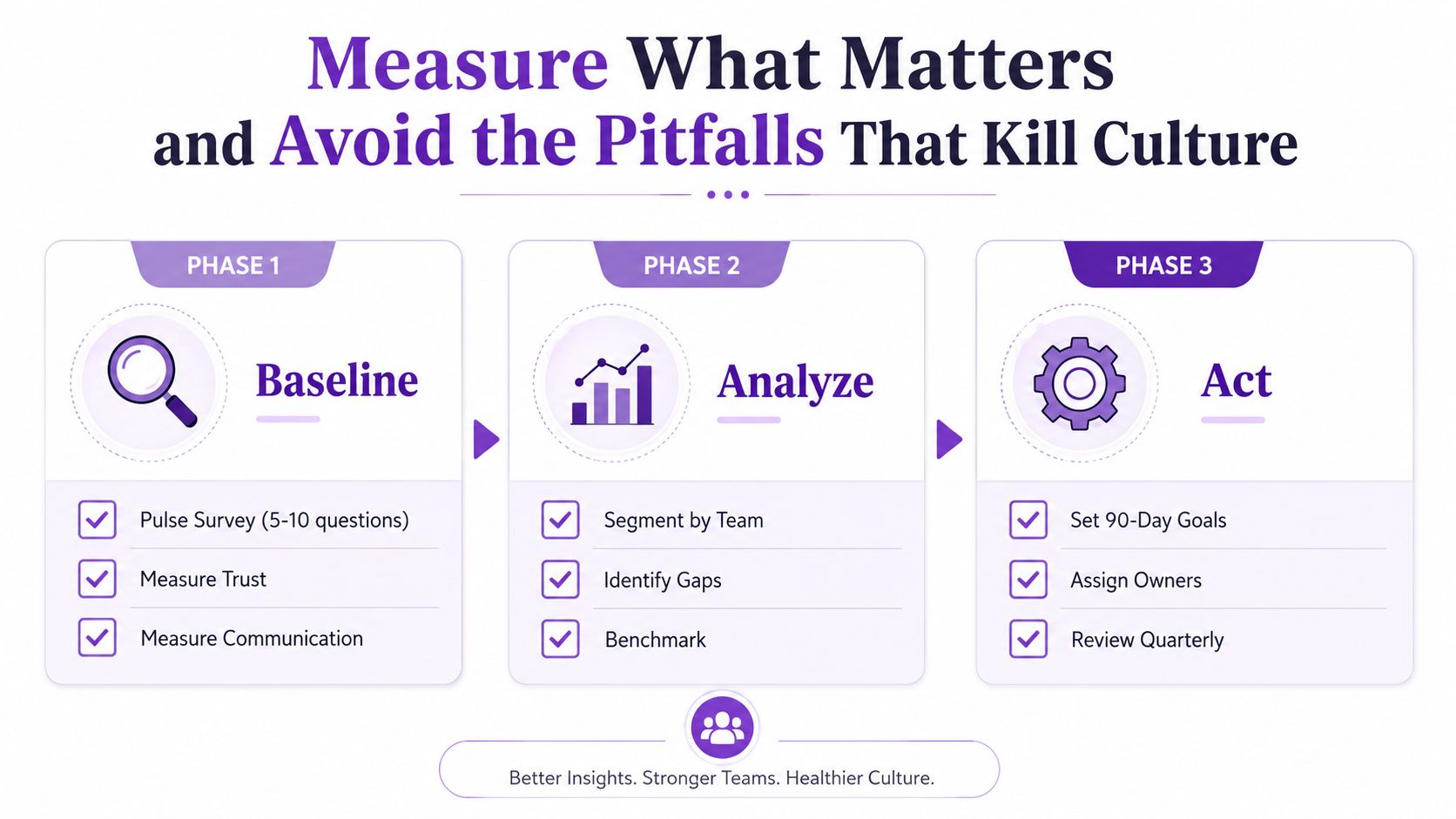
Great Place To Work says employee surveys are the place to start when assessing how remote and hybrid work affect culture, but only if you're ready to act on what they reveal. That's the part many companies botch. They ask, people answer, and then leadership files the results into the drawer labeled “interesting.” Don't do that. It makes future feedback more expensive, because people notice when their honesty goes nowhere.
Keep pulse surveys short, usually 5 to 10 questions, and use them to track leading indicators like response times, participation in optional activities, and collaboration patterns. Those are useful because they show drift before turnover does. Annual surveys are fine for a rearview mirror. They're lousy for steering.
The other common pitfall is preserving every office habit because nobody wants to offend the old guard. That's where remote culture gets silly fast. You don't need to recreate the entire office. You need to preserve the cultural core and adapt the parts that only made sense when everyone was in the same building. That's the sensible middle ground, and it saves everyone from ritual cosplay.
A clean checklist keeps it honest:
If you're serious about company culture remote, stop treating it like morale theater and build it like infrastructure. Pick the behaviors, write the rules, measure the drift, and reward the work that makes the system stronger. If your team is scaling across the U.S. and Latin America, start by tightening your operating rules this week, then book the onboarding review and communication charter session before the next hire walks into confusion.