
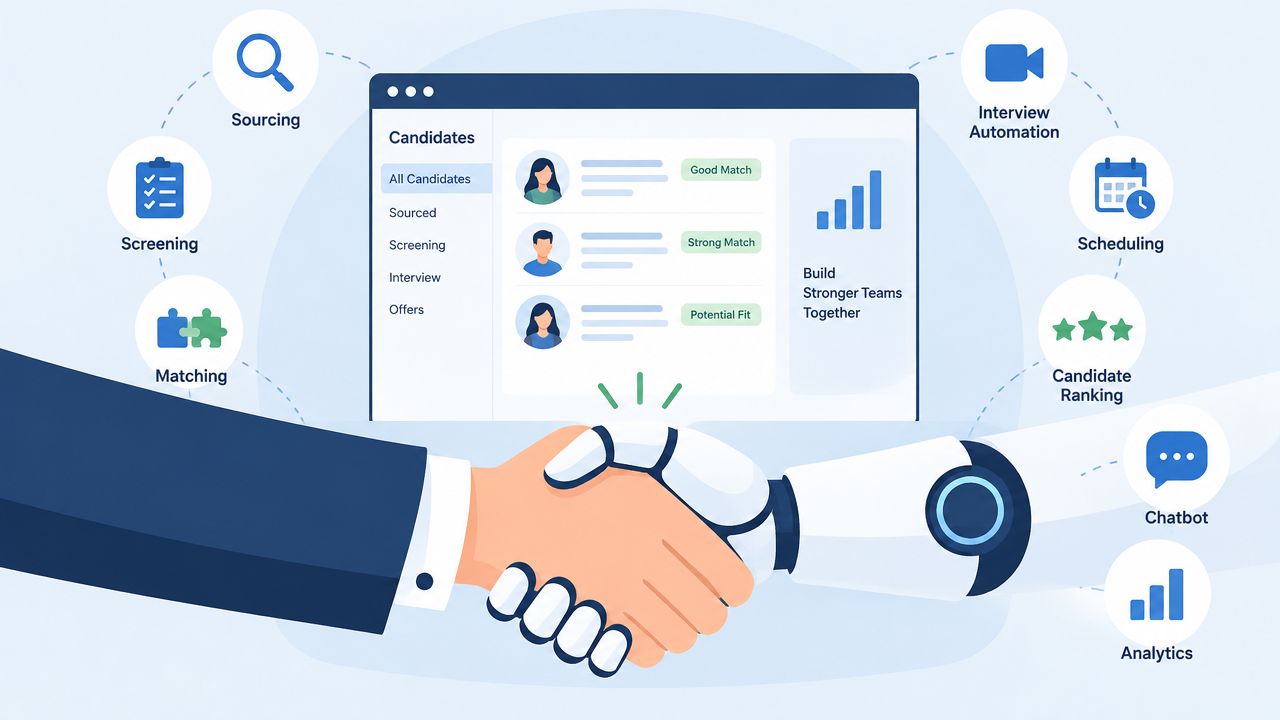
39% of organizations had adopted AI in HR by 2026, and recruiting was the most common use case at 27%, but no single platform is right for every medical practice. Sourcing tools help find passive candidates, conversational systems automate early screening, and applicant-tracking systems structure evaluation and coordination.
Where does AI fit when a practice needs a remote receptionist, patient coordinator, billing support specialist, or medical virtual assistant without weakening human review? That's the practical question behind the growing list of companies using AI in recruitment.
AI can reduce repetitive work, but it can't replace role definition, credential verification, judgment about patient-facing communication, or a manager's responsibility for a defensible hiring decision. A 2026 hiring-market report found that 69% of companies used AI somewhere in hiring, while only 18% had scaled it broadly across the process, a gap that reflects how difficult workflow integration and governance can be (2026 hiring adoption findings).
The eight platforms below span talent intelligence, candidate sourcing, conversational screening, scheduling, and applicant tracking. Each is evaluated through a medical-practice lens: what it automates, which roles or practice sizes it may suit, what still needs verification, and which tactic you can adapt. Any supplied customer examples should be treated as illustrative claims requiring independent verification before publication, not as confirmed customer results. If you're preparing candidate materials alongside your hiring process, this guide to writing a resume in Markdown with AI may also be useful.
Draup fits practices that need more than a keyword search. Its talent-intelligence approach is designed to identify and match professionals against a defined combination of skills, work history, credentials, availability, and role requirements. For a practice hiring remote administrative staff, that can mean separating a virtual medical receptionist from a billing specialist or prior-authorization coordinator instead of treating every healthcare support applicant as interchangeable.
The quality of the result depends on the quality of the role specification. A posting that says “healthcare assistant” leaves too much open to interpretation. A stronger brief identifies whether the person will schedule appointments, verify insurance, support referrals, communicate with Spanish-speaking patients, or manage inbox workflows. It should also state whether the role involves protected health information, which systems the employee will access, and which duties remain outside the position.
Draup may be useful when a practice has a defined profile and an existing applicant-tracking environment that needs richer candidate matching. Practice managers can specify core working hours and compare availability with patient communication windows, a practical safeguard for remote teams working across regions.
Credential flags can support administrative review, but they shouldn't be treated as final proof. A platform may identify a missing certification or a potentially relevant background. Your team still needs to verify the document, issuing body, expiration date, employment history, and any state-specific requirements that apply to the job.
Practical rule: Use AI to narrow the review queue, not to decide whether a person is qualified to handle a sensitive patient workflow.
For high-turnover roles, saved searches or alerts can help recruiters revisit the talent pool rather than restarting from zero. Reporting may also help compare attributes such as U.S. healthcare experience, bilingual ability, software familiarity, and schedule alignment with later retention or performance data. That analysis should be handled carefully. Correlation doesn't establish that one background characteristic caused better performance, and demographic information must never become a shortcut for exclusion.
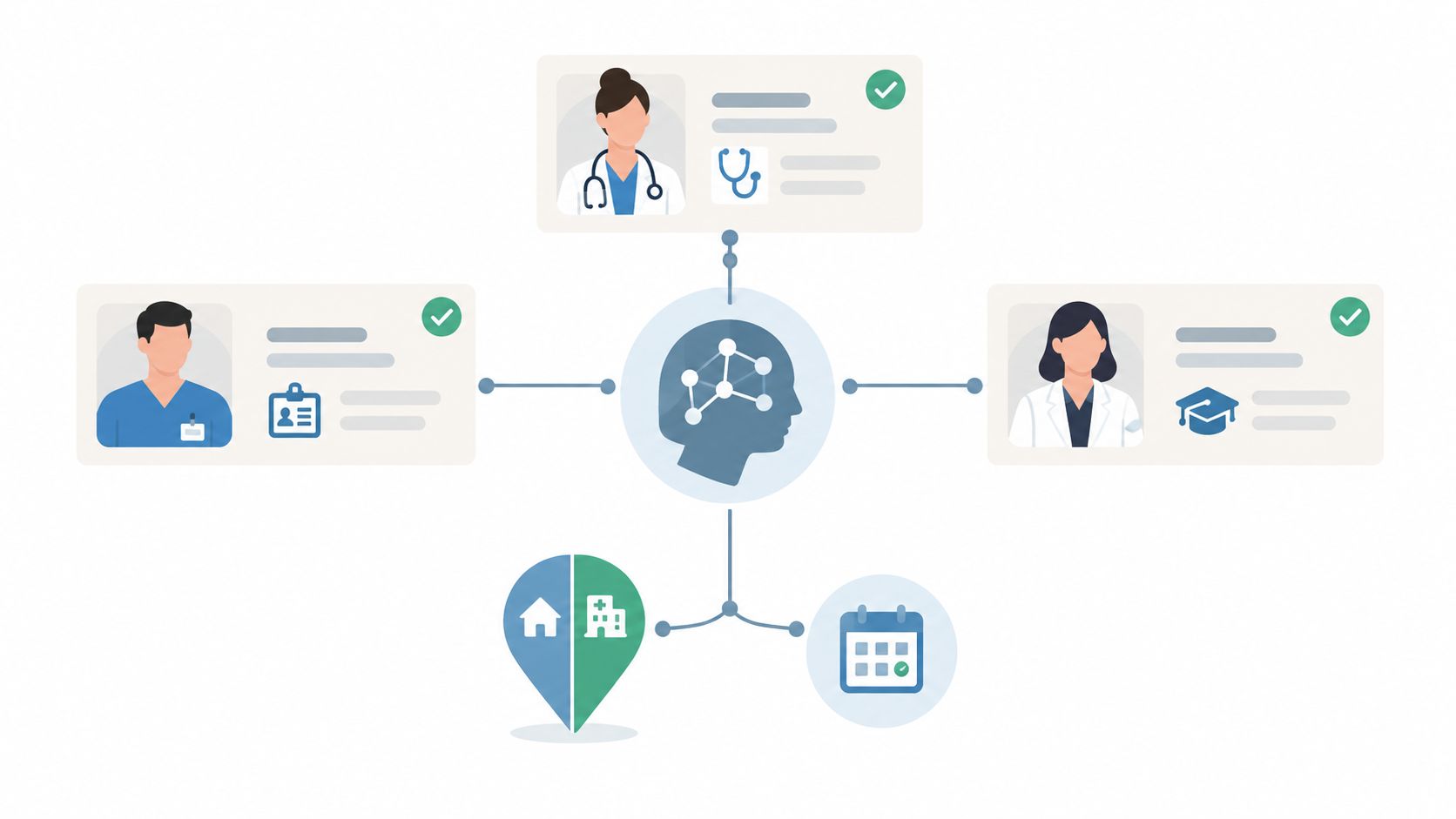
Eightfold is oriented toward skills-based talent intelligence and longer-term workforce planning. That makes it potentially more useful for a growing medical group than for a single urgent vacancy. A multi-location practice may use it to identify external candidates with transferable administrative experience, map internal employees who could move into patient coordination, or build a pipeline for roles that recur throughout the year.
For remote healthcare staff, transferable skills can matter. A candidate with strong scheduling, customer-service, documentation, and software-learning experience may succeed as a virtual receptionist after structured onboarding, even without identical experience in your specialty. That possibility is valuable, but it also creates a verification obligation. “Learning agility” is not a substitute for testing whether someone can follow escalation rules, protect patient information, communicate clearly, and work within the practice's hours.
Start by dividing the profile into three groups:
Incomplete internal records can weaken recommendations, so audit employee and candidate profiles before relying on mobility or matching suggestions. You should also validate whether the platform's ranking favors conventional career paths over candidates with nontraditional resumes, career breaks, or experience from another healthcare market.
The Stanford-affiliated recruitment benchmark is useful here because it evaluates interview-advancement prediction for resume and job pairs, along with resume-to-job recommendations tied to downstream outcomes rather than ranking alone (Stanford-affiliated AI recruitment benchmark). For a practice, the operational lesson is straightforward: compare recommendations with interview completion, quality of work samples, onboarding progress, and manager assessments instead of assuming a high match score predicts success.
Practices that need a structured way to cut hiring time with AI tools should still define the human checkpoints before activating automated recommendations. The platform can organize a pipeline, but managers must decide which evidence is job-related and sufficient.
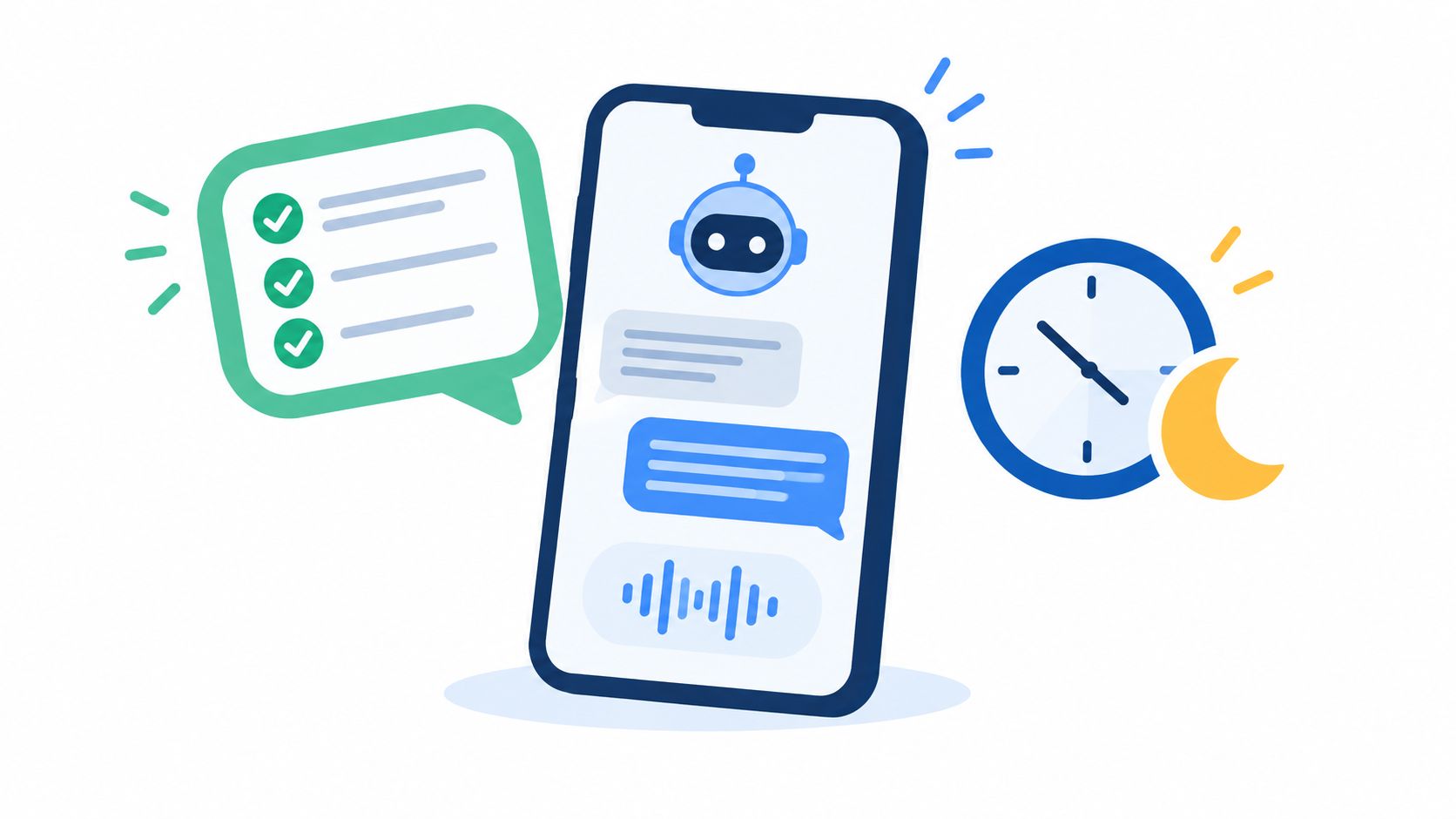
Sense fits practices that lose time to repetitive outreach and preliminary screening. Its conversational workflows, delivered through text or phone, can gather time-zone availability, language capability, software experience, work authorization information, and prior healthcare exposure before a manager schedules an interview. That creates a useful intake record for remote roles, especially when applicants respond outside the practice's working hours.
The workflow should collect facts, not make unsupported judgments. Ask candidates about schedule coverage, systems they have used, and the boundaries of the role. A patient coordinator may still need to calm a frustrated caller, recognize when a message requires escalation, and document information accurately. A short automated exchange cannot reliably establish empathy, clinical judgment, accent, or nuanced communication. Use a human interview and a job-related exercise for those decisions.
Build the screen around four checks:
Review the conversation itself before expanding it. After-hours screening can reduce back-and-forth with candidates working elsewhere or living in another time zone, but a long or unclear exchange can discourage qualified applicants, particularly on a mobile connection. Examine where candidates stop, which questions cause confusion, and whether bilingual responses receive consistent handling. Treat abandonment as a workflow signal, not a final quality score.
Automation should make the first step easier for candidates. It shouldn't make the practice less accountable for the final decision.
Set a human review point before rejecting someone based only on an automated interpretation. Route unusual work histories, varied English proficiency, connectivity problems, and rigidly mismatched answers to a practice manager or senior staff member. When comparing medical virtual assistants, use Sense for logistics, then assess trust, communication, credential information, and role fit through human review.
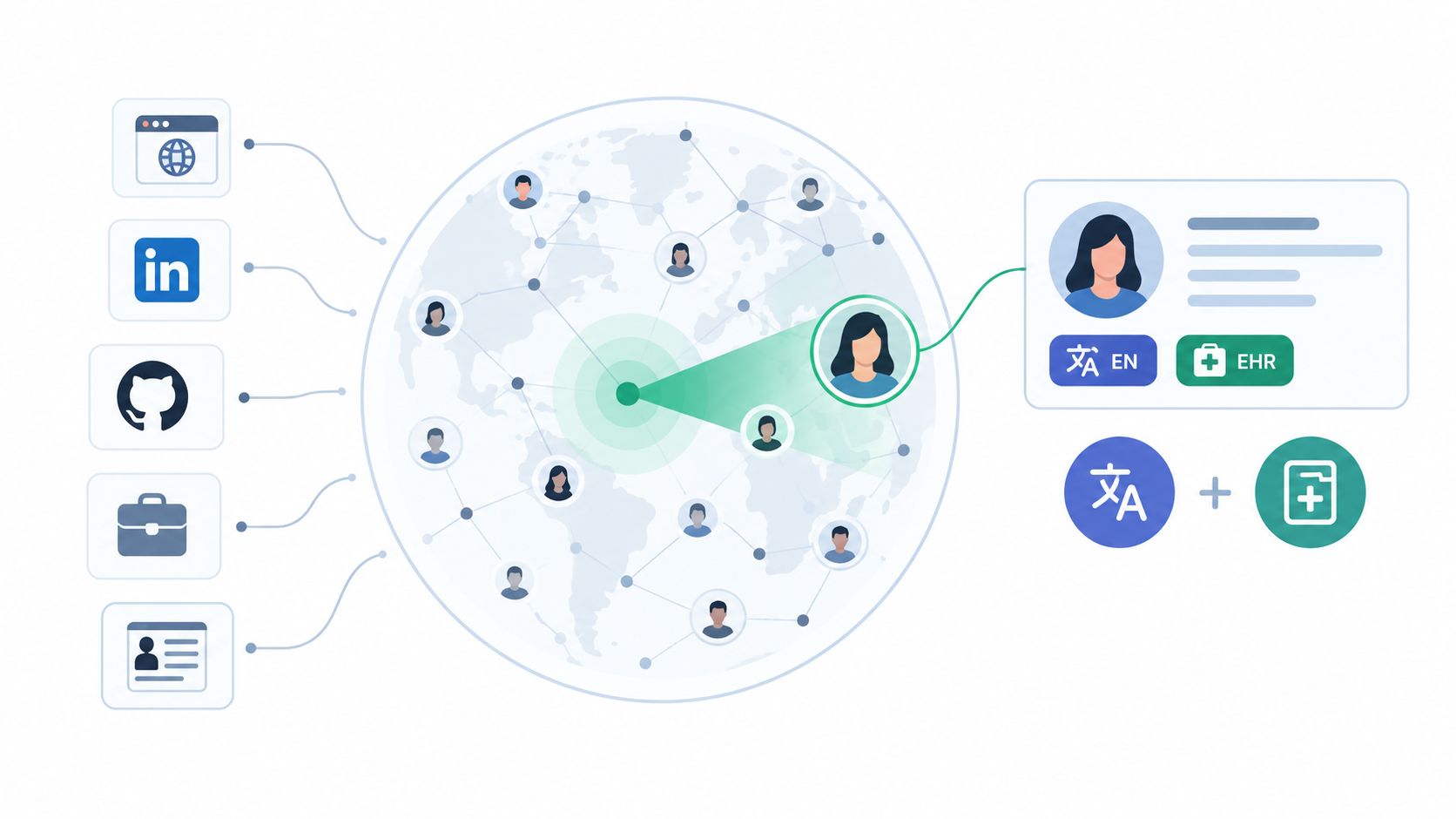
LinkedIn Recruiter's AI-assisted recommendations are most relevant when job postings aren't reaching the people you need. Experienced remote receptionists, patient coordinators, billing support staff, and healthcare administrative professionals may not be actively applying, yet they may consider a role with better schedule alignment or a clearer growth path.
That makes sourcing different from screening. LinkedIn can help identify profiles using skills, employment history, certifications, and related experience. It can't confirm that a candidate has current authorization, reliable connectivity, accurate EHR experience, or the communication discipline required for patient-facing work. Those checks remain part of the practice's process.
A medical practice can improve sourcing quality by combining role terms with workflow terms. Search concepts might include medical reception, patient scheduling, insurance verification, EHR documentation, referrals, telehealth support, or bilingual English and Spanish communication. A candidate's title may say “customer support specialist,” while the actual work may include appointment coordination and sensitive records handling.
Saved searches can keep pipelines active for recurring vacancies. Before contacting someone, review the profile for evidence that supports the outreach, such as relevant systems experience or prior remote work. A personalized message should explain the role, patient population, core hours, and administrative boundaries instead of implying that the person is already qualified.
Be cautious with activity signals and inferred attributes. A recent profile update may suggest openness to contact, but it doesn't establish interest. Demographic or location filters can also create unfair narrowing if used as proxies for suitability. Use time-zone availability and language capability only when they are genuine job requirements, and document why they matter.
Outreach standard: Tell passive candidates why their documented experience appears relevant, then invite them to verify whether the schedule and responsibilities fit.
LinkedIn can connect with broader recruiting workflows, and a LinkedIn scraping API may appear attractive to teams seeking data at scale. Practices should be cautious about privacy, platform terms, data provenance, and whether collected information is appropriate for employment outreach. More data doesn't automatically produce a fairer shortlist.
Ashby combines applicant tracking, interview coordination, analytics, and structured evaluation. For a medical practice, its practical value is creating a shared review process when an administrator, operations manager, provider, and billing lead assess the same remote candidate.
A scorecard gives each reviewer the same job-related prompts. For a remote patient coordinator, criteria might cover accurate information capture, appropriate escalation, clear written communication, dependable time-zone coverage, and compliance with privacy procedures. Those criteria help separate communication skill from general likability and keep patient-facing judgment visible in the hiring record.
Build the scorecard around observable requirements before configuring automated ranking:
Define “culture fit” through specific workplace behaviors or leave it out. An undefined label can reward personal similarity rather than job performance. Review candidates near an automated cutoff as well. Resume parsing may miss transferable experience, alternate job titles, bilingual skills, or evidence of working across time zones.
Ashby can automate interview scheduling and candidate messages, reducing coordination work for distributed teams. Human reviewers still need to confirm whether a candidate's credential history, communication approach, and workflow judgment match the role. Automation organizes evidence. It does not verify clinical authorization or decide whether a response is safe for patients.
Document job-related reasons for rejection and retain the relevant review record according to the practice's retention policy. Practices operating across jurisdictions should confirm applicable requirements with qualified employment counsel.
The EEOC's 2024 Annual Performance Report describes the agency's AI and Algorithmic Fairness Initiative. Automated employment systems therefore require governance, not only configuration. This guide to AI recruitment tools can help managers compare workflow controls, review steps, and oversight features instead of relying on vendor feature lists.
Greenhouse is designed for organizations that need a consistent hiring process across multiple interviewers, locations, or departments. That can suit a medical group expanding remote administrative teams, especially when providers and managers participate in hiring from different schedules.
AI-assisted job-description drafting can speed up the first version of a posting, but a practice should have an operational owner review it. The final description needs to distinguish administrative duties from licensed clinical work, identify required systems experience, state time-zone expectations, and explain whether the employee will access protected health information. A generic AI draft often misses the details that determine whether applicants understand the job.
Distributed hiring benefits from structured coordination. A practice can use scheduling workflows for initial conversations, then reserve provider time for finalists who have already met the basic administrative requirements. Asynchronous interviews may help candidates in different time zones, but they can also disadvantage applicants with weak internet access, caregiving constraints, or discomfort recording video.
Give candidates clear instructions and a non-video alternative where appropriate. Evaluate responses against the same written criteria, and don't treat camera presence, background, or delivery style as a measure of patient-care readiness. Human reviewers should focus on the content relevant to the role.
Greenhouse-style scorecards and consensus tools can document how several reviewers reached a decision. That record is useful when one provider prefers an applicant for reasons another reviewer can't connect to the job. It also creates an opportunity to inspect where candidates leave the process.
The platform should not be the only fairness control. HealthECareers' guidance on AI-assisted screening recommends comparing AI and manual screening, removing harmful language, reviewing performance over time, and testing how systems treat different demographics. Those practices are applicable regardless of the ATS you choose.
For a smaller practice, Greenhouse may be more process than you need if one manager fills occasional vacancies. For a multi-site organization, the cost of added structure may be justified when inconsistent interviews, lost candidate notes, or unclear ownership are already slowing hiring.
Lever combines applicant tracking with sourcing, scheduling, collaboration, and candidate relationship management. It can be useful when a practice has enough hiring activity to need a shared pipeline but still wants recruiters and managers to communicate around each candidate in one place.
Its practical value appears in handoffs. A recruiter may confirm availability and experience, an operations manager may assess documentation habits, and a clinician may evaluate whether the person understands patient-facing boundaries. Lever can organize those stages, but the practice must define who owns each decision. Without that design, automation can just move an unclear process faster.
Automated scheduling is well suited to introductory calls and standard interviews. Final conversations should usually involve the manager or senior staff member who will supervise the employee. The final discussion is where you can test whether a virtual medical receptionist understands confidentiality, knows when to escalate a patient message, and can maintain a calm tone during a difficult interaction.
Job-board distribution can expand reach, but broad posting isn't a substitute for a precise description. A bilingual patient coordinator posting should specify whether Spanish is required for calls, written messages, or both. A billing-support role should identify whether the employee handles claims follow-up, payment posting, coding support, or insurance verification. Those distinctions affect both matching and candidate expectations.
Use analytics to inspect each stage, including application review, screening, interviews, references, and offer acceptance. If qualified candidates disappear after the first interview, review the scheduling windows, interviewer behavior, assessment length, and compensation communication before assuming the candidate pool is weak.
Background-check workflows can standardize initiation, but they don't determine whether a result is relevant to the role or satisfy every jurisdictional requirement. Employment screening must be handled consistently and with appropriate notices and authorizations. A practice should confirm the process with counsel rather than treating an ATS setting as legal protection.
Could a practice reach qualified healthcare staff who never apply to its job posts? SeekOut focuses on discovering passive candidates, which can expand searches for bilingual receptionists, remote patient coordinators, billing specialists, and administrative professionals with EHR or telehealth experience.
The outreach workflow matters as much as the search. A professional who is not actively job hunting needs a message that explains the schedule, patient population, remote expectations, responsibilities, and reason their background fits. A generic template may produce replies, but it rarely gives candidates enough information to judge the opportunity.
Build the search around how the person will work:
This sequence keeps a familiar job title from becoming an unnecessary filter. It also makes trade-offs visible. If the search returns too few prospects, the hiring manager can identify which requirement to relax without weakening standards across the role.
Talent mapping can show a growing medical group where relevant skills appear concentrated and which professional backgrounds are present in the available pool. It cannot confirm salary expectations, interest in changing jobs, or permission to contact a person. Verify contact details, respect privacy obligations, and provide a clear way to decline future messages.
A small practice with one predictable opening and a strong referral network may find SeekOut more than it needs. Recurring, specialized, geographically limited hiring creates a stronger case for the platform, especially when passive candidates are part of the target pool. SeekOut can provide names and search context, while staff must still verify experience, references, schedule, patient-facing communication, credential requirements, and role boundaries.
| Solution | Implementation complexity | Resource requirements | Expected outcomes | Ideal use cases | Key advantages |
|---|---|---|---|---|---|
| Draup (AI-Powered Healthcare Recruitment) | Moderate, requires detailed role specs and ATS integration | Moderate, subscription, profile data completeness, implementation time | Reduced screening time; automated credential flags; improved fit matching | Practices hiring remote medical assistants, virtual receptionists, compliance-sensitive roles | Clinical-focused matching, automated compliance checks, time-zone availability mapping |
| Eightfold AI (Talent Intelligence) | High, needs structured data and configuration for potential scoring | High, data audit, profile enrichment, training and subscription cost | Builds long-term talent pipelines; identifies transferable candidates and growth potential | Larger networks or practices focused on workforce planning and internal mobility | Skills-based matching, learning-agility scoring, diversity-focused recommendations |
| Sense (AI Recruitment Assistant) | Low–Moderate, set up conversational flows and ATS sync | Low, subscription, screening question design, monitoring | Major reduction in initial screening time; consistent triage; better candidate response | High-volume hiring, after-hours screening, multilingual candidate triage | Conversational phone/SMS screening, 24/7 throughput, multilingual support |
| LinkedIn Recruiter with AI Sourcing | Moderate, requires recruiter expertise and saved searches | High, recruiter licenses, outreach effort, ongoing sourcing time | Access to passive experienced candidates; faster sourcing for senior admin roles | Enterprise or multi-location hiring seeking passive or senior administrative talent | Passive candidate access, activity signals, large professional network |
| Ashby (AI-Enhanced ATS) | Moderate, ATS setup, scorecard and workflow definition required | Moderate, subscription, initial configuration, staff training | Consistent evaluations, reduced admin work, faster interview scheduling | Small–mid practices needing structured hiring and bias monitoring | Structured scorecards, bias monitoring, automated scheduling and workflow |
| Greenhouse Recruiting (AI-Enhanced Hiring) | High, significant setup and possible professional implementation | High, licensing, implementation support, training | Scalable distributed hiring, asynchronous assessments, diversity analytics | Large multi-location practices building distributed virtual teams | Async video interviews, AI job description generation, consensus tools |
| Lever (Modern ATS with AI) | Moderate, workflow customization and scorecard setup | Moderate, subscription, job board integrations, admin time | Improved candidate ranking, faster scheduling, clearer pipeline visibility | Growing organizations hiring multiple remote assistants and schedulers | AI candidate ranking, time-zone aware scheduling, collaborative hiring tools |
| SeekOut (AI Talent Intelligence) | Moderate–High, search tuning and outreach workflow setup | High, license cost, personalized outreach, ATS integration effort | Passive candidate discovery, talent mapping, niche skill sourcing | Hard-to-fill roles, underserved regions, specialized EHR or bilingual hires | Web-scale passive discovery, candidate enrichment, diversity sourcing filters |
The right decision among companies using AI in recruitment starts with the hiring problem, not the brand. Choose talent-intelligence or sourcing tools when the challenge is finding scarce or passive candidates. Choose conversational AI when managers lose time collecting basic information and scheduling early conversations. Choose a structured ATS when several reviewers need consistent scorecards, clear handoffs, and an audit trail.
Medical practices should also separate administrative automation from clinical judgment. AI can help identify a candidate who has scheduling experience, organize an interview, or flag an incomplete credential record. It shouldn't make unsupported decisions about licensing, clinical competence, diagnosis, triage, or a person's ability to handle sensitive patient situations. Those decisions require qualified human review and, where applicable, formal verification.
Compliance responsibilities are changing across markets. The SHRM-based 2026 adoption report found that 39% of organizations had adopted AI in HR, while another 46% expected to adopt it by the end of that year, evidence that practices need governance before tools become embedded in daily work. Rules and guidance can involve bias audits, candidate disclosures, retention of decision data, and human oversight in places including New York City, California, Illinois, Texas, and the European Union. Requirements vary by jurisdiction and use case, so confirm obligations with qualified counsel or a compliance professional.
Pick one role, such as a remote medical receptionist or patient coordinator, and compare the existing process with one AI-supported workflow. Track measures that reflect both speed and quality:
Review rejected applications manually during the pilot, including candidates just below any automated cutoff. Compare AI recommendations with human decisions and record disagreements. If the system repeatedly excludes unconventional resumes, certain language patterns, career breaks, or candidates requiring accessibility accommodations, pause the workflow and correct the process before expanding it.
A pilot also gives your team a chance to test privacy controls. Limit the information collected at each stage, define who can access candidate records, confirm vendor agreements and data handling, and decide how long hiring data should be retained. HIPAA obligations depend on the information and relationship involved, and a general recruiting platform isn't automatically “HIPAA certified.” Practices should distinguish legal requirements from recommended security measures.
Adoption alone doesn't prove that AI improves hiring. A field report based on 14.5 months of live production data found AI scoring covered 99.99% of applications, screening capacity increased from roughly 25 to 30 CVs per recruiter per week to about 54, and application-to-interview time fell from a manual benchmark of 40 to 45 days to 8.0 days (field report on AI recruitment production data). The same report measured shortlist-to-interview conversion at 21.3% versus a 15% to 20% benchmark, and interview-to-hire at 37.4% versus 30% to 35%. Those results illustrate what a practice should test, not what any vendor guarantees.
The Cleveland Clinic's recruiting guidance describes AI use for sourcing, initial outreach, scheduling, and follow-up, while identifying healthcare recruiting chatbots including Paradox, Humanly, Fetcher, RecruitGenius, and hireEZ (Cleveland Clinic recruiting guidance). For a practice, the most defensible approach is narrow automation, transparent communication, consistent review, and clear accountability.
If your practice needs pre-vetted remote healthcare talent for reception, patient coordination, billing support, or medical administrative work, explore LatHire's remote staffing platform and compare available candidates against your role, schedule, privacy, and workflow requirements before choosing a hiring path.