
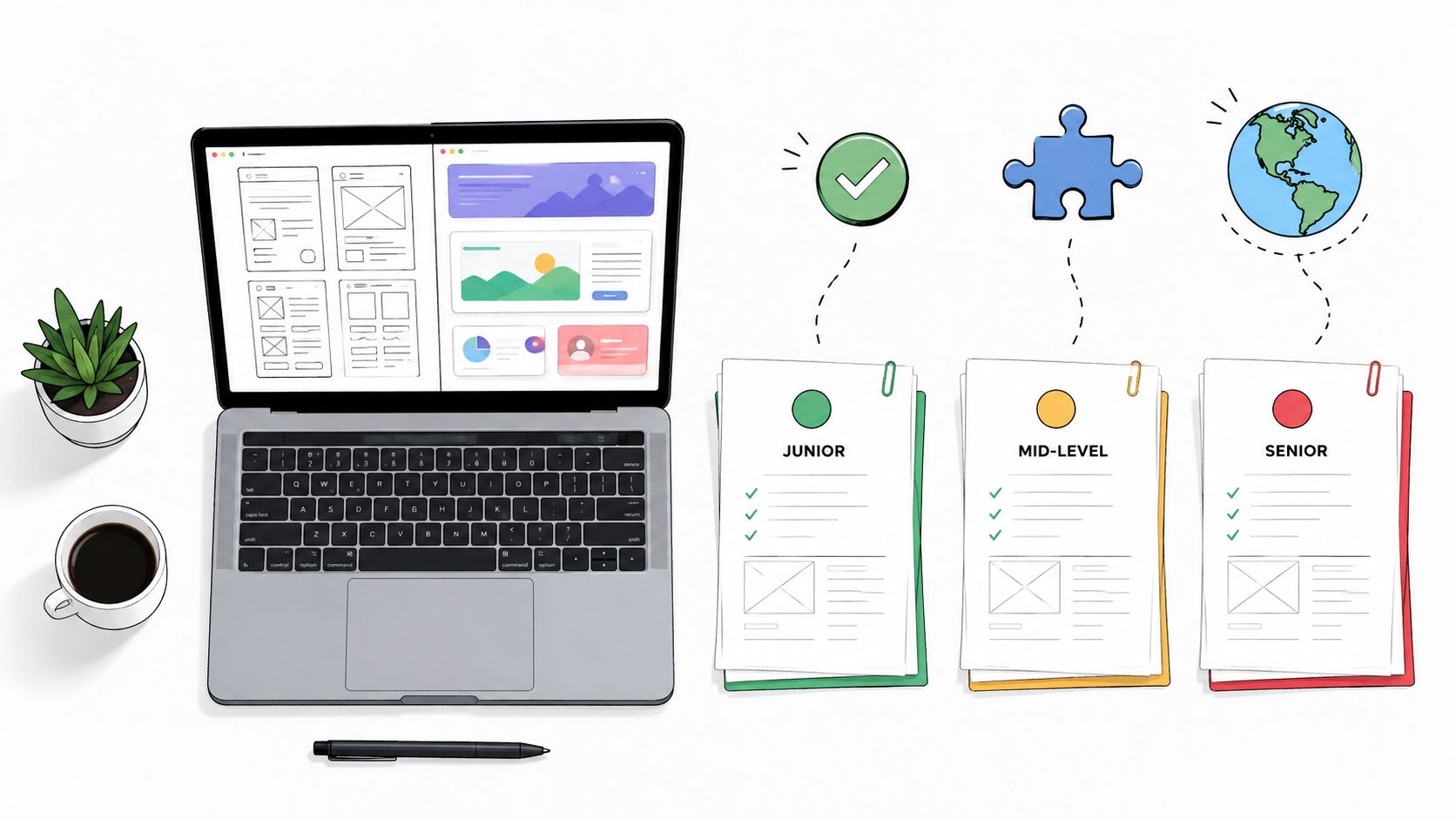
Most advice about a UX UI designer job description starts in the wrong place. It tells you to add more keywords, list every design tool you've heard of, and sprinkle in “fast-paced environment” until the posting sounds like it was assembled by a committee trapped in a conference room.
That approach fails. Strong designers don't want a mystery role disguised as an opportunity. They want to know whether they'll own research, interaction design, visual execution, accessibility, product decisions, or some unfortunate combination of all five. If your post doesn't answer that clearly, you'll spend weeks screening candidates who were never a fit, while the best people move on.
The discipline has been broader than visual polish for decades. Don Norman coined the term “user experience” at Apple in 1993, and Norman and Jakob Nielsen founded Nielsen Norman Group in 1998, helping formalize methods such as usability heuristics and user-centered design, as documented by Adobe's history of the user experience term. Your job post should reflect that maturity instead of pretending the role is “make our screens look nicer.”
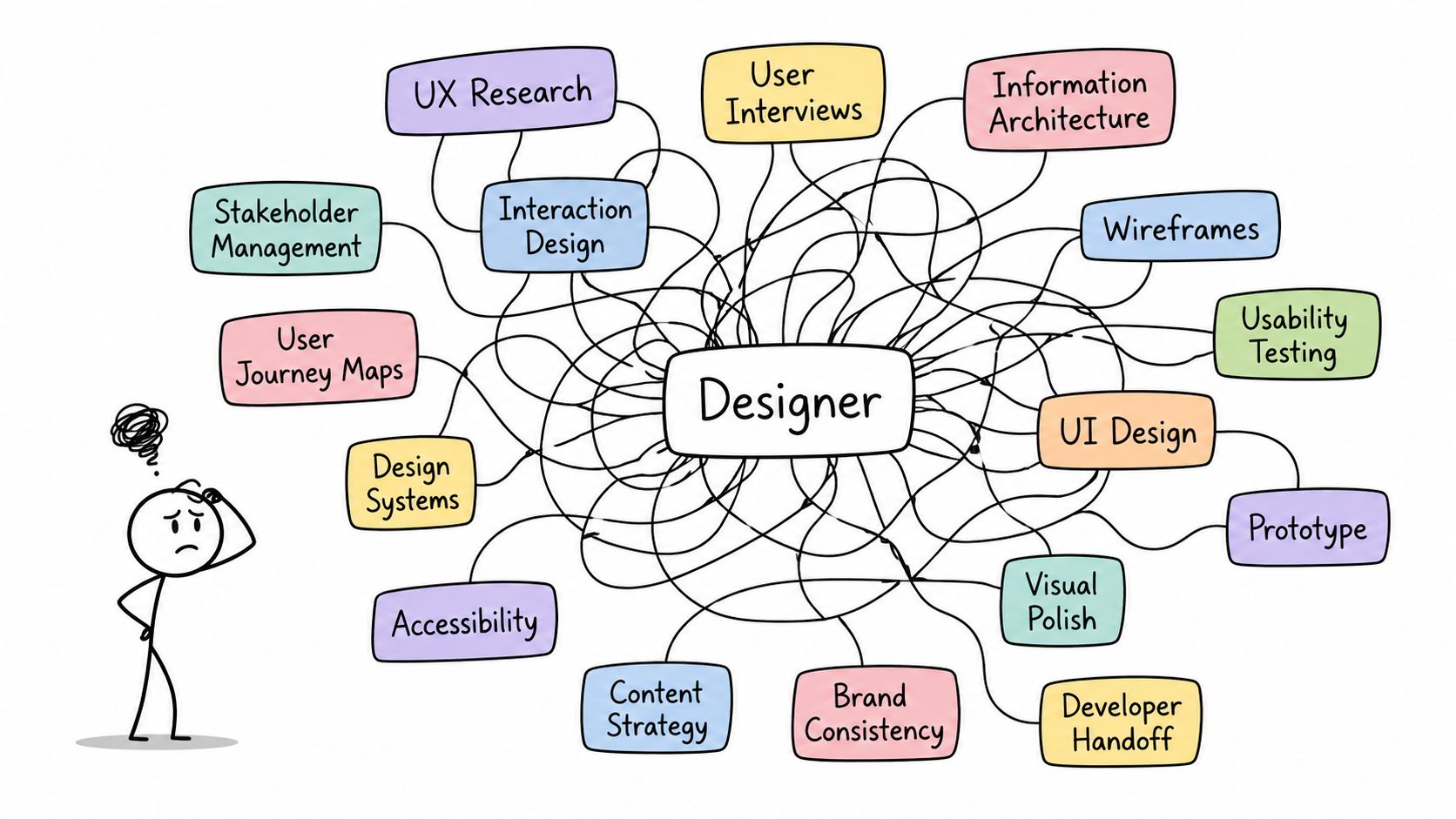
The most common mistake is bundling UX research, interaction design, interface production, design systems, front-end collaboration, and brand work into one vague title. Then the company adds “other duties as assigned,” as if that phrase has ever made a talented designer feel excited.
A generic post says, “We're looking for a UX/UI designer to create beautiful, intuitive experiences.” That sentence tells a candidate almost nothing. Does the designer interview users? Map workflows? Own product decisions? Build component libraries? Prepare developer specs? Test accessibility? Or just turn product-manager sketches into polished screens?
Strong candidates notice the ambiguity immediately. A specialist may worry that the company doesn't understand UX. A visual designer may fear being judged on research they've never been expected to own. A senior product designer may read the posting and conclude that leadership wants one person to perform an entire design department's work.
A sharp posting makes the operating model visible. Compare these two descriptions:
The second version attracts fewer random applicants, which is exactly the point. It gives qualified candidates enough information to self-select and gives interviewers a practical basis for evaluation.
The market itself reflects this tension. UX job postings in the United States reportedly rose 22% from 2022 to 2023, reaching more than 45,000 LinkedIn openings, according to Robert Half's UX designer market guide. In a crowded hiring environment, clarity isn't a cosmetic improvement. It's a filtering mechanism.
Practical rule: Write the job description so a designer can tell what they'll deliver in their first month, what decisions they'll own, and what work belongs to someone else.
Before writing bullets, choose the role architecture. Decide whether you need a UX specialist, a UI specialist, or a hybrid product designer. Then state the split between discovery and execution. That one decision will save more time than another round of résumé keyword filtering.
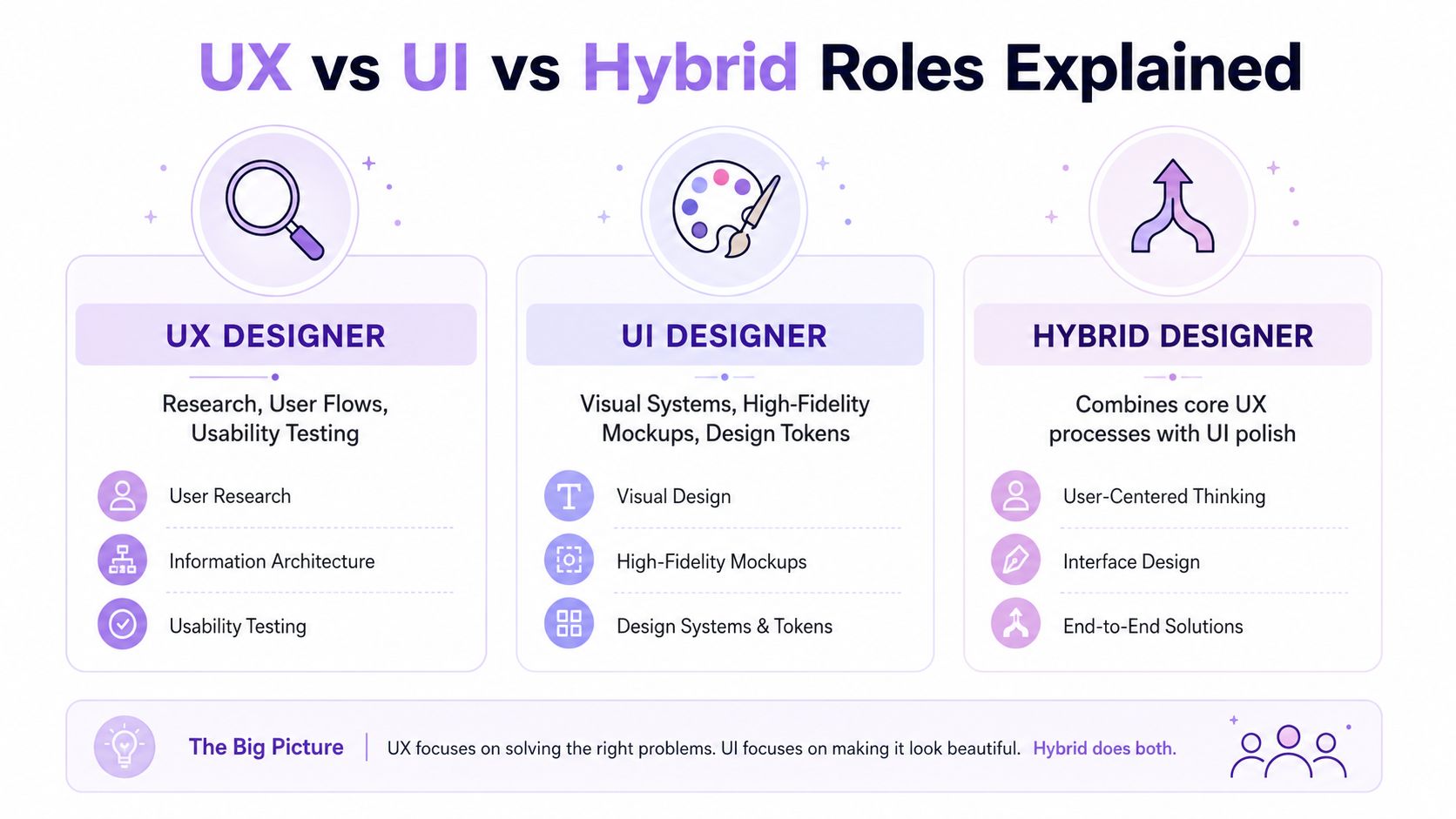
UX and UI aren't interchangeable labels, even though companies use them as if they were two fonts in the same dropdown menu. They overlap, but they solve different problems and produce different deliverables.
A UX designer focuses on how the product works and how people move through it. The role typically includes user interviews, workflow mapping, information architecture, user flows, wireframes, prototypes, and usability testing. UX designers investigate friction before they decorate the interface.
A UI designer owns the visual and interactive language of the product. That can include typography, color, spacing, iconography, responsive layouts, high-fidelity mockups, design tokens, component libraries, and visual consistency across product surfaces. UI designers make the structure legible, coherent, and usable at the interface level.
A hybrid UX/UI designer handles both. At a small company, that may be the right call. It may also be a spectacularly bad idea if the posting expects one person to conduct research, define strategy, create a design system, produce every screen, support implementation, and fix the website before lunch.
| Role | Primary ownership | Typical outputs | Hire this role when |
|---|---|---|---|
| UX designer | Research, structure, interaction | Interviews, journeys, flows, wireframes, usability findings | The product has complex workflows or unresolved user problems |
| UI designer | Visual execution and interface consistency | High-fidelity screens, visual rules, tokens, components | The product direction is clear but the interface feels inconsistent |
| Hybrid UX/UI designer | End-to-end feature design | Research, flows, prototypes, polished screens, handoff | The team is lean and needs one designer to carry a feature from discovery to build |
Team size and product maturity matter more than fashionable titles. A small startup with one designer may need a hybrid. A growing product team with dedicated research and engineering support may need an interaction designer or visual designer with narrower decision rights. A mature organization may increasingly separate UX Researcher, Interaction Designer, Visual Designer, Product Designer, and Design Systems Engineer roles, while smaller firms continue using the generic UX/UI title, as noted in Birjob's 2026 UX/UI role guidance.
Your posting should state who owns discovery, who approves product decisions, who maintains the design system, and who handles implementation questions. “Collaborates cross-functionally” is not a responsibility. It's a scented candle.
A hybrid role can work brilliantly when the company gives it a realistic scope, protected discovery time, and access to users. It fails when “hybrid” means “we want a senior designer at a junior budget.”
A useful posting describes work in sequence, not as a pile of fashionable nouns. Start with the problem, move through exploration and validation, then finish with implementation support and learning. That sequence shows candidates how the team designs.
The role should make clear that the designer works across wireframes, prototypes, high-fidelity designs, usability validation, accessibility, and developer handoff. Standards-oriented guidance also places information architecture, workflow mapping, user interviews, usability testing, and persona maintenance inside the practical scope of the role, as outlined in LHH's UI/UX designer job description guidance.
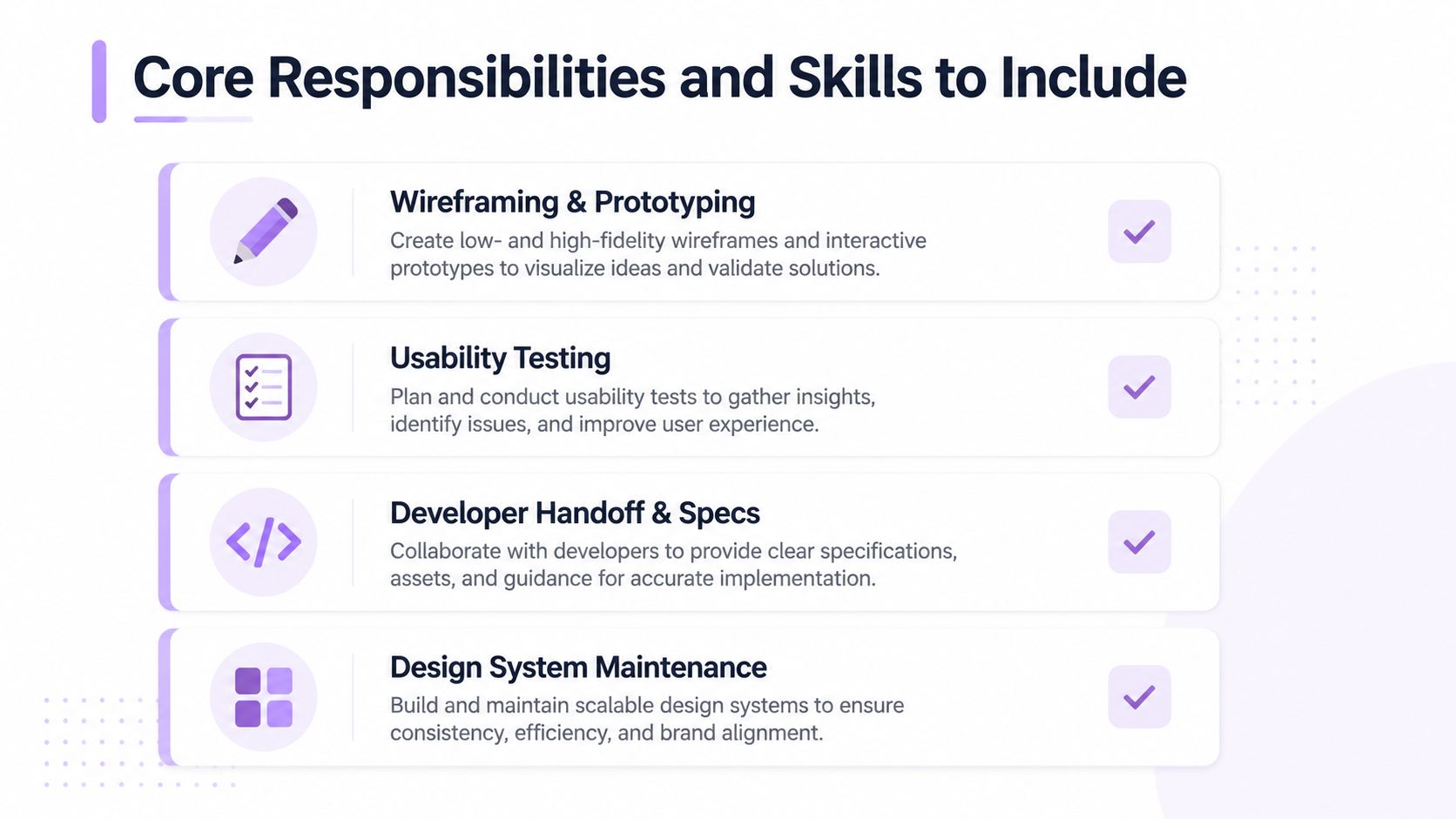
The required skills should match the work. Figma proficiency belongs in a modern interface role. Sketch may still matter if your team uses it, but don't list tools as trophies. Ask for experience moving from low-fidelity flows to production-ready assets and for evidence that the candidate has iterated after user feedback.
A sensible “required” list might include interaction design, prototyping, visual hierarchy, responsive design, accessibility awareness, and collaboration with developers. Nice-to-haves can include Webflow, Adobe tools, motion design, analytics experience, or familiarity with a particular industry.
Don't demand mastery of every research method, design tool, front-end framework, and branding discipline unless the role requires it. Candidates can learn software. They can't easily recover from a company that hired them for one job and evaluates them against another.
Designers who want to deepen their product thinking can also use essential UX books for SaaS as a practical reading resource, especially when the role touches workflows, onboarding, and retention.
The Bureau of Labor Statistics role description summarized by the Interaction Design Foundation reinforces the practical standard: digital interface designers develop and test layouts, interfaces, functionality, and navigation for usability across browsers or devices, while evaluating designs against web and accessibility standards.
Seniority shouldn't be a proxy for how many adjectives someone can tolerate. It should describe decision ownership, ambiguity, and expected output. These templates are designed for remote teams hiring across LatAm, with async documentation, deliberate overlap, and a clear growth path.
Role summary:
We're hiring a Junior UX/UI Designer to support feature discovery and interface execution. You'll work with a senior designer, product manager, and engineers to turn user needs into clear flows, prototypes, and polished interface designs.
Key responsibilities:
Required skills:
Nice to have: Experience with Sketch, Webflow, Adobe tools, design systems, or usability testing.
Remote and LatAm note: This role is open to remote candidates in Latin America who can maintain meaningful overlap with the core team's working hours. We'll provide structured feedback, mentorship, and a path toward owning complete features.
Role summary:
You'll own product features from discovery through implementation. You'll balance user needs, product goals, technical constraints, and interface quality without waiting for someone to convert every decision into a ticket.
Key responsibilities:
Required skills: A portfolio showing end-to-end feature ownership, strong Figma practice, prototyping fluency, usability testing experience, accessibility awareness, and confident cross-functional communication.
Nice to have: Experience with analytics, design tokens, Webflow, or SaaS products.
Remote and LatAm note: Remote candidates across Latin America are welcome. Success requires dependable async updates, written decision records, and agreed working-hour overlap with product and engineering.
Role summary:
You'll lead design strategy for important product areas, raise the quality bar, and mentor designers while remaining close to the work. You'll turn ambiguous customer and business problems into tested product direction.
Key responsibilities:
Required skills: A strong portfolio with complex product work, strategic judgment, advanced prototyping, systems thinking, stakeholder leadership, and experience influencing without direct authority.
Nice to have: Design leadership, accessibility specialization, AI-assisted product design, or experience scaling remote teams.
Remote and LatAm note: Candidates in Latin America should be comfortable leading asynchronously, mentoring across cultures, and creating written clarity when the team isn't in the same room.
For more guidance on turning scope into a usable posting, compare these templates with LatHire's job description creation guide.
| Seniority level | US annual salary | LatAm remote annual salary | UK annual salary |
|---|---|---|---|
| Junior | $70k-$90k | Varies by market and contract | Varies by market and contract |
| Mid-level | $90k-$120k | Varies by market and contract | Varies by market and contract |
| Senior | $120k-$150k+ | Varies by market and contract | Varies by market and contract |
The table's US bands are useful only as a planning frame, not a promise. Published guides also show broad variation by level and market, including US ranges from $98,859 to $120,760 annually, as well as UK ranges from £29,036 to £60,586 and Canadian ranges from C$60,000 to C$118,835, summarized in the market data cited earlier.
Compensation becomes easier to discuss when the role has a defined level. A senior designer who owns strategy, systems, and mentorship shouldn't be priced like a production-focused junior role, and a hybrid role shouldn't inherit specialist expectations without corresponding compensation.
One 2026 market snapshot reported 205 active UX designer openings in the CIS and Europe with a median salary of $5,460 per month, while another source reported US UX median pay of $149,000 per year. Those figures come from different markets and methodologies, so don't mash them into one global benchmark. Use them to understand why geography, specialization, and seniority must appear in the posting, not remain hidden until the offer stage.
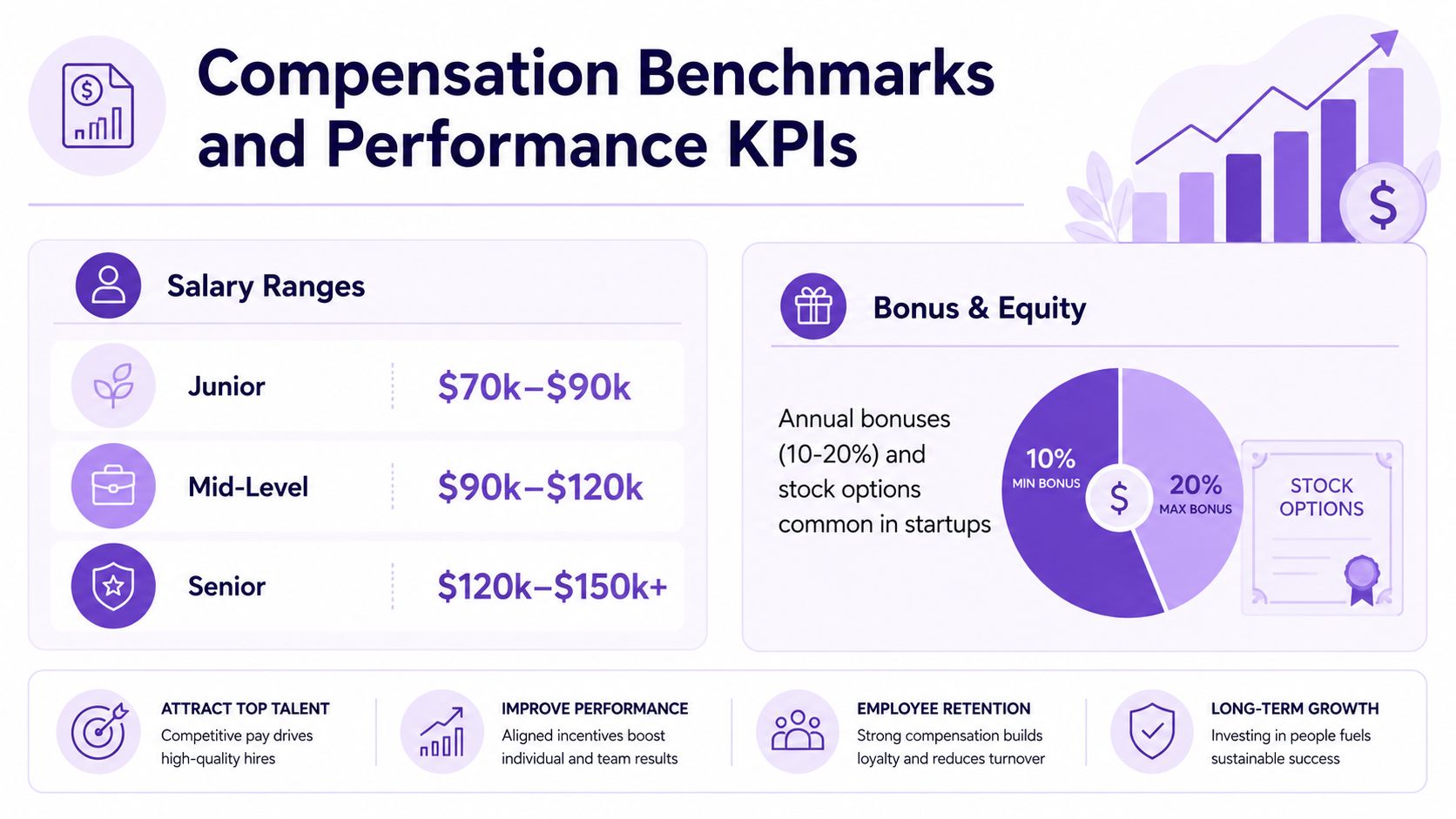
Remote compensation varies widely. Independent snapshots describe remote UX/UI pay from roughly the mid-$60Ks in startups to above $120K in broader remote markets, with remote UX designer compensation often higher than UI-only roles, according to Built In's remote UX designer salary guide. Don't advertise a “senior” role while offering a junior budget and hoping the word “mission” closes the gap.
Equity, bonuses, benefits, contractor status, currency, and payment timing should be explicit. Candidates can make an informed choice when the package is clear. They become suspicious when the salary is “competitive” but the company publishes three paragraphs about free coffee.
A designer's impact shouldn't be judged by personal taste or the number of screens delivered. Use a small set of outcome and process indicators:
Write these expectations into the role without promising a particular improvement. A KPI should guide investigation, not pressure a designer to manufacture a flattering number.
The unpaid take-home assignment is often a lazy substitute for a hiring process. Senior candidates have real jobs, families, and enough experience to recognize when a “small exercise” is a weekend project wearing a fake mustache.
Use three formats instead. Each reveals a different skill without demanding a speculative redesign of your product.
Give the candidate a bounded problem and a short working session. For a junior candidate, ask them to sketch an appointment-booking flow. For a mid-level candidate, ask them to improve a confusing subscription-change workflow. For a senior candidate, ask them to frame a multi-step enterprise approval problem before proposing solutions.
Watch how they clarify the user, constraints, and success criteria. The final sketch matters less than their ability to expose assumptions, invite critique, and iterate without becoming emotionally attached to the first rectangle they draw.
Ask the candidate to choose one project and walk through it from problem framing to shipped outcome. Probe the decisions that polished portfolios tend to hide:
A portfolio presentation shouldn't become a ceremonial tour of attractive mockups. The UX designer interview question guide from LatHire can help interviewers prepare questions that expose judgment rather than presentation polish.
For a narrowly defined role-relevant task, offer a paid exercise lasting 4 to 6 hours at the candidate's hourly rate. Give the same brief to each finalist, define the expected deliverables, and don't use the work commercially without explicit agreement.
Ask juniors to create a simple flow and prototype. Ask mid-level designers to propose and test a feature direction. Ask seniors to explain the product tradeoffs, research plan, system implications, and rollout risks. Evaluate clarity, iteration speed, tool proficiency, communication, and respect for constraints.
Nearshore hiring works best when you treat LatAm as a professional talent market, not a discount aisle. Designers in Brazil, Mexico, Argentina, and Colombia work across product, agency, SaaS, and technology environments, and many teams can build useful overlap with US colleagues.
The practical advantage is time. LatAm designers can often overlap 5 to 7 hours with US teams, which supports live critiques, product planning, and developer handoff without forcing either side into a midnight schedule. Remote hiring can also produce 40% to 60% savings compared with US salaries, depending on seniority, contract structure, benefits, and market. Treat those figures as planning ranges, not a guarantee.
Language and culture still need active management. Write decisions down, use clear critique language, document ownership, and test collaboration during interviews. A good candidate doesn't need to share every cultural reference with the team. They need to explain design reasoning, handle disagreement, and communicate reliably.
Legal compliance is where many founders discover that “we'll figure out payroll later” was not a strategy. Contracts, payments, benefits, worker classification, and local requirements deserve professional handling. LatHire connects companies with pre-vetted Latin American professionals and provides support for HR, international payroll, benefits, and legal compliance, as described on its remote LatAm designer sourcing service.
Import your finished job description into LatHire, request matching candidates, and move directly into structured portfolio reviews and assessments. You can get matched with pre-vetted candidates in 24 hours, giving you a practical alternative to the six-week recruiting slog.
Stop publishing “make it intuitive” and calling it a hiring strategy. Define the role, name the deliverables, publish a credible compensation frame, and use an assessment that respects the candidate's time. Then put your completed UX/UI designer job description into a focused sourcing workflow and start interviewing people who want the job you meant to post.