

Calling someone an “independent contractor” and paying an invoice doesn't settle international contractor payroll for a U.S. medical practice. A remote medical receptionist, patient coordinator, billing specialist, or virtual assistant may still be treated as an employee under applicable rules, especially when the practice sets fixed hours, provides detailed instructions, supplies tools, and integrates the worker into a core workflow.
The financial issue is only part of the exposure. A practice must also establish the worker's foreign status, assess withholding and reporting duties, account for currency and settlement costs, and determine whether the worker handles protected health information. If the person accesses PHI on behalf of the practice, payroll onboarding must connect with HIPAA privacy contracting and security controls.
A defensible process starts before the first payment: document classification, collect the right tax forms, define payment terms, assess local obligations, and execute appropriate privacy agreements. The sections below explain how to apply that process to remote healthcare staffing, where operational control and patient-data access can make a contractor arrangement more complicated than it first appears.
The most common mistake is treating the signed contractor agreement as the compliance file. A contract is evidence, but it doesn't override the actual working relationship. If a practice directs how a virtual receptionist works, requires a fixed schedule, provides training and equipment, and makes the role central to patient operations, the arrangement may look less like an independent business and more like employment.
International contractor payroll is also different from domestic invoice processing because several systems overlap. The practice may be in the United States, the worker may perform services in Latin America, and the patient, software, or billing relationship may involve another jurisdiction. Employment classification, tax reporting, social protection, payment records, and privacy obligations can follow different rules.
Practical rule: Treat the worker's location and day-to-day control as compliance facts, not administrative details.
The scale of cross-border labor income helps explain why payment reliability matters. The World Bank estimated officially recorded remittances to low- and middle-income countries at approximately $656 billion in 2023, an amount equivalent to Belgium's GDP, and projected approximately $685 billion for 2024, representing 5.8% growth from 2023. These figures describe remittances, not contractor payroll, and shouldn't be treated as the same category. They do show why delayed, opaque, or poorly documented international payments can affect household finances and broader economic flows. The World Bank's remittance analysis provides useful context.
A practice can have a reliable clinical workflow and still miss basic payroll controls. Typical gaps include:
A payroll platform or payment tool can help organize records. For example, a practice comparing workflow options may review Tutorbase payroll alongside its accounting and compliance processes. No platform removes the need for a documented decision about classification, tax status, or PHI access.
The high-level answer is straightforward, even though execution requires care: align worker classification, tax documentation, payment controls, and privacy agreements before funds change hands. That sequence gives the practice an audit trail and makes it easier to identify when a contractor model no longer fits the work.
Misclassification begins when the practice evaluates the label instead of the relationship. The U.S. Department of Labor's economic-reality framework examines the worker's opportunity for profit or loss, investments made by the worker and the business, permanence, control, whether the work is integral to the business, and specialized skills or business initiative. The assessment considers the relationship as a whole and asks whether the worker is economically dependent on the practice. The Department of Labor's classification FAQs explain the framework.
The IRS uses a related control analysis. It considers behavioral control, financial control, and the type of relationship, including instructions, training, expenses, tools, benefits, and the parties' ongoing expectations. No single factor decides the result, so a signed agreement can't cure day-to-day facts that point in the opposite direction.
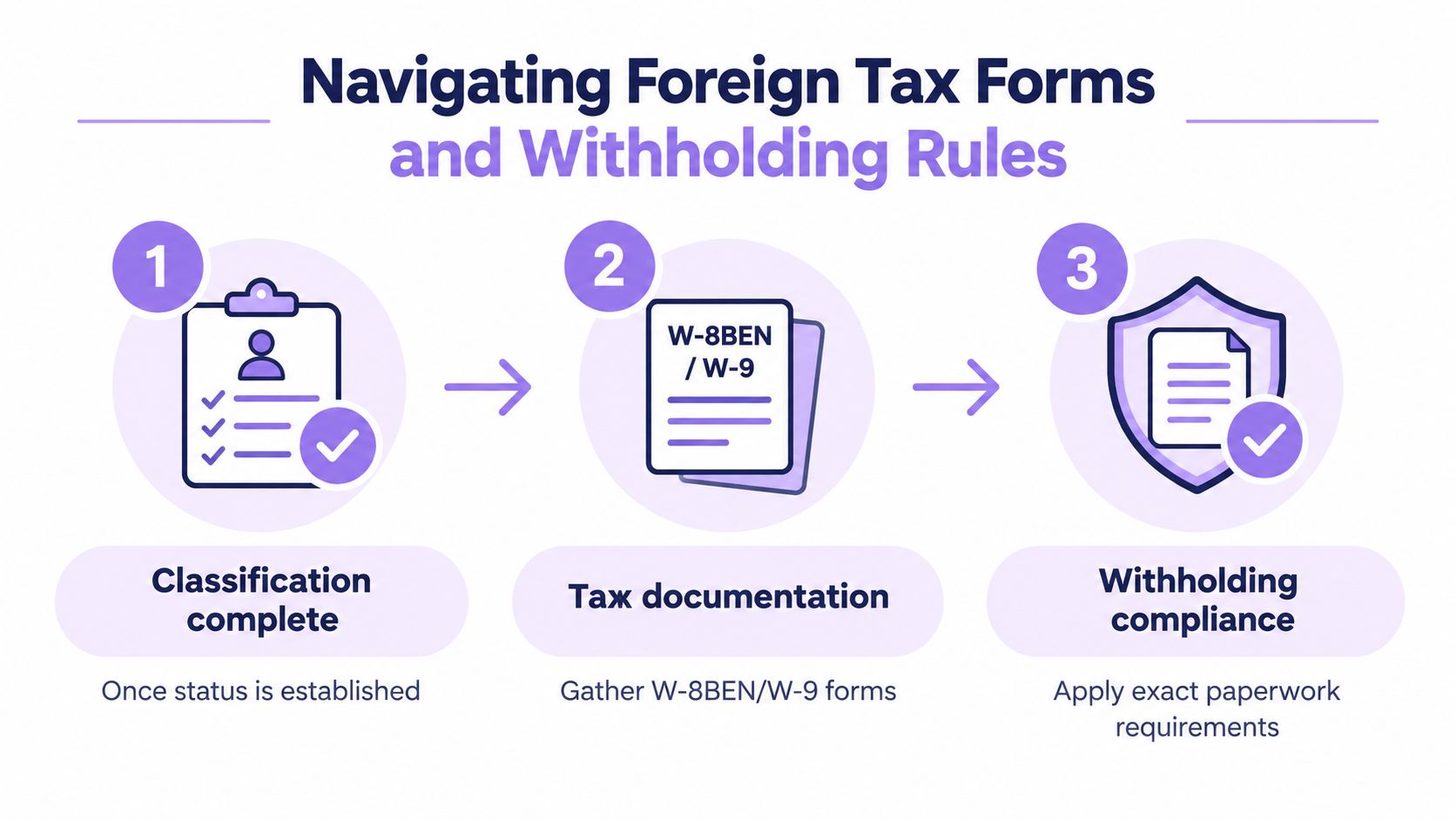
Consider a virtual medical receptionist who chooses the methods, tools, and working hours for serving several clients, invoices by project or defined service, and operates an established business. Those facts support independence, although they don't resolve the analysis.
Now change the facts. The practice requires the receptionist to work the front desk's exact schedule, follow mandatory scripts, attend recurring staff meetings, use practice equipment, complete ongoing training, and remain available only to that practice. The role may now carry stronger employee-like characteristics, particularly if the worker is economically dependent on the practice.
A prior-authorization specialist creates a similar distinction. A specialist who supplies an independent service, controls the process, and serves multiple organizations may present a different profile from a person who works under continuous supervision, follows internal procedures, and performs an integrated function that the practice manages like any other staff role.
Use a written checklist rather than relying on the contract label. The file should capture:
For a U.S.-connected arrangement that remains uncertain, either party may request an IRS Form SS-8 determination. That process isn't a substitute for prospective controls, and a practice shouldn't use it as a reason to delay a careful review.
A classification worksheet can be supported by automation, just as practices use AI tools for attorney productivity to organize legal workflows. Automation can prompt for missing facts and preserve versions, but qualified counsel should review difficult cases. Practices can also use a contractor classification workflow to keep evidence, approvals, and revalidation dates together.
Once classification is documented, tax onboarding should establish who the payee is, where services are performed, and which reporting rules apply. A foreign contractor's paperwork isn't interchangeable with a U.S. contractor's paperwork. The IRS explains that payments to nonresident aliens may be subject to a 30% withholding rate unless a treaty or another legal rule provides a reduced rate or exception. The IRS guidance on payments to nonresident aliens describes the status and withholding issues.
First, establish foreign or U.S. status. Collect the appropriate tax documentation and verify that the name, address, and status information are consistent with the contract and payment records. If the payee's status can't be determined, IRS presumption rules may require treatment as a non-exempt U.S. person and backup withholding.
Next, confirm the service location. Ask where the worker physically performs the services, not where the practice is headquartered or where the patient is located. Keep evidence of the answer, and update it if the worker relocates or works from another country.
Then, review treaty and withholding questions. Don't assume that a foreign form automatically removes withholding. A treaty position, source-of-income analysis, or exception may require specific information, and the practice should obtain tax advice when the facts are unclear.
After that, classify each payment in the ledger. Separate service fees, reimbursements, taxable benefits, adjustments, exchange-rate differences, and payment fees. The accounting record should show how the approved amount became the amount transmitted and the amount received.
Finally, calendar reporting deadlines and recheck the file. Forms, thresholds, and filing procedures can change. Assign ownership to a named finance or operations employee instead of assuming that the practice manager or worker will remember.
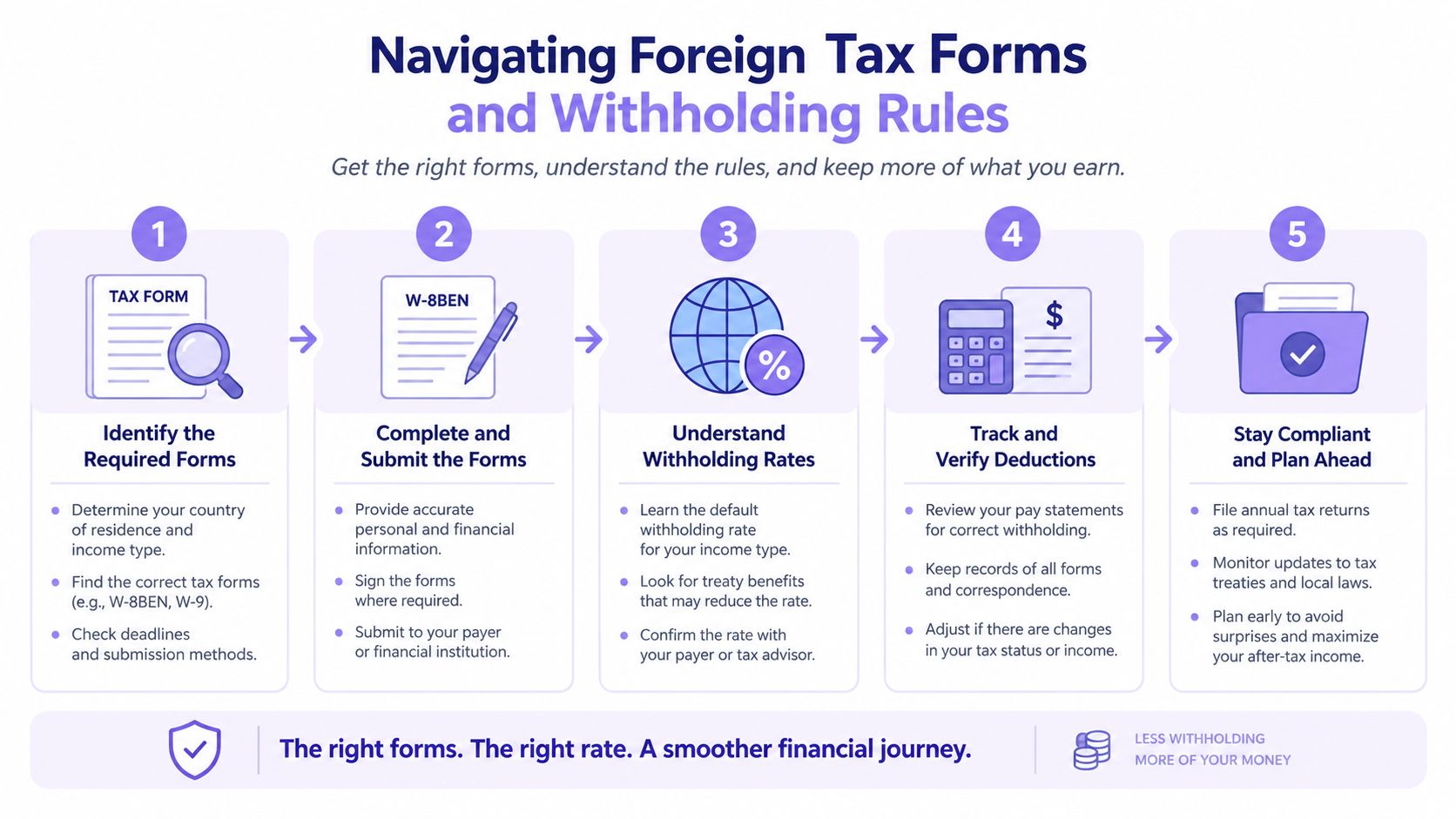
For qualifying payments made in the course of a trade or business to a person not treated as an employee, Form 1099-NEC generally applies. The IRS states that payments of at least $600 during the calendar year generally trigger reporting for services, while its current FAQ identifies a $2,000 threshold for payments made after December 31, 2025. The IRS contractor reporting guidance explains why practices must track the payment year rather than rely on an outdated checklist.
Form 1099-NEC isn't a substitute for Form W-2 when the worker is an employee. The IRS also requires filers with 10 or more information returns to e-file, so the practice should review its filing process as its contractor population changes.
A practical onboarding folder should contain the signed agreement, classification assessment, service location, tax form, withholding decision, payment instructions, invoice basis, and approval record. A W-8BEN explanation for practices can help staff understand the form's role, but it shouldn't replace tax advice for unusual arrangements.
The invoice amount isn't the worker's take-home pay. A contractor in Latin America may lose value through the exchange-rate spread, transfer fees, wallet charges, intermediary deductions, or a delay between approval and settlement. The practice should evaluate the complete payment path instead of comparing only the headline fee shown at the beginning of a transaction.
Available reporting illustrates why a single “average cost” is misleading. One 2025 to 2026 global payments analysis placed average cross-border payment costs at roughly 1.6%, with exchange-rate margins accounting for about 1.4 percentage points, while another analysis reported average transaction costs of 6.25%, depending on method and corridor. Separate reporting found that 52% of international contractors face currency-conversion fees averaging 3% to 5%. These figures aren't interchangeable, so a practice should model its own corridor and payment rail. The cross-border payment analysis provides the relevant comparison and cautions.
| Payment Method | Typical Fees & FX Spread | Settlement Time | Best Use Case |
|---|---|---|---|
| Bank transfer | May include bank charges, intermediary deductions, and an exchange-rate margin | Can vary by corridor and banking network | Established contractors who prefer direct bank settlement |
| Digital wallet | May combine wallet fees, conversion costs, withdrawal charges, and account limits | Often depends on the wallet and local withdrawal process | Smaller recurring payments where the worker already uses the wallet |
| Card-based payout | May carry card, conversion, and receiving costs | Depends on issuer and settlement rules | Situations where the worker needs a familiar payment instrument |
| Local payout network | May provide local-currency settlement with provider-specific conversion terms | Depends on local rail and provider controls | Regular payments where predictable local receipt matters |
The table is a decision aid, not a fee quote. Costs vary by corridor, currency, payment rail, provider, and who absorbs each charge. Ask each provider for the amount the worker receives in local currency, the exchange-rate timestamp, all deductions, expected settlement time, and the practice's total cost.
The contract should state whether the service fee is denominated in U.S. dollars or local currency, which exchange rate applies, when the rate is fixed, and who bears movement between invoice approval and settlement. It should also address rejected transfers, incorrect account information, intermediary deductions, and what happens when a payment is delayed for compliance review.
A simple internal worksheet can show three values:
Don't promise a fixed local-currency outcome unless the practice or provider is taking that risk. Instead, disclose the calculation before approval and keep the payment confirmation with the invoice. This transparency helps a medical practice distinguish a fair rate from a payment process that shifts all currency risk to the contractor.
Payroll onboarding becomes a privacy decision when the worker can view patient information. A virtual medical receptionist may handle names, contact details, appointment information, and messages. A patient coordinator may access scheduling notes, insurance details, or referral records. Billing and prior-authorization staff may work with claims and clinical documentation. The role title doesn't determine the privacy obligation. Access and function do.
HHS states that the HIPAA Privacy Rule requires covered entities to enter into written contracts or other arrangements with Business Associates that protect the privacy of PHI. Those arrangements should define permitted uses and disclosures, require appropriate safeguards, address breach reporting and subcontractors, and control access to systems containing patient information. HHS guidance on Business Associates sets out the requirement.
A contractor agreement governs the commercial relationship. A classification file supports the worker-status decision. Tax forms support U.S. reporting and withholding analysis. A Business Associate Agreement addresses PHI handling. One document shouldn't be expected to do all four jobs.
A practice should determine whether the worker or service organization is acting as a Business Associate before access is granted. If so, the BAA should align with the actual workflow, not use broad language that fails to identify the systems and activities involved.
Useful BAA topics include:
HIPAA requirements aren't the same as a generic security checklist. A tool isn't “HIPAA certified” merely because a vendor uses that phrase, and HHS doesn't recognize an official HIPAA certification. The practice must evaluate the arrangement, execute required agreements, configure access, and maintain its own compliance program.
A scheduler may need access to appointment availability but not full clinical notes. A billing support specialist may need claims information but not unrestricted access to unrelated patient records. A remote receptionist may need a secure messaging and scheduling workflow without permission to export patient lists.
Use role-based access, named accounts, multifactor authentication where available, least-privilege permissions, documented training, and prompt access removal when the engagement ends. These are recommended safeguards, not replacements for the legal analysis. The practice should also confirm its obligations with qualified healthcare compliance counsel, especially when the worker, vendor, or data is outside the United States.
Manual processes fail when information is scattered across email, spreadsheets, a bank portal, a practice-management system, and separate contract folders. A unified platform can reduce duplicate entry by connecting candidate records, agreements, tax documentation, payment approvals, contractor records, and reconciliation evidence. It can't make an uncertain classification lawful, but it can make missing steps visible.
The useful question isn't whether a platform has the most features. Ask whether it creates an audit-ready record for the decisions your practice makes.
Classification support: Can the system capture service location, control factors, duties, revalidation dates, and reviewer approval?
Tax workflow: Can it collect and protect the appropriate forms, distinguish U.S. and foreign status, track payment-year reporting, and document withholding decisions?
Payment transparency: Can the practice see the exchange rate, fees, settlement status, local receipt, and reconciliation from invoice to bank record?
Healthcare privacy boundaries: Does the platform avoid unnecessary PHI, support appropriate agreements where applicable, and integrate with the practice's access and incident procedures?
Local knowledge: Does it distinguish contractor payments from employment arrangements and identify when an employer-of-record or locally compliant employment structure may be more appropriate?
Human review: Can a finance, legal, or compliance reviewer override an automated workflow and record the reason?
A provider may offer contractor-of-record services, international payroll support, local payouts, or document management. Those services aren't interchangeable. A contractor-of-record structure may change who bears certain local employment responsibilities, while a payment platform may only transmit funds. Read the service agreement and identify which obligations remain with the medical practice.
Platforms such as international payroll services from LatHire can be evaluated alongside banks, wallets, payroll providers, and local counsel. LatHire is one possible option for practices seeking pre-vetted Latin American professionals and support for contracts, cross-border payments, currency conversion, tax compliance, and local labor-law considerations. Practices should compare scope, pricing, data handling, review rights, and responsibility allocation before selecting a provider.
A sensible implementation starts with one role and one payment corridor. Document the classification file, tax forms, privacy agreement, invoice approval, payment calculation, and reconciliation. Review the first payment cycle with finance and compliance staff, then expand only after the controls work in practice.
International contractor payroll for medical practices is not a matter of merely approving invoices. The practice must connect worker classification, foreign tax documentation, payment economics, local obligations, and HIPAA privacy controls before remote staff receive access or compensation.
Start with a role-specific classification file, verify where services are performed, collect the right tax documentation, model the worker's actual net receipt, and determine whether a BAA and access controls are required. Reassess the arrangement when duties, supervision, schedule, location, or system access changes.
If your practice is hiring a remote healthcare worker, begin with a documented review rather than a contractor label. A qualified tax adviser and healthcare compliance professional can help resolve jurisdiction-specific questions, while a suitable payroll or workforce platform can keep the resulting process organized and traceable.
Ready to formalize your remote staffing workflow? Review your next contractor arrangement against classification, tax, payment, and PHI-access requirements, then speak with a qualified compliance adviser or evaluate a platform that can support the full process before the first payment.