

You've got a product deadline, a thin local talent pool, and a backlog that keeps breeding in the dark. The obvious answer seems simple: hire offshore developers, save money, and get moving.
Then reality arrives. Resumes don't match the actual skill level, interviews happen at miserable hours, contracts sit in legal limbo, and your engineering lead spends more time coordinating than building. The salary looks cheap. The process certainly isn't.
How to hire offshore developers without turning your internal team into a recruitment department comes down to one principle: automate the repetitive work, then keep experienced humans in charge of judgment, compliance, and relationships. AI can search and rank candidates quickly. It can't replace accountability, context, or a sensible manager.
Traditional offshore hiring often begins with a job post and ends with a spreadsheet nobody trusts. You publish the role across generic boards, receive a flood of profiles, and start checking whether “expert in Python” means production experience or a weekend tutorial. Hope you enjoy spending your afternoons fact-checking resumes and running technical interviews, because that's now your full-time job.
The problem isn't that offshore developers lack talent. The problem is that manual recruiting gives you weak signals at the exact point where mistakes are expensive. A polished resume can hide shallow experience, poor communication, or a history of disappearing when the work gets ambiguous.
Founder's rule: If your senior engineers are screening every resume, your hiring process is already stealing from product delivery.
Generic job boards optimize for volume. You need relevance. A hiring manager looking for a senior full-stack developer with cloud architecture experience, strong written communication, and availability during North American working hours doesn't need more profiles. They need fewer, better-matched candidates.
Manual recruiting also creates a nasty administrative loop:
That final item matters. Strong developers usually have options, and slow hiring processes make your company look disorganized before the first interview ends.
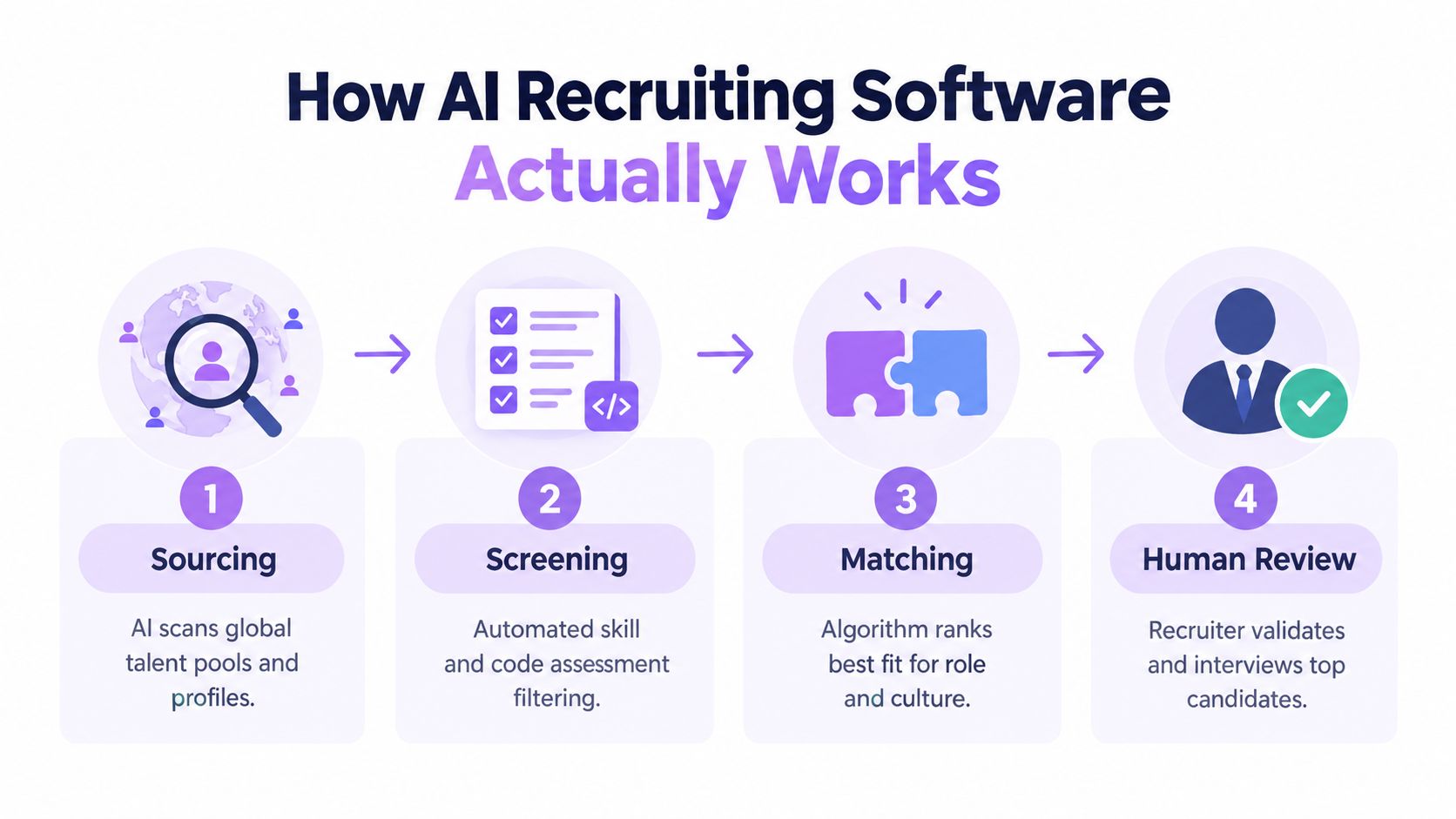
A practical guide to recruiting interviews can help teams structure evaluation, but a better process still needs a better funnel. AI recruiting software handles the repetitive front end by sourcing across wider talent pools, screening against defined requirements, and ranking candidates before your team spends valuable interview time.
The useful version of AI recruiting doesn't pretend an algorithm can understand everything about a developer. It handles pattern-heavy work, then gives a human reviewer enough evidence to make a sharper decision.
That means importing or generating a precise job description, defining must-have skills, testing practical capability, and checking communication before a candidate reaches your calendar. It also means keeping human validation in the loop, especially for identity, employment history, worker classification, and cultural fit.
Turns out there's more than one way to hire elite developers without mortgaging your office ping-pong table. The winning approach isn't “AI replaces recruiting.” It's AI removes recruiting busywork so humans can focus on hiring judgment.
The salary difference is real, but it's only the first line in the calculation. Companies hire offshore developers because local supply often can't keep pace with demand, particularly for specialized roles in AI, cloud, and cybersecurity.
ManpowerGroup's 2026 Talent Shortage Survey summary reports that 72% of global employers can't find the skilled workers they need, while 76% of companies in IT report difficulty hiring. That makes offshore hiring more than a cost-cutting trick. It's a way to reach skills your local market may not provide quickly enough.
A 2026 offshore salary index covering 41 roles across 8 countries found that offshore hires cost an average of 66% less than comparable U.S. Bureau of Labor Statistics median wages. The reported range runs from 36% to 86%, depending on the role and location.
The examples make the point better than a slogan. A senior offshore full-stack developer in Poland costs about $90,000 per year, compared with a U.S. senior median of $159,500, a 44% saving. A mid-level machine learning engineer in India costs about $37,800, compared with a U.S. median of $135,000, or 72% less.
Those figures explain why offshore development matured into a durable model. But don't build your business case around salary alone. Your actual cost includes recruiting, assessments, payroll, legal support, onboarding, management time, communication, rework, and the cost of replacing someone who leaves.
The advertised monthly price can look even lower. One offshore developer cost guide places a dedicated full-time offshore developer at about $1,550 per month, with an average around $1,750 and senior specialists reaching roughly $2,500. The same guidance makes the point many pitch decks conveniently omit: you still have to onboard and manage that person like a real employee.
Distributed teams can spend 25% to 70% of total development effort on coordination rather than coding, according to research summarized in this distributed software development study. Applied to a 160-hour monthly workload, that represents roughly 40 to 112 hours per developer spent on communication, handoffs, and dependency management.
That doesn't mean every offshore team loses that amount. It means poor structure can consume the advantage before you notice it. Tightly coupled modules, unclear ownership, constant cross-team reviews, and shared release pipelines create waiting lines disguised as collaboration.
My recommendation is blunt: use offshore hiring for specialized capacity and scalable delivery, not as an excuse to avoid designing a real engineering system. Define service boundaries, document interfaces, assign ownership, and make asynchronous handoffs explicit. Otherwise, you're not scaling engineering. You're scaling meetings.
AI recruiting software is useful when it replaces low-value sorting with structured evidence. It's less useful when it produces a shiny dashboard full of candidate scores nobody can explain.
The basic workflow should be simple enough for a founder, recruiter, and engineering lead to understand.
First, define the work. A vague request for a “rockstar developer” creates vague matches. Specify the stack, seniority, ownership expectations, product context, communication requirements, and time-zone needs.
Then let the platform source across relevant talent pools and profiles. AI saves time, because it can compare large volumes of information consistently instead of relying on whoever happened to read a resume first.
Next comes screening. Good systems use skills evaluations and technical assessments to test whether someone can reason through practical work. That's far more useful than rewarding candidates who've memorized interview puzzles.
The shortlist should show evidence, not just a score:
Candidates then move to human review. A recruiter or hiring manager validates the results, interviews the strongest matches, and tests how the person handles ambiguity. That final step matters because software delivery is full of incomplete requirements. A developer who asks useful questions beats one who merely ticks every keyword box.
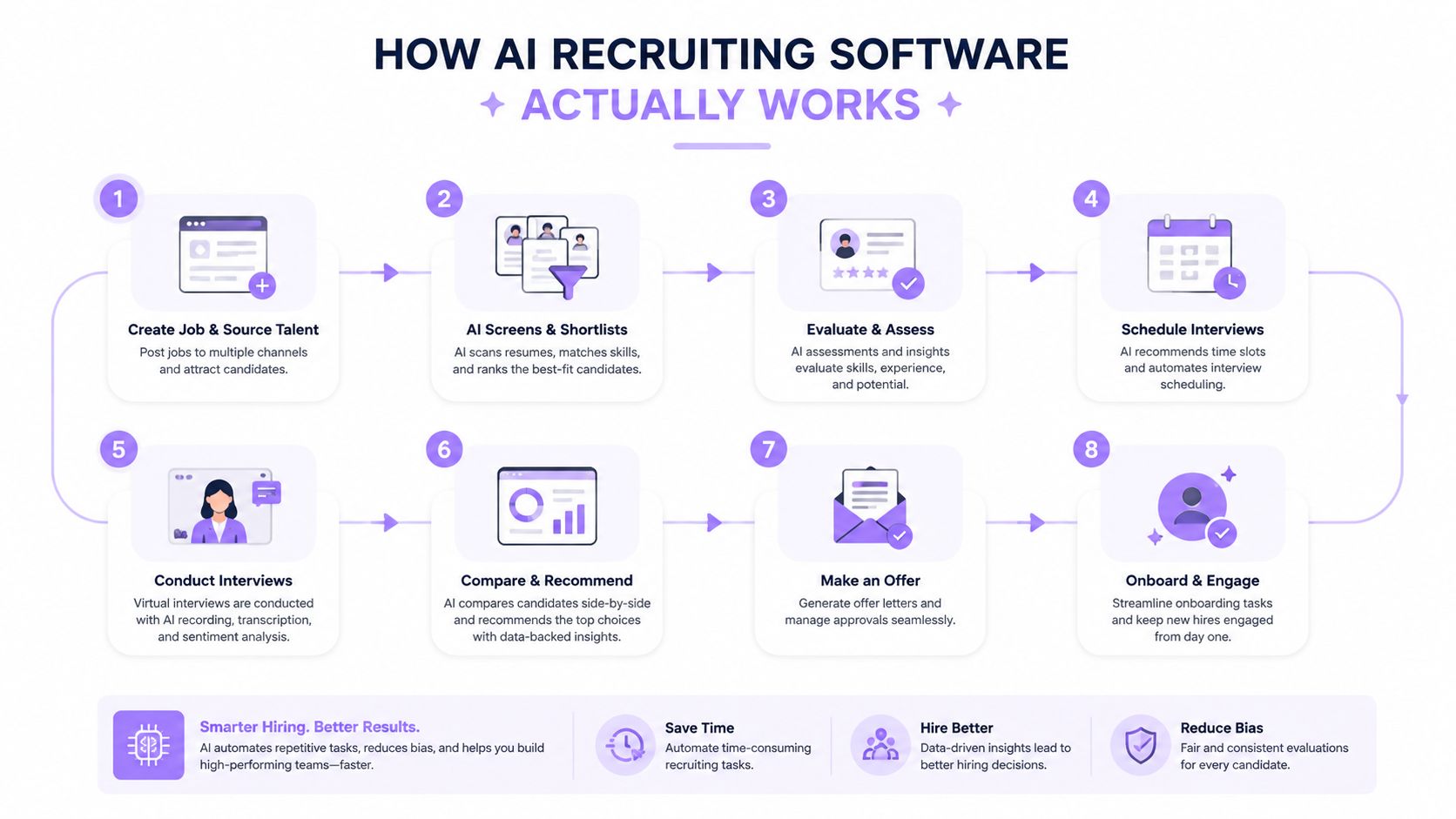
Don't buy based on the phrase “AI-powered.” Ask how the platform evaluates technical ability, what humans verify, how candidate data is handled, and whether your team can inspect the reasoning behind a match.
You'll also want to understand how the system fits your existing process. Tools such as AI-powered recruitment tools should reduce duplicate work, not force recruiters to maintain another isolated database.
Run a small test with a real role. Compare the quality of the shortlist, the clarity of the evidence, and the time your team spends reviewing candidates. If the platform gives you more profiles but no confidence, it hasn't solved the problem. It has automated the noise.
There's no universally best offshore region. There's only a region that fits your technical needs, budget, communication rhythm, and working hours.
The pricing spread is wide. A 2026 offshore software development rates guide reports hourly rates from about $15 to $120, depending on region and seniority. Its regional averages place Eastern Europe at $37 per hour, Latin America at $50, Asia at $28, and Western Europe at $66.
Those averages are useful for orientation, not procurement. Seniority, scarcity, role complexity, and engagement model can move the final rate substantially. The cheapest regional average won't help if your team loses a day waiting for basic clarification.
| Region | Avg Hourly Rate | US Time-Zone Overlap |
|---|---|---|
| Eastern Europe | $37/hour | Limited, depending on location |
| Latin America | $50/hour | Strong, especially for North American teams |
| Asia | $28/hour | Limited for most U.S. teams |
| Western Europe | $66/hour | Limited to moderate, depending on location |
Research on offshore software development finds that fewer overlapping hours create the main productivity penalty, pushing teams toward asynchronous communication and slowing rapid clarification. A question raised at one team's end of day may sit unanswered until the other team starts work.
An industry guide on time-zone overlap for distributed teams identifies 4 hours as minimum viable overlap for software development and 6 or more hours as comfortable overlap. Treat those figures as operating guidance, not a universal law. Architecture work, incident response, and tightly coupled product development need more live collaboration than isolated maintenance tasks.
Choose Eastern Europe when deep technical specialization and European collaboration hours fit your operating model. Choose Asia when the talent pool and price profile make sense and your team has strong documentation and handoff discipline. Choose Latin America when North American overlap matters enough to justify the higher regional average.
That last option is often the practical choice for U.S. and Canadian companies, particularly when developers need to join live planning, reviews, and troubleshooting. A thoughtful guide to practical meeting scheduling across zones is useful for designing the calendar before you hire, not after your first missed handoff.
You should also compare offshore vs nearshore hiring before deciding that distance is the only variable. The right question isn't “Where is the lowest rate?” It's “Where can this team deliver with the least avoidable friction?”
AI can rank candidates. It can't carry legal responsibility for your hiring decision.
Cross-border hiring creates worker-classification and labor-law risks that can erase expected savings. Current hiring guidance warns that misclassifying contractors or ignoring local employment rules can trigger fines, while pay transparency, role-based pay, and local compliance increasingly shape international hiring decisions. The 2026 remote developer hiring playbook also reports that global demand for remote technology experts rose 19.8% year over year in Q4 2025, which puts pressure on companies to move quickly without becoming careless.
A model can identify a strong match for a React, Node.js, Python, DevOps, QA, mobile, or AI/ML role. It can compare assessments, experience, availability, and stated preferences. It cannot reliably determine whether a person's identity documents are valid, whether previous employment claims hold up, or whether your proposed engagement follows local rules.
That's why a serious platform combines algorithmic matching with human-led checks. LatHire, for example, combines AI assessments and skills evaluations with human-led background checks, then supports international HR, payroll, benefits, and legal compliance for cross-border engagements.
The same principle applies if you hire directly or use another provider. Ask who owns compliance, who checks the candidate, who handles payroll, and what happens when local rules change. If the answer is “the algorithm,” close the browser.
Look for a process that gives your team:
AI alone is a fast way to make the wrong decision faster. AI plus human validation is how you scale without turning compliance into a surprise invoice.
Hiring is the visible event. Retention is the operating system.
Offshore developers disengage for familiar reasons: weak communication, awkward time zones, poor recognition, unclear growth paths, and the feeling that they're disposable contractors rather than members of the product team. Industry coverage on building a culture that retains staff highlights those same pressure points.
The fix isn't another virtual happy hour. It's better work design.
Structure offshore work around loosely coupled services, clear interface contracts, and explicit ownership. This reduces cross-site blocking and keeps developers from waiting on decisions that live only in someone else's head.
A distributed team also needs written context. Record architecture decisions, acceptance criteria, handoff notes, and release responsibilities where everyone can find them. Asynchronous work succeeds when the documentation answers normal questions before they become meetings.
Research summarized in this study of distributed development coordination estimates that coordination can consume 25% to 70% of development effort, so every unclear dependency creates a direct productivity cost. Loose coupling isn't architectural fashion. It's retention support, because developers hate spending their working day waiting for permission to proceed.
Recognition should travel across borders. Credit offshore developers in demos, release notes, retrospectives, and promotion discussions. Give them access to the same product context as internal engineers, not a carefully rationed slice of the roadmap.
Growth needs a visible path too. Discuss technical ownership, mentorship, leadership opportunities, and compensation progression before frustration turns into a resignation. Remote and hybrid roles remain competitive, while remote hiring competition has intensified, so assuming you can replace a departing developer quickly is a poor operating plan.
Use a fixed overlap window for decisions and pairing, then protect deep-work time outside it. The remote employee retention guidance is useful when you're turning these ideas into manager routines rather than leaving them as cheerful intentions.
One more practical point: administrative support affects loyalty. Reliable payroll, clear benefits, accessible HR help, and fair contracts tell people that your company has planned for their success. Nobody wants to build critical software for a company that treats getting paid as an experimental feature.
Start with the role, not the platform. Write down the product outcome, technical stack, seniority, ownership boundaries, communication expectations, overlap requirement, and engagement structure.
Then run this checklist:
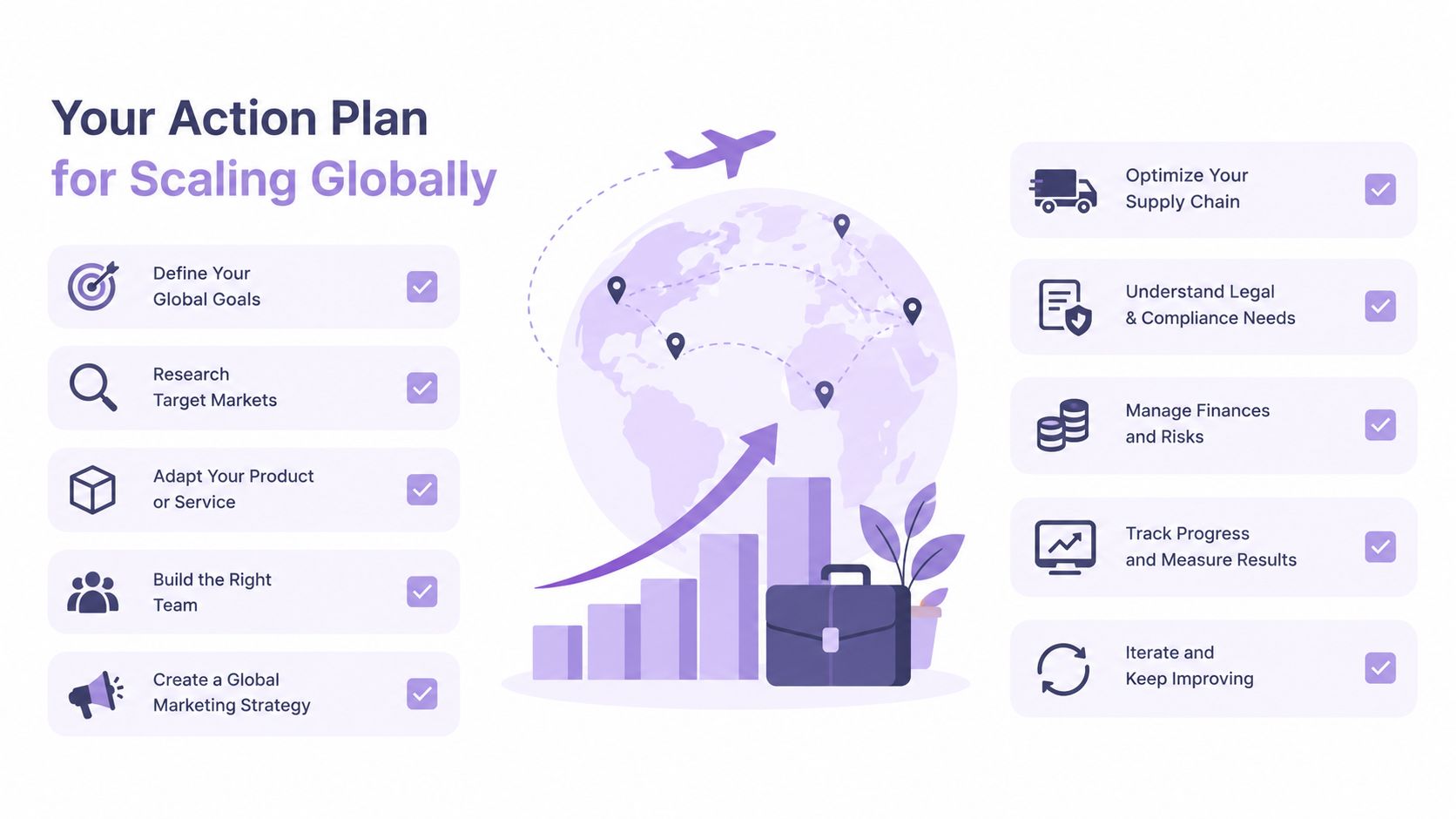
If you're evaluating a platform, ask for a live walkthrough using your own job description. Confirm how matching works, where humans enter the process, and who handles payroll and compliance after the hire. A platform that can source candidates but leaves you with the legal and operational mess has only solved the easiest part.
The sensible approach is straightforward: use AI to compress search and screening, use humans to verify reality, and design the team so developers can ship without waiting across continents. That's how to hire offshore developers without confusing a low salary with a low total cost.
Tell your hiring lead to choose one hard-to-fill engineering role, define its evaluation criteria, and test an AI-assisted shortlist this week. Review the candidates with your technical lead, verify the compliance path before making an offer, and reject any process that produces volume without evidence.