
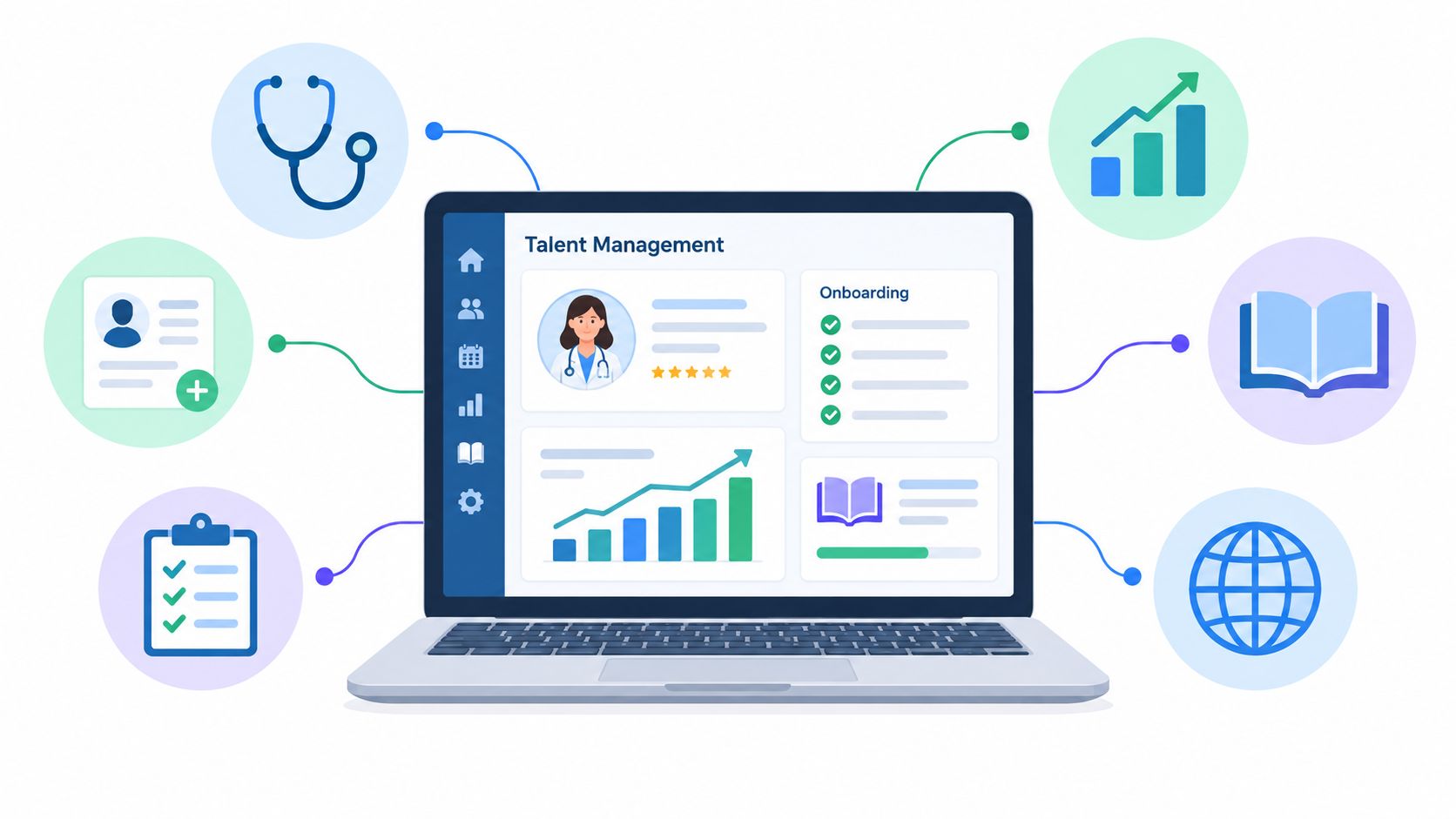
A practice manager starts the morning with a patient-intake backlog, an insurance verification queue, and messages from remote staff working across Latin America. One spreadsheet tracks schedules, another records onboarding tasks, and a messaging app holds performance notes that may never make it into the employee file. The arrangement may work for a small team, but it becomes difficult to control when more virtual receptionists, billing assistants, or prior-authorization specialists join.
Talent management platforms give medical practices a centralized way to recruit, onboard, develop, schedule, and evaluate remote healthcare staff. They don't replace an electronic health record, practice-management system, payroll provider, or compliance program. They connect the people-management layer around those systems so managers can see who has been trained, what each person is authorized to do, how work is progressing, and where operational risk is building.
For U.S. practices using LATAM talent, the right platform should support skills-based hiring, time-zone coordination, role-based permissions, documented HIPAA training, auditability, and workflow-specific performance measures. It should also leave clinical decisions with licensed professionals. The sections below explain how to select and use a platform without confusing workforce administration with patient-care authority.
A practice manager may begin with a simple arrangement: a remote medical receptionist receives a shared schedule, an insurance specialist updates a spreadsheet, and the office manager sends reminders through a chat application. As staffing expands, the manager must confirm training, monitor attendance, review patient communication, coordinate access to systems, and document performance across separate tools. The work isn't merely inconvenient. Fragmented records make it harder to prove that each person received the right instruction and that access matched the person's role.
Remote healthcare staff can handle substantial administrative work across the patient lifecycle. A virtual medical assistant workflow may include scheduling, reminders, intake collection, insurance verification, prior-authorization support, EMR or EHR updates, referral coordination, and post-visit follow-up, as described in this overview of virtual medical assistant workflows. Those responsibilities create dependencies. A scheduling assistant needs current availability, an intake coordinator needs an approved process for collecting information, and billing support needs clear escalation rules when documentation is incomplete.
Consider a multispecialty clinic with bilingual staff in different LATAM locations. One coordinator works during U.S. business hours and handles Spanish-language patient calls. Another focuses on insurance verification. A third supports prior authorizations. If their role descriptions, training records, work schedules, quality reviews, and system access live in separate places, a manager has to reconstruct the operational picture manually.
That process also creates avoidable ambiguity. A strong performance review may not show whether the employee completed security training. A time-tracking record may not explain why an authorization queue grew. A hiring file may describe “healthcare experience” without identifying the practice-management system, payer workflow, or language capability the role requires.
Practical rule: Treat remote staffing as an operating system for people and workflows, not as a collection of independent contractors with separate logins.
A talent management platform can connect recruiting criteria to onboarding tasks, assign role-specific learning, document manager check-ins, and preserve performance history. The platform becomes the management layer, while the EHR and practice-management system remain the authoritative systems for clinical and patient-operational records.
The broader market reflects this shift. One market report estimated the global talent management software market at USD 9.96 billion in 2023 and projected USD 22.67 billion by 2030, with a 12.5% CAGR from 2024 through 2030. Another report estimated USD 11.30 billion in 2025 and projected USD 29.48 billion by 2034, while one estimate assigned North America a 38.10% share in 2025. These figures come from differing market methodologies, but both describe sustained investment in recruiting, performance, learning, and internal mobility infrastructure in the talent management software market.
Practices evaluating broader digital health scaling support should apply the same discipline to staffing infrastructure. Centralization only works when the platform reflects real clinical workflows, limits sensitive access, and gives managers useful information instead of another administrative dashboard.
A useful platform should manage the employee lifecycle around healthcare operations. It isn't just a digital personnel folder. Recruiting, onboarding, performance management, learning, workforce planning, and reporting should connect to the responsibilities of each remote role.
The category has expanded from early HR software consolidation into broader cloud-based workforce systems. Commentary from The Business Research Company identifies expanding corporate workforces, early HR software adoption, standardized processes, multinational expansion, and employee productivity as historical drivers. Its report projects the market from USD 14.48 billion in 2025 to USD 27.6 billion in 2030, and projects USD 16.52 billion in 2026, figures that illustrate the category's rapid adoption while using a different market definition from the Grand View Research estimates. The underlying operational direction is consistent, companies are moving away from manually managed talent processes toward centralized workforce data and lifecycle workflows. Workforce management solutions provide useful comparison context, but medical practices still need to test healthcare-specific controls.
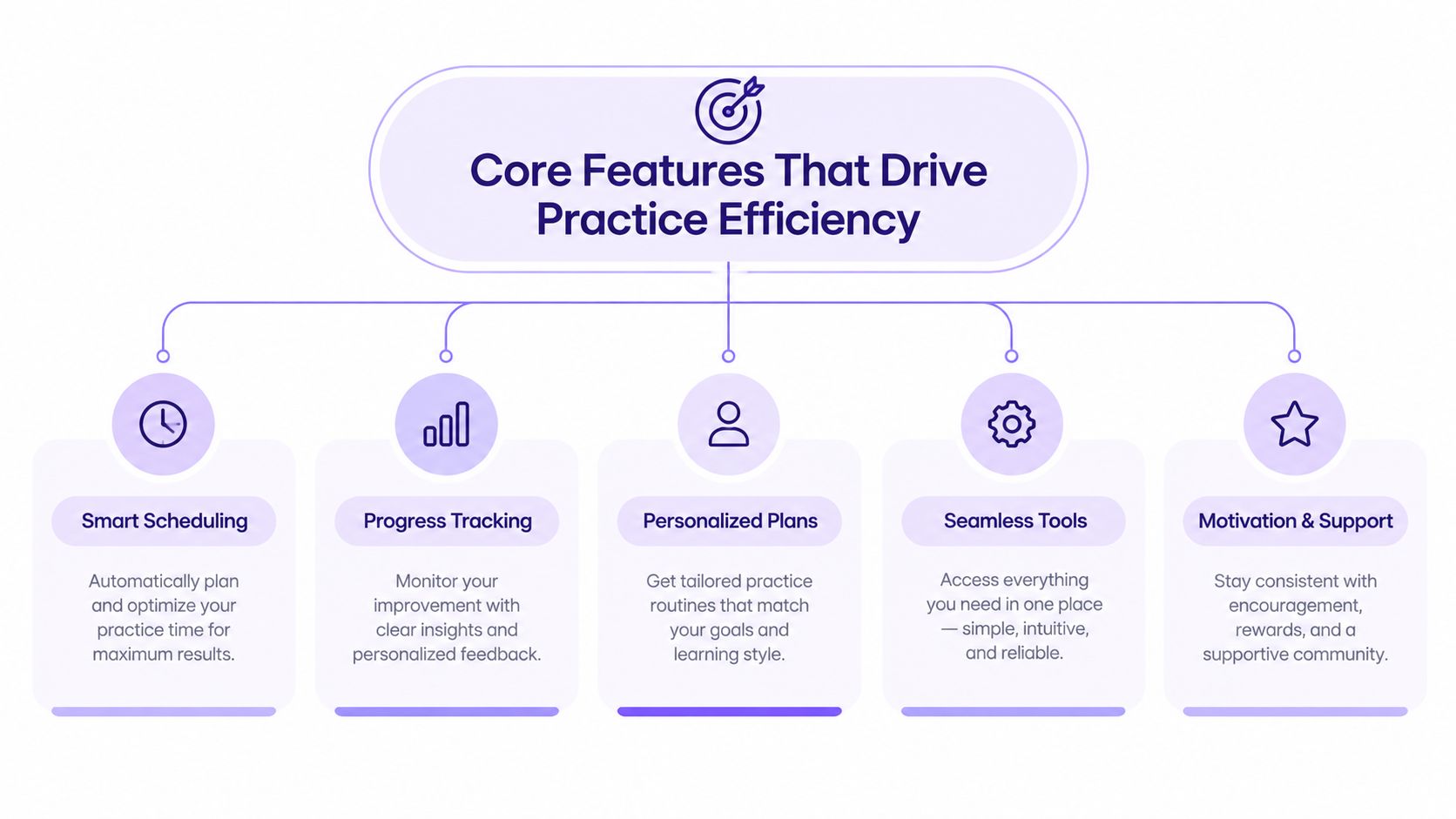
Recruiting features should capture more than a résumé and a job title. For a virtual medical receptionist, the profile might include bilingual communication, appointment scheduling, insurance terminology, escalation judgment, and experience with the practice's scheduling environment. For billing support, the relevant profile may include claim-status work, denial follow-up, documentation discipline, and familiarity with the practice's billing process.
A LATAM hiring partner such as LatHire can be considered alongside direct recruiting and general staffing vendors. Its stated model includes AI-assisted matching, candidate profiles, skills evaluations, human-led background checks, and post-hire support for international payroll and legal compliance. A practice should still conduct its own role validation, reference checks where appropriate, access review, and workflow-specific interview.
Onboarding should turn a signed offer into a sequence of accountable tasks. The platform can assign HIPAA and privacy training, confirm policy acknowledgments, record manager orientation, and track requests for approved system access. It should distinguish “training assigned,” “training completed,” and “access approved.” Those are different states, and combining them creates false confidence.
The workflow should also include the boundaries of the role. A remote intake coordinator may collect information and route an escalation, but shouldn't interpret symptoms or make clinical decisions. A scheduling assistant may reschedule appointments within approved rules, but shouldn't independently alter clinical instructions.
Performance measures should reflect the job, not generic corporate goals. Managers can assess scheduling accuracy, documentation completeness, appropriate escalation, patient communication, queue management, and adherence to approved procedures. Learning assignments can then target the actual gap, such as a refresher on referral routing or a new payer-verification process.
A platform's reporting library can reduce manual work. SAP SuccessFactors is described as offering over 2,000 predefined metrics and benchmarks across areas such as turnover, diversity, hiring effectiveness, and engagement, according to this technical discussion of embedded talent metrics. A medical practice doesn't need every metric. It needs a smaller, governed set that managers can interpret consistently.
A generic HR suite may manage employee records well and still fail a medical practice. The evaluation should start with the workflows that create operational or privacy risk, then test whether the platform can support them without forcing managers to duplicate information.
First, map the remote roles and their tasks. Separate patient-facing administration from internal administration, then identify which tasks involve protected health information. Next, identify the authoritative system for each record. The EHR may own clinical documentation, the practice-management system may own appointments and billing activity, and the talent platform may own employee status, training completion, performance notes, and role assignments.
Then ask vendors to demonstrate realistic scenarios. Have them onboard an insurance verification specialist, assign training, request access, change the person's role, record a performance concern, and show the resulting audit history. A slide presentation won't reveal whether permissions, integrations, and exception handling work under pressure.
The platform should also support cross-border operational details without obscuring accountability. Confirm time-zone display, working-hour alignment, bilingual role fields, local payroll coordination, offboarding, and the process for removing access when an assignment ends. International staffing obligations can vary by arrangement and jurisdiction, so practices should confirm legal and tax questions with qualified advisers.
| Evaluation Criteria | Why It Matters for Healthcare | Red Flags to Watch For |
|---|---|---|
| Role-based access | Limits workforce access to the information needed for the assigned job | One shared permission group for every remote worker |
| Audit history | Helps managers review changes, approvals, and access-related events | Records show the current state but not who changed it |
| EHR and practice-system integration | Reduces duplicate entry and clarifies system ownership | Vendor promises integration without demonstrating failure handling |
| Training workflows | Connects required instruction with role assignment and completion | Training is stored as an informal note or uploaded file |
| Time-zone and language support | Helps coordinate LATAM staff and patient communication coverage | Scheduling uses one assumed location or omits language capability |
| Offboarding controls | Supports prompt removal of workforce access | No clear connection between status change and access review |
| Reporting | Shows staffing capacity, training status, and role performance | Dashboards offer attractive charts but no actionable definitions |
A platform comparison such as remote workforce management software can help establish a feature baseline. Don't select based on the feature list alone. Require a written explanation of data ownership, integration responsibilities, support boundaries, implementation work, and total operating cost.
The choice between a broad HCM suite and a specialized talent intelligence tool depends on what the practice is trying to solve. An all-in-one suite can simplify vendor management and provide a shared employee record. A specialized platform may offer deeper skills matching, internal mobility, or learning workflows that a general suite handles only at a surface level.
For a smaller practice with straightforward roles, a broad system may be excessive. If the main need is to track employee status, onboarding, training, and manager reviews, a tightly scoped platform can be easier to administer. Large, multisite, or multinational healthcare organizations may value broader integration, standardized permissions, and a common reporting model, even when implementation requires more planning.
Talent intelligence becomes more useful when the practice needs to match people to precise work. “Medical administrative experience” is too broad to guide hiring for every role. A specialized skills profile might distinguish between appointment scheduling, referral coordination, prior authorization, insurance verification, billing follow-up, and patient communication in English or Spanish.
The same principle applies to technology. A candidate may have used an EHR, but that doesn't establish proficiency with the specific system, workflow, or documentation standard used by your practice. Ask candidates to describe the tasks they performed, the escalation rules they followed, and the records they were permitted to update. A platform can organize that evidence, but it can't replace a well-designed assessment.
Recent market coverage describes a split between organizations consolidating into all-in-one HCM suites and those adopting specialized tools for skills intelligence, internal mobility, or learning. Talent intelligence is projected to grow at a 17.9% CAGR, outpacing legacy HR capability segments, according to market coverage of talent management software options for 2026. That projection suggests growing buyer interest, not proof that a specialized product will produce a particular practice outcome.
Decision test: Choose breadth when governance and consolidation are the bottleneck. Choose specialization when inaccurate skills matching or shallow workflow support is the larger risk.
Whichever architecture you choose, keep one system authoritative for each important record. Multiple platforms can work together, but only when integrations, permissions, corrections, and ownership are documented. Otherwise, the practice trades spreadsheet confusion for software confusion.
Remote staff who can access protected health information fall within the same HIPAA compliance perimeter as in-office employees. The location of a medical virtual assistant or remote intake coordinator doesn't create a looser category. The HIPAA guidance for remote healthcare workers explains that the Privacy Rule and Security Rule apply regardless of where the person works.
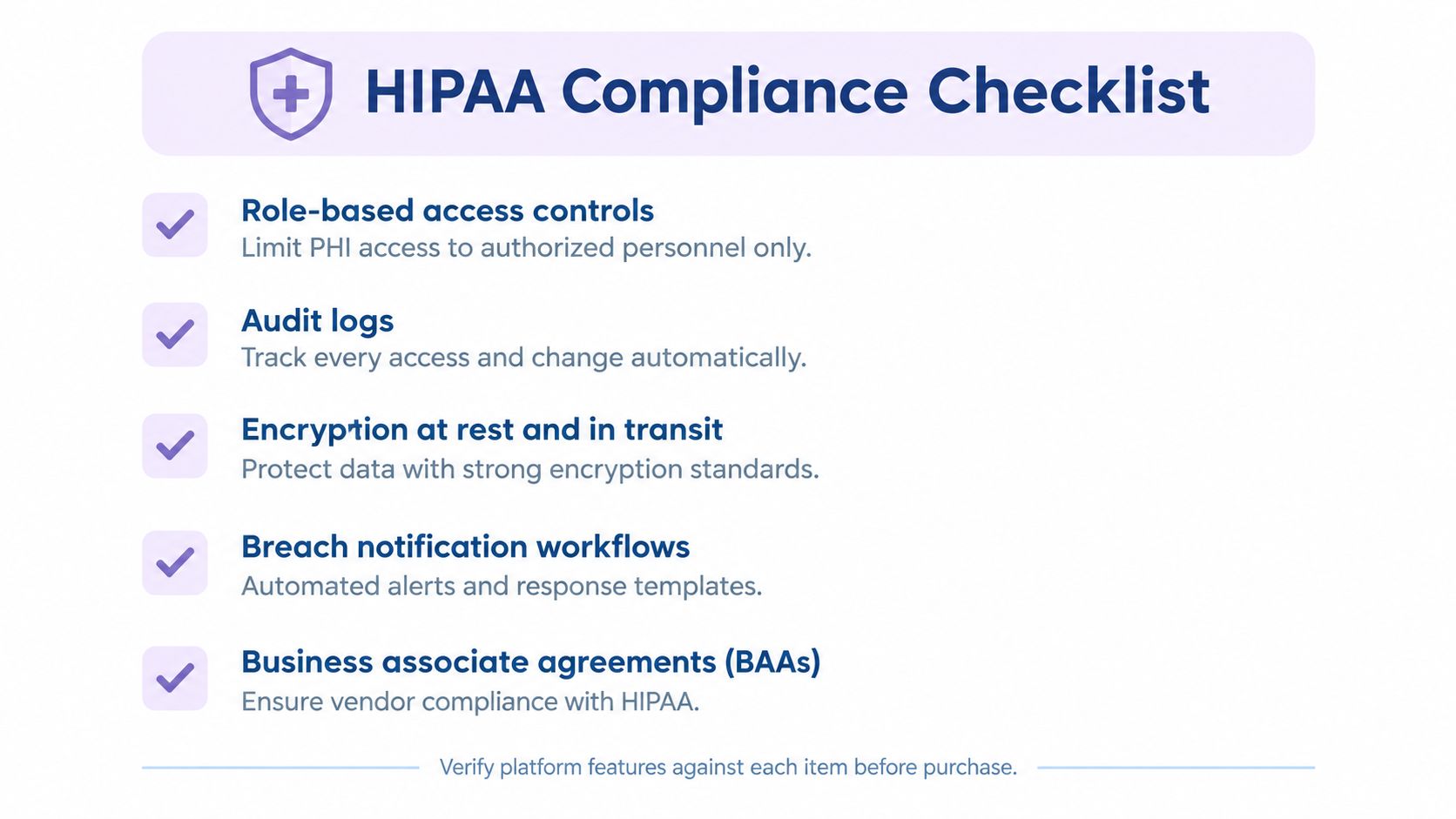
A talent management platform supports compliance, but it doesn't make a practice compliant by itself. HIPAA requirements involve administrative, physical, and technical safeguards. The practice still needs appropriate policies, workforce training, risk analysis, incident response, vendor oversight, and day-to-day enforcement.
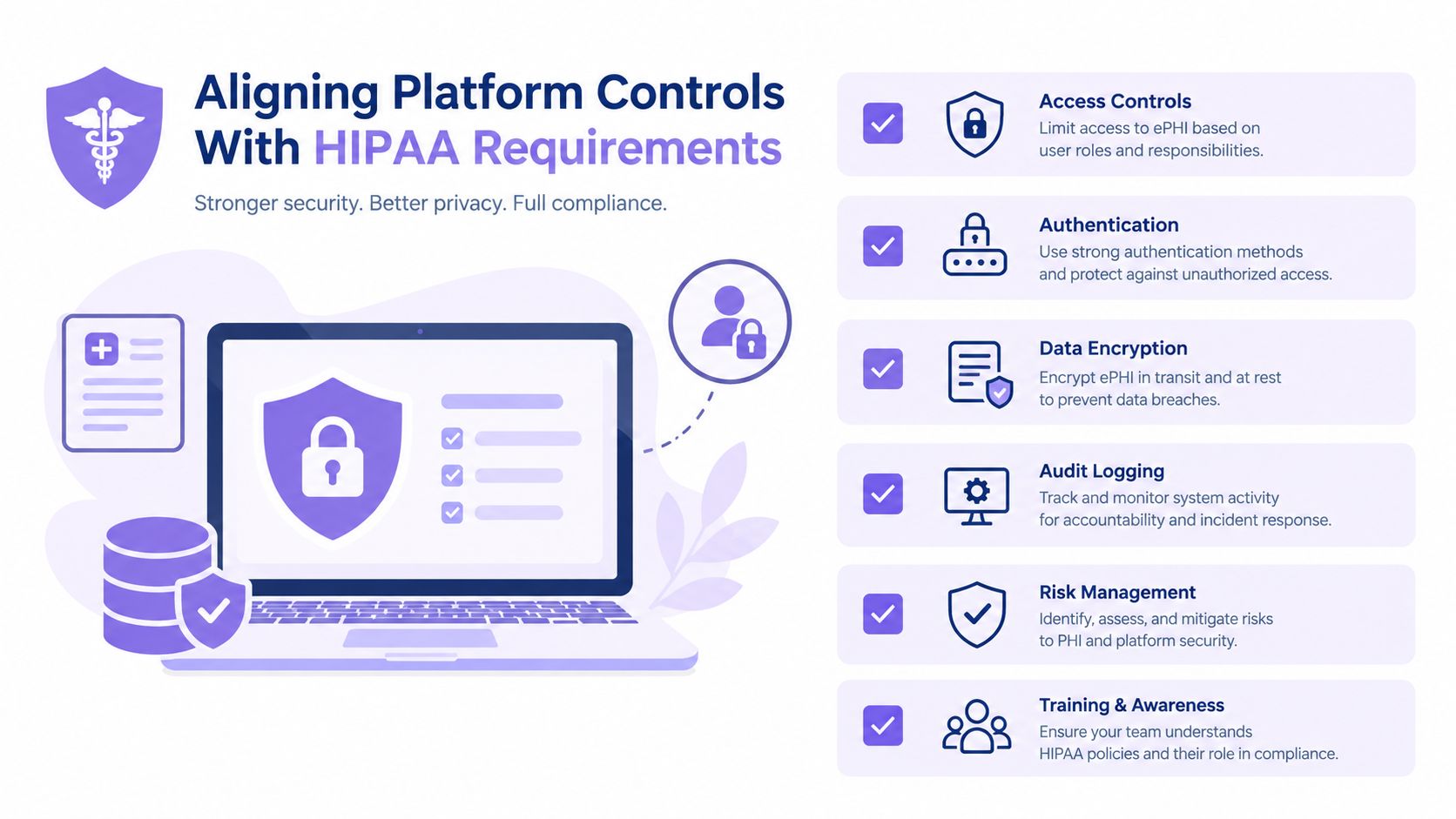
Role-based access should match the worker's actual duties. A scheduling employee may need appointment information but not broad billing access. An insurance verification specialist may need payer-related information but not unrestricted clinical notes. Unique logins and multi-factor authentication should be standard expectations, not shared-workspace workarounds.
Audit logs matter because managers need to know who accessed or changed information and when. The platform should show administrative events clearly, while the connected EHR or practice-management system should retain its own relevant access history. Encryption, endpoint protection, secure communications, device controls, and incident workflows also need evaluation.
A signed Business Associate Agreement should be in place before a remote worker or service provider receives access to PHI, and access should be limited by role with unique logins and multi-factor authentication, as outlined in this remote healthcare staffing compliance guidance. A BAA is necessary where applicable, but it isn't evidence that the vendor's configuration, workforce behavior, or integration design is safe.
Assign training before access. Require approval before provisioning. Review access when duties change. Disable access during offboarding. Preserve the records that show these actions occurred.
Healthcare remote-work guidance also emphasizes staff training, device encryption, secure communication channels, endpoint security, and audit logs as administrative, physical, and technical safeguards. Practices reviewing broader healthtech governance risk compliance resources should use them to strengthen governance, not to outsource responsibility. A practical data security best-practices framework can support the operational checklist, but practices should confirm their obligations with qualified compliance professionals or counsel.
The return on a talent management platform shouldn't be reduced to a promise of lower staffing expense. For a medical practice, the useful question is whether the system improves managerial control over work that affects access, throughput, patient communication, and staffing continuity.
A unified system reduces the need to reconcile employee records, training spreadsheets, performance notes, and schedule information manually. It can also help a manager identify where a queue is slowing, which role lacks coverage, whether required training remains incomplete, or whether turnover is concentrated in a particular function. These are operational signals. They don't prove that software caused improved retention or productivity, but they give leaders better evidence for decisions.
Start with measures tied to the role:
Predictive analytics can move HR from static record-keeping toward forward-looking decision support. A study of SAP HCM with predictive analytics reported higher workforce agility, improved employee retention, and better operational performance compared with conventional HR systems, as summarized in the study on predictive analytics in cloud HR systems. That finding supports using analytics as a planning aid, not treating a dashboard as a guarantee.
Compare current administrative effort with the platform's subscription, implementation, integration, support, training, and administrator costs. Include the time managers spend correcting bad data and the operational cost of delayed access or unclear ownership. Then establish a baseline before launch and review the same measures afterward.
Recruiting analytics can help separate hiring speed from hiring quality. A resource on recruitment analytics is useful when deciding which funnel measures belong in the business case. Don't claim that a faster shortlist alone creates value. A candidate who can start quickly but lacks the required workflow skills may create more supervision and rework.
Talent management platforms can give medical practices a reliable management layer for remote LATAM staff, but only when the platform reflects actual healthcare roles. Use it to connect recruiting, onboarding, training, performance, access reviews, scheduling coverage, and workforce analytics. Keep clinical judgment, patient records, and licensed care decisions in the proper systems and with the proper professionals.
Before selecting a platform, complete this review:
If you need pre-vetted LATAM administrative talent to manage through a structured platform, evaluate candidates by role, language, schedule, healthcare experience, and documented workflow skills. Medical Virtual Assistants can help U.S. practices identify remote healthcare professionals for administrative functions, while your practice remains responsible for supervision, access approval, training, and compliance.
If your practice is ready to replace fragmented remote staffing records with a controlled workflow, schedule a platform and staffing review with Medical Virtual Assistants. Bring your role descriptions, systems, coverage needs, and HIPAA requirements so the evaluation can focus on the people and controls your operation needs.

