
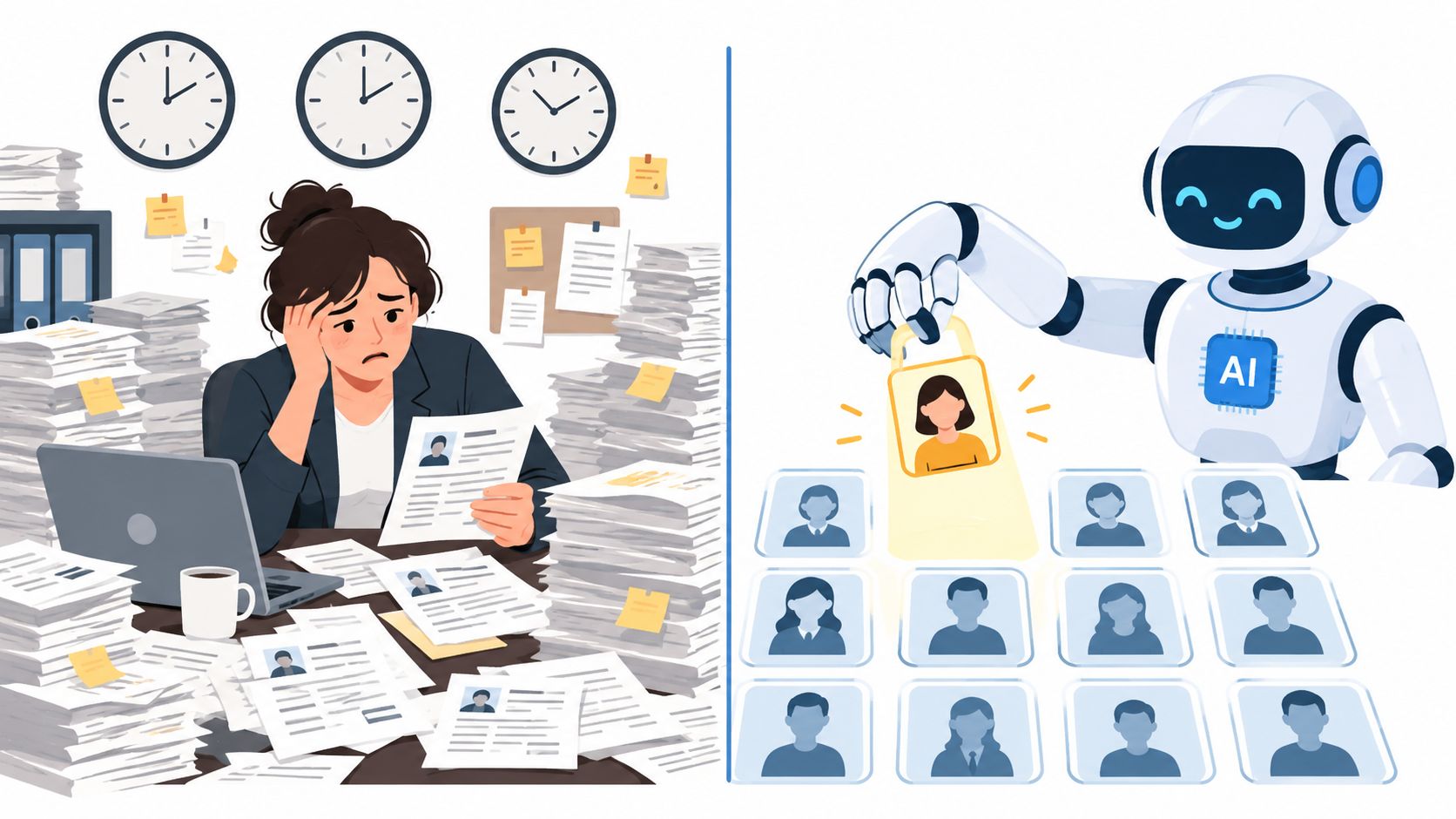
The popular advice is to hire a marketing staffing firm whenever your internal team can't fill a role quickly. That sounds sensible until you're paying for a shortlist built from recycled resumes, waiting weeks for introductions, and still doing the evaluation yourself. I've made that mistake. More than once. The invoice arrived on time. The talent did not.
The better question isn't whether you need outside hiring help. It's whether you need another intermediary, or a verified, AI-driven talent pool that can identify actual skills before your team burns hours on interviews. Traditional firms still have a place, but their economics are under pressure, and modern marketing teams shouldn't confuse a resume match with a professional who's ready to deliver.
Traditional marketing staffing firms often sell confidence before evidence. You pay a retainer or placement fee, explain the role in detail, and receive resumes packed with familiar terms. Then the interview reveals that “full-funnel strategy” may mean attending a campaign meeting rather than owning acquisition, conversion, and retention.
The economics favor visible recruiting activity. Agencies source, submit, and close, while your team absorbs the cost of a weak hire, a delayed launch, or a candidate who vanishes after the final interview. Their success is measured at placement. Yours is measured after the person starts producing.
Practical rule: If a staffing partner cannot show how it validates skills, it is selling search volume.
The workflow remains slow and repetitive. A recruiter searches LinkedIn, filters by title, scans for keywords, and forwards a profile. The same person may sit in several agency databases, with outdated availability and little detail about what they built. Your team then repeats the evaluation through interviews, portfolio reviews, reference checks, and internal debate.
That is why remote staffing agencies deserve scrutiny rather than automatic trust. Remote hiring expands access to capable professionals, but geography does nothing to verify quality. A larger pool helps only when someone can separate a strategist who owns outcomes from a candidate who merely lists strategy on a profile.
The core problem is unverified matching: software can identify a keyword, but it cannot establish depth, judgment, communication, or cultural alignment on its own. AI-driven platforms should narrow the pool through structured signals, then use assessments and human review to verify the match before your team invests interview time.
Marketing teams need people who can work inside real tools, collaborate across time zones, and adjust when the brief changes halfway through a sprint. Paying more for a slower version of resume forwarding is an expensive habit. A matched talent pool creates a scalable alternative by connecting teams with candidates evaluated for actual delivery, not just searchable vocabulary.
Traditional staffing firms are built for resume movement, not reliable delivery. Employers posted 376,200 marketing and creative jobs in 2025, according to Robert Half's 2026 market analysis. That volume exposes the weakness of a process that depends on recruiters manually finding, screening, and forwarding candidates one profile at a time.
The vacancy problem continues after a job goes live. Nearly three in ten U.S. marketing job postings, 28.9%, remained open after 30 days, and social media manager roles reached 42.2%, according to Robert Half's analysis of the slowest-filling marketing roles. Every extra week leaves campaigns understaffed, pushes work onto already-busy employees, and delays projects tied to revenue.
Marketing staffing firms often call this a candidate shortage. That diagnosis is incomplete. The deeper failure sits in pipeline design: recruiters revisit the same databases, search by job title, and evaluate candidates late. A firm can hold thousands of profiles and still lack people ready to contribute.
Agency and professional-services workforces average 42 days to fill a role and experience 30% annual turnover, compared with an 18% all-industry turnover average, according to Agiled's 2026 agency hiring statistics. Slow placements and frequent departures force firms to replace recruiter capacity, candidate flow, and client confidence repeatedly.
The economics are just as revealing. Client acquisition was the top challenge for 23% of staffing firms in 2025, while 12% cited candidate shortage, according to the Staffing Hub 2025 State of Staffing Report. Buyers are not paying for a database of names. They want lower hiring risk, faster delivery, and a fee they can defend internally.
Manual recruiting starts each requisition too close to zero. AI-driven matching keeps profiles structured, identifies adjacent skills, tracks availability, and sends candidates through consistent evaluation. Human judgment still decides the hire. AI makes that judgment faster, better informed, and scalable.
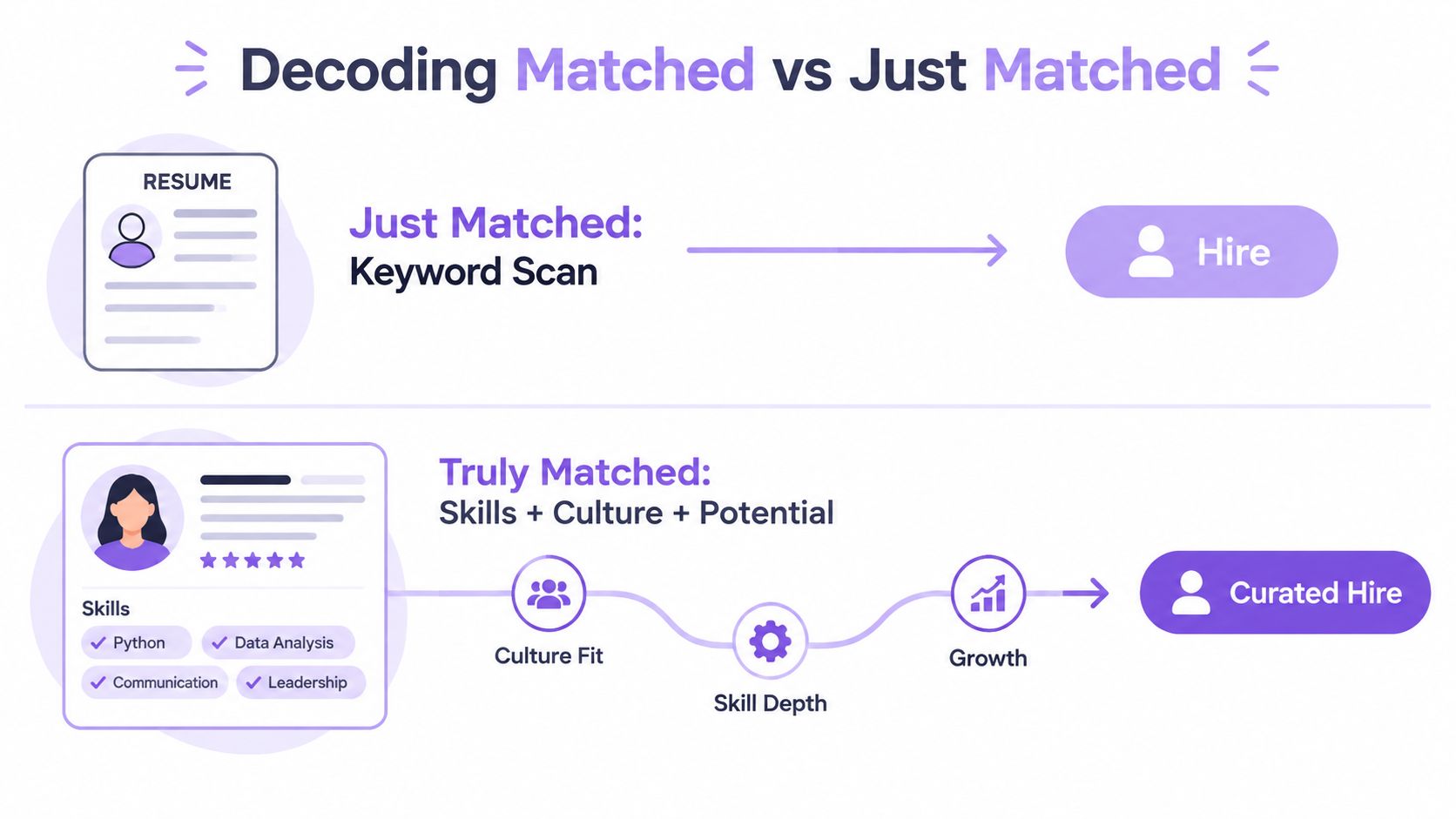
“Matched” has become one of recruiting technology's loosest promises. In many systems, it means a resume repeats the terms in a job description. A keyword overlap is a search result; a hiring decision requires evidence.
A genuine matched candidate has proof behind the profile. They have demonstrated relevant skills, explained their contribution to real work, and passed checks suited to the role. A paid-media specialist should reason through campaign tradeoffs. A copywriter should show how they turn a brief into effective messaging. A marketing operations hire should understand the systems they will own, rather than list platforms in a sidebar.
A credible pipeline should include five layers:
Role clarity. The platform translates the hiring need into responsibilities, tools, seniority expectations, and working conditions. A vague job description produces vague judgments at every later stage.
AI-assisted discovery. Automation searches structured profiles and identifies relevant combinations of experience. AI earns its place here by processing more information than a recruiter can reasonably review after a long day of manual searching.
Skills validation. The candidate completes assessments or work samples that test the capabilities the role requires. This separates a promising profile from a shortlist supported by evidence.
Human review. Recruiters or talent specialists examine context, communication, work history, and fit. Their judgment matters, but it should focus on candidates who have already cleared basic competency checks.
Availability and compliance confirmation. The team verifies whether the person can work the required schedule, collaborate in the relevant time zone, and engage through a compliant arrangement.
Candidates can improve the information systems receive by using practical resources such as real rewrites for marketing resumes. A clearer resume helps interpret experience, but formatting cannot prove execution. Ask what the candidate produced, how they approached the work, and what the evaluation tested.
A candidate with the right words is discoverable. A candidate who can demonstrate the work is hireable.
The distinction protects both sides. Candidates avoid being reduced to keyword bundles, while employers get a clearer view of actual capability. Marketing staffing firms that cannot explain their matching process are asking you to trust a black box. Inspect the machinery before signing the contract.
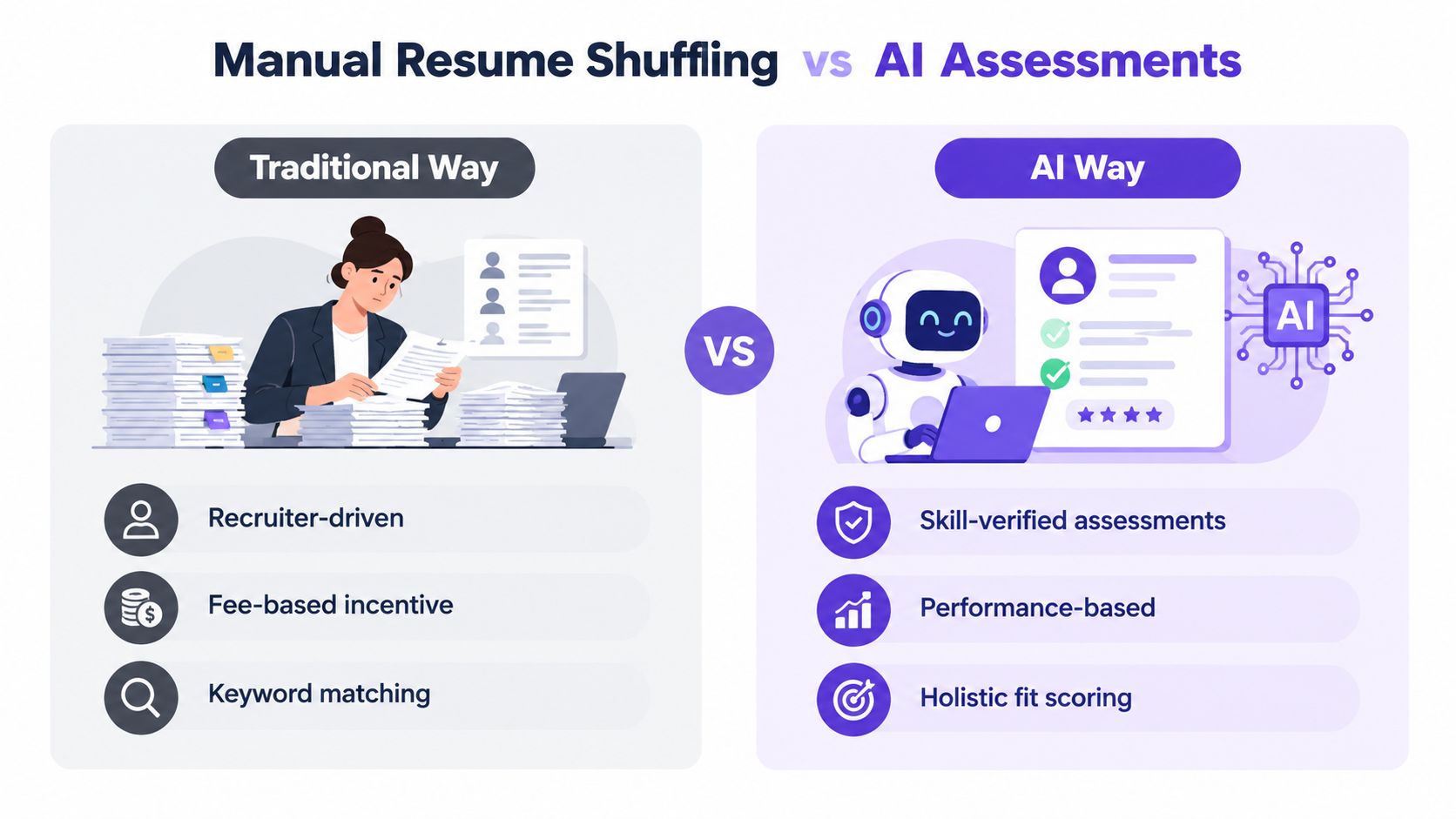
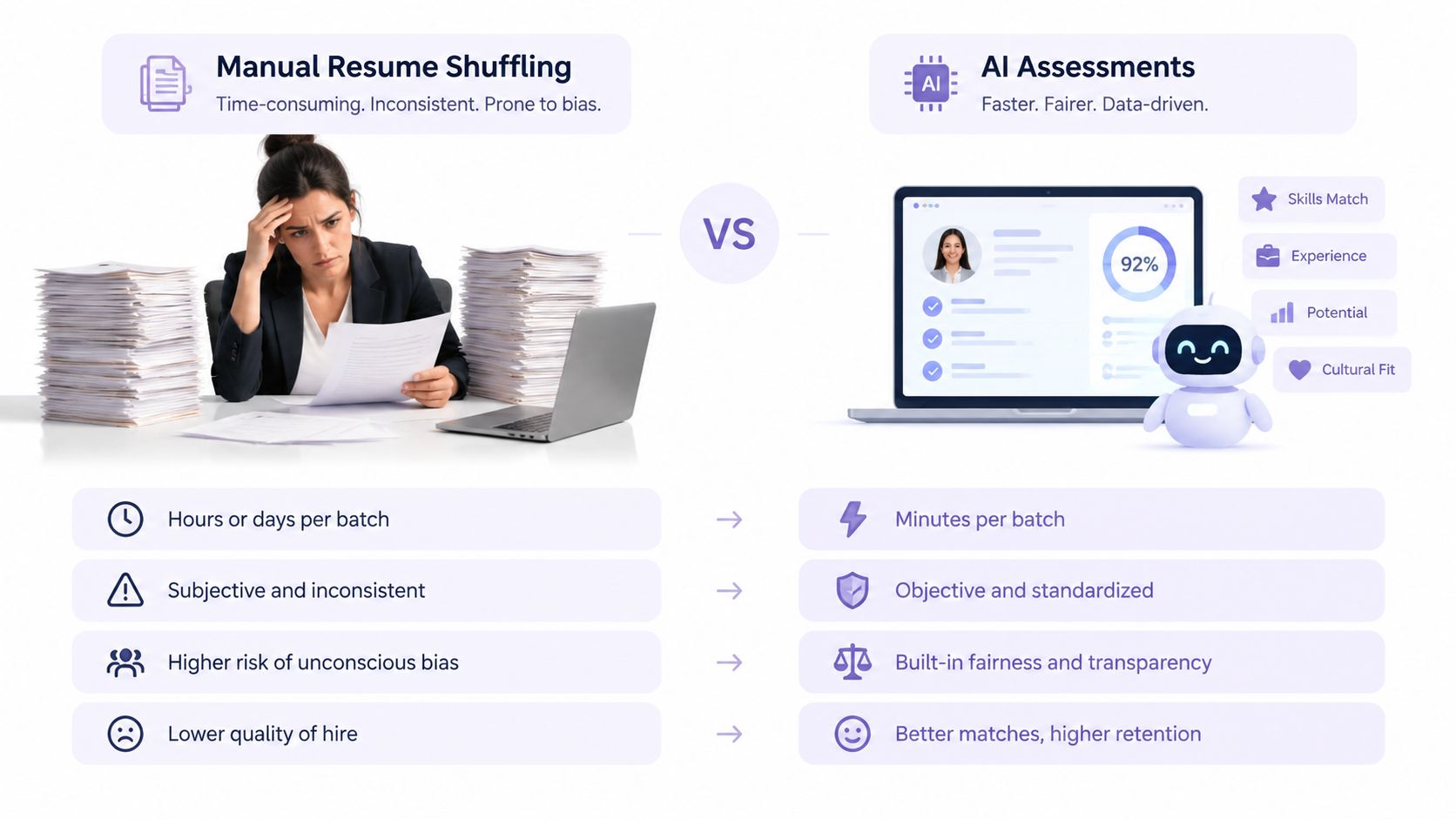
Traditional marketing staffing firms often sell access to talent while billing you for manual sorting. The recruiter searches databases, reads resumes, asks screening questions, and decides which profiles deserve your attention. That model can work with deep niche knowledge and a strong network. It becomes expensive and slow when one recruiter juggles several searches or is rewarded for sending candidates quickly.
AI-assisted assessment puts repetitive work earlier in the process. A platform can parse job requirements, compare structured skills, identify relevant experience, and administer evaluations before your hiring manager opens a calendar invite. Human specialists then review a smaller, more relevant group. Your team spends its time judging evidence instead of performing clerical triage.
| Hiring question | Manual agency process | AI-assisted assessment |
|---|---|---|
| How are candidates found? | Recruiter searches databases and networks | AI searches structured talent profiles |
| What gets prioritized? | Titles, keywords, recruiter judgment | Skills, evidence, availability, and role requirements |
| When are skills tested? | Often during your interview process | Before the shortlist reaches your team |
| Who absorbs the time cost? | Your recruiters and hiring managers | The platform handles more early-stage work |
| What happens at scale? | More requisitions require more manual effort | Automation supports a broader pipeline |
Automating resume sorting with a futuristic logo is just a spreadsheet wearing sunglasses. Reject platforms that only rearrange keywords. The scalable option must connect matching with evidence, availability, and role requirements.
Demand assessments that resemble the actual job. A content marketer should solve a content problem. A designer should demonstrate design judgment. A lifecycle marketer should explain segmentation, testing, and measurement in context. The evaluation should reveal how the person thinks, not merely whether the resume contains familiar vocabulary.
Teams improving their wider marketing workflow can also build a content stack with ViewsMax. The hiring lesson is the same: use tools to remove repetitive handling, then reserve human judgment for decisions that require context.
A structured pre-employment skills testing process gives your team a defensible basis for comparison. It cannot predict every future outcome, and no honest platform should claim otherwise. It can reduce the chance that a polished resume carries someone past a basic capability check.
That distinction exposes the broken economics of traditional vetting. Manual review expands in line with requisitions. AI-driven matched talent pools can handle more early-stage evaluation without making every new hire a fresh administrative project. For modern marketing teams, that is the difference between a staffing service that forwards resumes and a talent system that can scale.
Traditional staffing firms make growth expensive by turning every new requisition into another round of manual searching, resume sorting, and follow-up. LatHire uses an AI-powered hiring workflow for companies hiring across technology, marketing, sales, and operations. Its talent pool includes more than 800,000 Latin American professionals, while AI assessments, skills evaluations, and human-led background checks create structured candidate profiles.
The advantage is the sequence. AI handles broad search and initial organization. Skills evaluations supply evidence. Human reviewers interpret the profile before it reaches the employer. That division of labor keeps hiring managers from discovering, testing, and verifying every applicant from scratch.
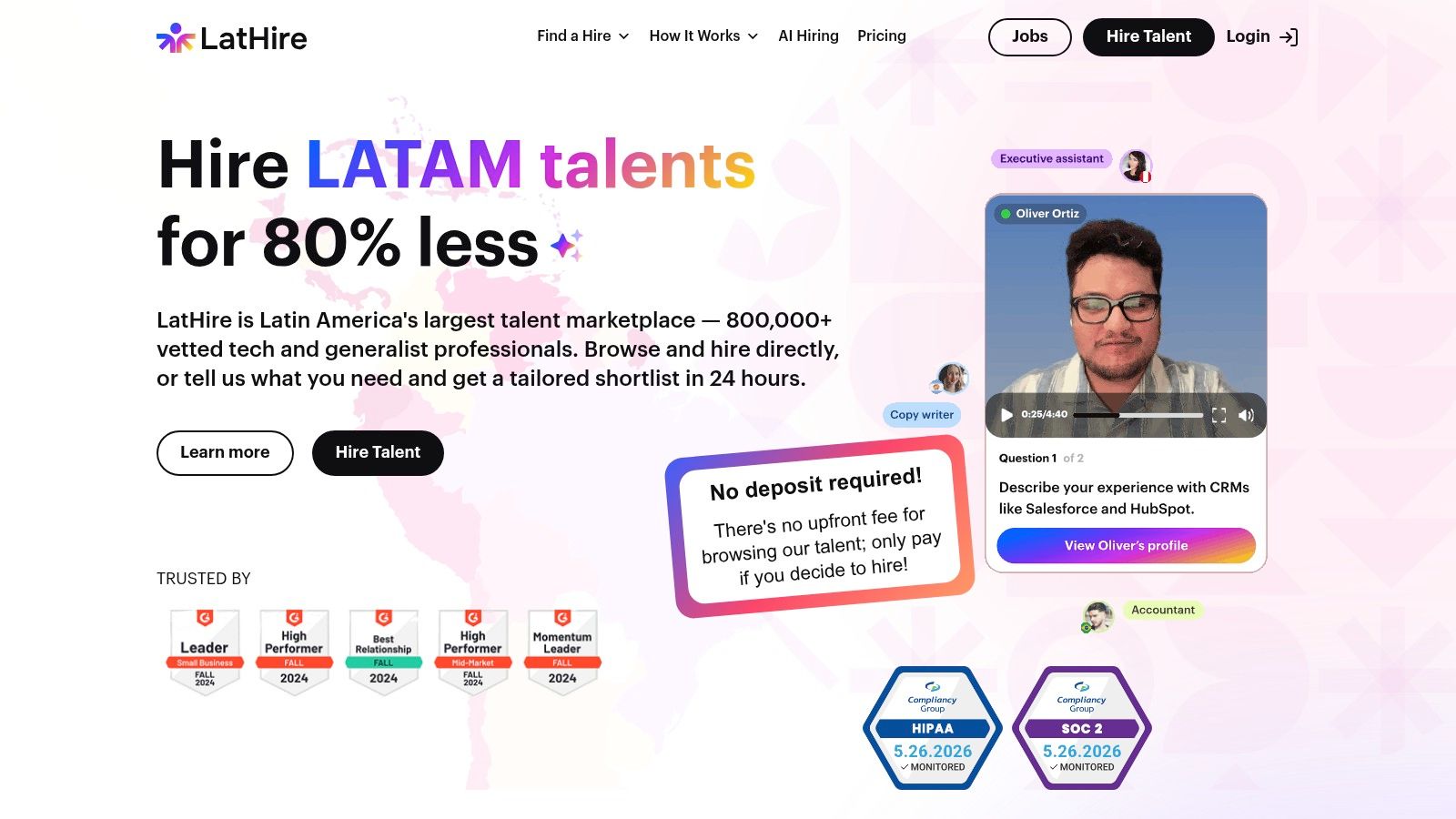
You can import an existing job description or generate one with AI. Start with a clear brief, because vague requirements produce weak matches regardless of the sourcing technology. The system identifies candidates using role requirements, validated skills, availability in your time zone, and preferred engagement model.
LatHire states that qualified candidates can be presented in as fast as 24 hours, with hiring costs reduced by up to 80% and time-to-hire reduced by over 80%, as described on its AI-powered recruitment platform. Treat those figures as product claims, not guarantees. Test them against your own requisitions before building a hiring plan around them.
The platform also handles administrative work that can make cross-border hiring unpleasant:
AI lets skilled recruiters spend their time on interpretation, communication, and risk management instead of endless resume shuffling. That is the operating model modern teams should demand from a talent partner.
A polished “AI” homepage proves very little. Some platforms are job boards with a chatbot attached. Before signing, ask the vendor to show the assessment workflow, the evidence behind each match, and the people responsible for reviewing candidates.
Skills validation should be visible. Ask what candidates complete before you see their profiles. Request role-specific assessment examples. If the answer is “our algorithm reviews their resume,” the platform is automating sorting, not verifying ability.
The matching logic should reflect the job. Evaluation should account for tools, seniority, communication needs, domain experience, and the output the role must produce. A social media manager and a demand-generation manager may share a marketing label, but their criteria should be different.
Availability needs to be current. A profile is useless if the candidate accepted another role weeks ago. Ask how often availability is updated and how the platform confirms it, particularly for work requiring overlap with your time zone.
The engagement model should fit the work. Marketing teams may need flexible support, project-based expertise, or a longer-term contributor. A vendor that forces every role into one arrangement is optimizing its billing system rather than matching your operating needs.
Compliance must be part of delivery. Cross-border hiring involves payroll, benefits, worker classification, and legal obligations. A platform that cannot explain who handles payroll, classification, and legal obligations is selling you uncertainty.
Human review should remain in the loop. AI can prioritize evidence. A person still needs to assess communication, context, and expectations. Ask who reviews each candidate and at what stage.
Refusal to explain the vetting method is enough reason to leave. So is a promise of perfect fit, a large batch of profiles without context, or success measured only by resume volume.
Question pricing that hides the full economics. A low headline fee becomes expensive when your team spends hours re-screening candidates, chasing availability, or correcting payroll problems. Calculate the full workflow cost, including internal interview time and the impact of a delayed hire.
Buyer's test: Ask the platform to explain in plain English why each candidate fits the role. If the response is only a keyword list, keep shopping.
Many individual recruiters are excellent. The problem is the fee-driven process around them, which becomes hard to defend when AI can organize talent and validate skills before your team gets involved.
The market shows why companies keep investing in talent infrastructure. The global recruitment marketing market was valued at US$1.2 billion in 2024 and is projected to reach US$1.7 billion by 2030, reflecting a 7% CAGR, according to Research and Markets' recruitment marketing analysis. The broader recruitment advertising agency market was estimated at US$6.35 billion in 2024, rose to US$6.88 billion in 2025, and is projected to reach US$9.35 billion by 2029 at an 8% CAGR, from the same source. Companies are paying to improve talent attraction. You should still demand a hiring process that earns its cost.
Concentration makes the old model harder to justify. The U.S. marketing and creative staffing market was about $1.8 billion in 2023, with the 13 largest firms accounting for 88% of that market, according to Staffing Industry Analysts. A later SIA update found that nine organizations each surpassed $25 million in U.S. marketing and creative temporary staffing revenue in 2025, together representing roughly 66% of an estimated $2.4 billion market, as reported by Solomon Page. Large firms handle much of the volume, but their scale does not require you to accept slow searches, opaque fees, or resume queues.
Audit your last few agency hires. Record shortlist speed, interview conversion, skills-review results, and the internal hours spent repairing the process. Then run a comparable role through an AI-driven, pre-vetted platform. Judge the result by evidence, speed, communication, and compliance.
The American Staffing Association reports that U.S. staffing companies hired 12.7 million temporary and contract employees during 2023, and 73% of staffing employees worked full time, according to its staffing industry statistics. Contingent hiring is a serious operating system, not a side project. Build yours around verified capability and flexible scale, rather than an expensive queue of resumes.
Stop renewing a staffing arrangement because it feels familiar. Define the skills for your next marketing role, require assessment evidence, and compare an AI-matched talent pool with your current agency workflow. If the old process cannot beat a faster, clearer, more accountable model, cut the retainer and return that budget to the team.

