
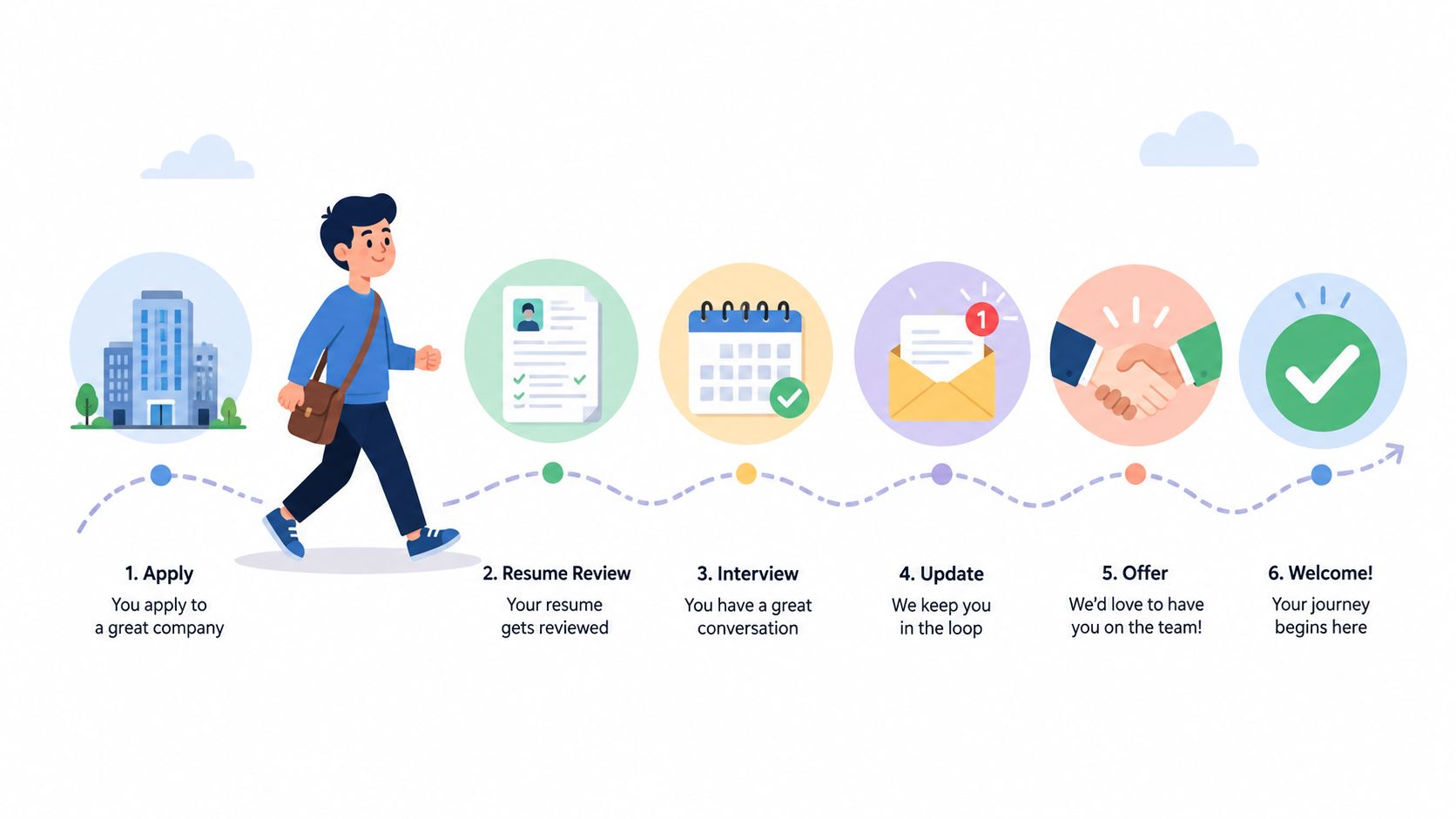
You already know the feeling. The finalist looked perfect, the interview loop felt smooth enough, and then the candidate went quiet right when your team started mentally assigning them a desk. One Slack ping becomes three. Three pings become a calendar war room. The role sits open, the rest of the pipeline starts smelling like stale coffee, and somebody says, “Maybe they got another offer.”
That moment is candidate experience in the wild. Not a branding exercise, not HR wallpaper, not a fluffy “make people feel good” slogan. It's the reason strong candidates vanish, why good offers get declined, and why hiring can feel like you're mortgaging your office ping-pong table just to keep the process moving.
The frustrating part is that many teams don't lose candidates because they're evil or careless. They lose them because the process leaks at every seam. Silence. Confusion. Too many forms. Too many interviews. Too much waiting. The fix is less mystical than people think, but it does require treating the hiring funnel like an actual system instead of a series of optimistic emails.
The best candidate in the pipeline doesn't usually disappear because they hate your company. They disappear because your process gave them too many reasons to drift. A recruiter waits on one manager feedback note, the hiring lead says they're “thinking,” and the candidate's attention gets vacuumed elsewhere.
That's the whole story, just with nicer clothes on.
I've seen teams blame the market, the compensation band, the recruiter, the ATS, and once, with remarkable confidence, Mercury retrograde. The more honest answer is usually simpler. The candidate got stuck in a process that felt slow, vague, or slightly unserious, and they decided their time mattered more than the chase.
Candidates are making tiny judgments at every touchpoint. Does the job description read like it was written by a human? Does the application feel sane? Do they hear back? Do they know what happens next? Those little moments add up fast, and they shape whether someone keeps going, accepts the offer, or mentally ghosts you before you can ghost them first.
The reason candidate experience has become such a live wire is that hiring outcomes are sensitive to friction. In large labor markets, the difference between “fine” and “great” is not decoration, it's conversion. If the process feels like a maze, even strong candidates start treating it like a side quest they didn't agree to.
Practical rule: if your best candidate needs to ask, “So what happens after this?”, your process already has a leak.
That's why the question what is candidate experience matters less as a definition and more as an operating problem. It's the full system behind whether a person feels respected enough to continue. Get that right and hiring gets calmer. Get it wrong and you'll keep doing late-night damage control like it's a company sport.
Candidate experience is the sum of every interaction a job seeker has with your organization, from the first time they hear about you to the final touchpoint after an offer, rejection, or onboarding. It includes the job description, the application form, screening, interviews, communication gaps, offer handling, rejection, and the impression left after the process ends.
That's the clean version. The messy version is better. Candidate experience also covers the people who never apply, never reach interview, decline the offer, or drop out halfway through. In other words, it's not only about the happy path. It includes the people who leave without saying anything, because they're still walking away with an opinion.
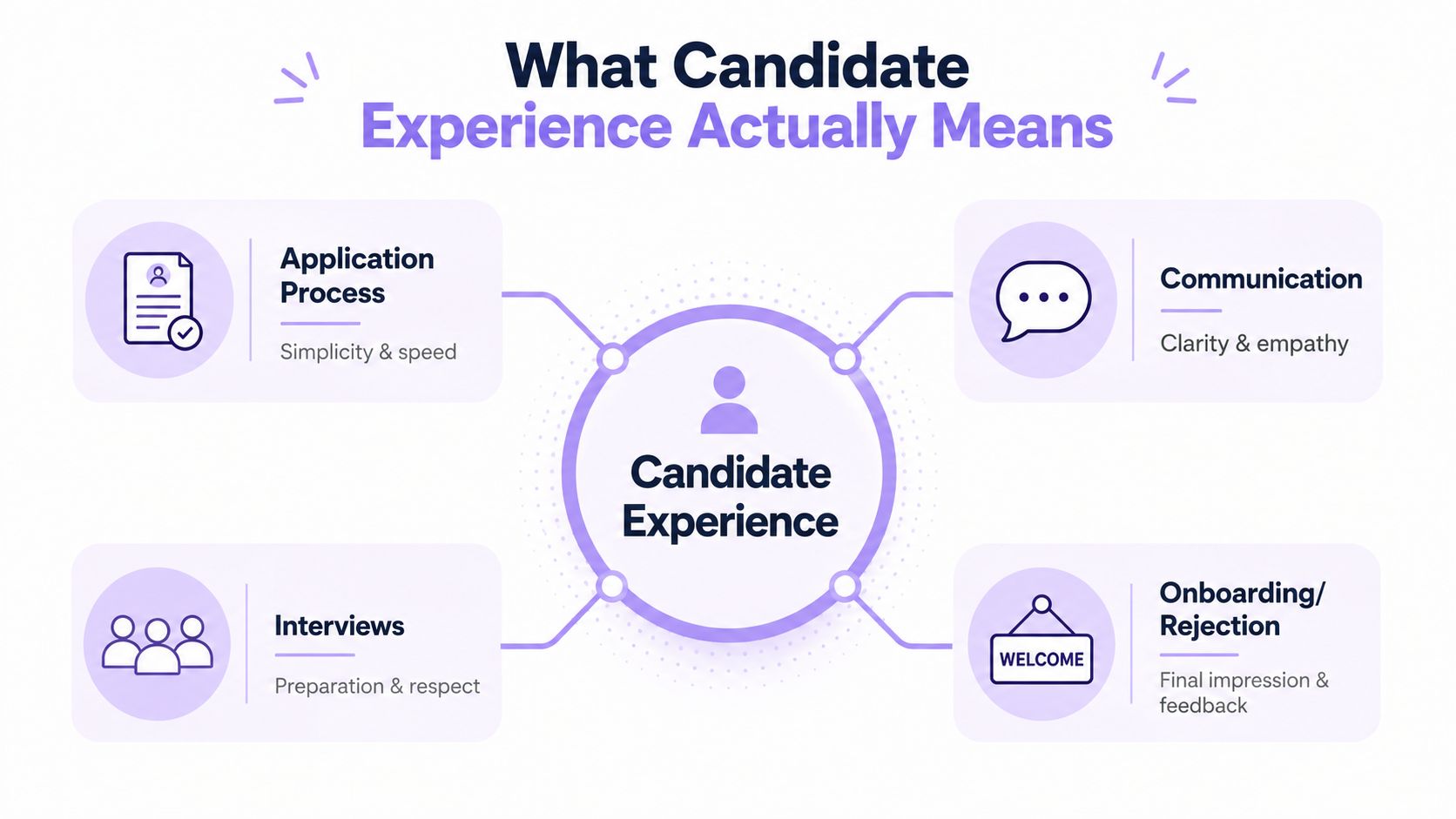
The candidate journey is the path, the actual recruitment sequence from search to hire. Employer brand is the story you tell. Candidate experience is the movie, and every scene counts, including the awkward ones.
That distinction matters because two companies can run similar funnels and create wildly different feelings. One sends sharp updates, respects time, and gives clear next steps. The other sends applicants into a fog bank and wonders why the talent pool looks suspiciously thin by Friday afternoon.
LinkedIn's talent-acquisition guidance makes the practical point well, the experience starts with the job description and continues through interviews and follow-up communication. That means the posting itself is not just a prelude. It's part of the experience, which is a lovely reminder that words can, in fact, create operational debt.
A usable definition looks like this. Candidate experience is the quality of every touchpoint, plus how much friction, clarity, and respect a person feels along the way. That's not soft stuff. It's the difference between a process people tolerate and one they'll re-enter later.
Candidate experience is also measurable, which is where the hand-waving stops. It can be tracked across recruiting touchpoints such as candidate Net Promoter Score, application completion rate, offer-acceptance rate, and time-to-hire. Once you see it that way, it stops being a vibes conversation and starts acting like an operational discipline.
Soft definitions die in standups. Metrics survive because somebody has to explain them to leadership without sounding like they're describing a tarot reading.
The annoying truth is that many companies still measure candidate experience late, if at all. Industry research shows that only 17% of employers measure it at every possible opportunity, and 44% only measure it once a candidate has been hired. That's backwards. If you only look after the hire, you're inspecting the crash site after the plane has already landed badly. candidate experience benchmarking research
| Metric | Funnel Stage | What It Signals | Target Range |
|---|---|---|---|
| Candidate NPS | Post-interview and post-decision | Whether candidates would recommend the process | Higher is better, track directionally |
| Application completion rate | Application | Whether the form is too long or too confusing | Strong completion, especially when the form is lean |
| Offer-acceptance rate | Offer stage | Whether the process built enough trust to close | Higher is better, especially after slower loops |
| Time-to-hire by stage | Screening, interview, offer | Where delays are creeping in | Shorter stage latency is the point |
| Post-decision survey score | Rejection or offer acceptance | Whether the ending felt clear and respectful | Consistent, positive feedback over time |
Candidate NPS tells you whether people would send a friend into the same process. If it drops, you've got a trust problem, not just an operations problem.
Application completion rate tells you if the front door is too annoying to walk through. A clunky form can kill momentum before a recruiter even sees the profile, which is a very expensive form of self-sabotage.
Offer-acceptance rate is the bluntest test of whether the candidate believed your process. People don't accept offers in a vacuum. They accept them after deciding whether the company seems organized, honest, and worth the leap.
Time-to-hire by stage is where the hidden drag lives. One slow approval, one delayed manager review, one interview loop that drifts into next week, and suddenly the whole pipeline is narrating its own downfall.
Post-decision survey scores are the useful after-action report. They tell you whether candidates felt seen, even when they didn't get the job.
If you want the measurement side sharpened further, a practical recruiting analytics overview like this guide to recruitment analytics is a solid internal reference point for turning these signals into something your team can review.
A dashboard only helps if someone is willing to look at the number and admit the process is the problem.
A candidate can go through your process, do everything right, and still leave with the only message that mattered being silence. That is usually where the damage starts. The people you reject, the people who withdraw, and the people you forget still shape your reputation, your referral pool, and your next hiring cycle.
North American candidate-experience research shows how expensive that silence gets. Many job seekers say they rarely or never receive an update on their application, and a poor experience is enough to make people turn down an offer later. A small communications gap turns into a pipeline problem, then a branding bill. North American candidate experience data
Hiring stories usually center on the finalist who signs. That makes for a tidy internal victory lap. The larger audience is everyone who never becomes an employee, and they still talk, compare notes, and remember whether your team acted like adults.
That is why the rejection email matters so much. A plain, timely, human rejection closes the loop and leaves the door open for future interest. Silence does the opposite. It turns a normal no into a small act of brand damage, and it tells strong candidates that your process stops caring the moment they are no longer useful.
The fix is not mysterious. Shorten the application, publish clearer timelines, send rejections that sound like they were written by someone who has met another human, and give strong candidates a reason to come back later. If someone was close, say so carefully. If the role changed, say that. If the company still wants them in the mix, make the re-engagement path obvious.
A rejected candidate is still an audience. That is the part generic advice usually skips, and it changes how founders hire once they have been burned a few times. It is also where the practical use of AI gets interesting. Used well, it can keep follow-up timely and consistent, and a clear AI in hiring process approach can support that without turning the candidate into a ticket number. Used badly, it just helps the company move faster while making the experience colder.
AI can improve candidate experience. It can also make hiring faster for the employer while making the process colder, more opaque, and somehow still more annoying. That is the part people forget while the demo is glowing on the screen.
The fastest way to ruin trust is to automate bad habits. Robotic rejection emails, fuzzy scoring logic, and black-box assessments do not feel inventive to candidates, they feel like getting graded by a vending machine. If the system cannot explain itself, do not act surprised when candidates stop believing it.
The application is the first place to look. The underlying friction is simple, candidates bail when the form feels long or clumsy, and lean applications tend to perform better. If your AI tool helps people move through the process faster, good. If it adds extra steps with a shinier interface, that is expensive decoration. application friction data
A better use of AI is structured, skills-based screening. Masking personal identifiers early, standardizing evaluation, and surfacing the right jobs to the right people can cut noise without turning the process into a mystery box. That is also where a practical resume screening AI guide helps teams think through the trade-offs without pretending every automation choice is morally neutral.
If the tool speeds up hiring, who is it speeding up for, the recruiter or the candidate?
A decent vendor answer should touch transparency, candidate drop-off, and stage-level feedback. If the vendor only talks about throughput and never mentions clarity, that is a tell. You are probably buying speed for the company and entropy for everybody else.
One useful example is LatHire's own workflow, which is built around matching vetted candidates quickly while keeping profiles, skills, and availability visible. That kind of system can support candidate experience because it reduces uncertainty. Still, no platform can rescue a process that is sloppy. If the interview loop is chaotic, the tool just helps you be chaotic at scale.
For teams trying to separate process design from tool worship, AI in the hiring process is a useful internal read. The bigger point is simple. AI should make the candidate experience clearer, not just the recruiter's calendar emptier.
You don't need a hiring transformation deck. You need a few decisions that survive contact with a busy team and a noisy pipeline.
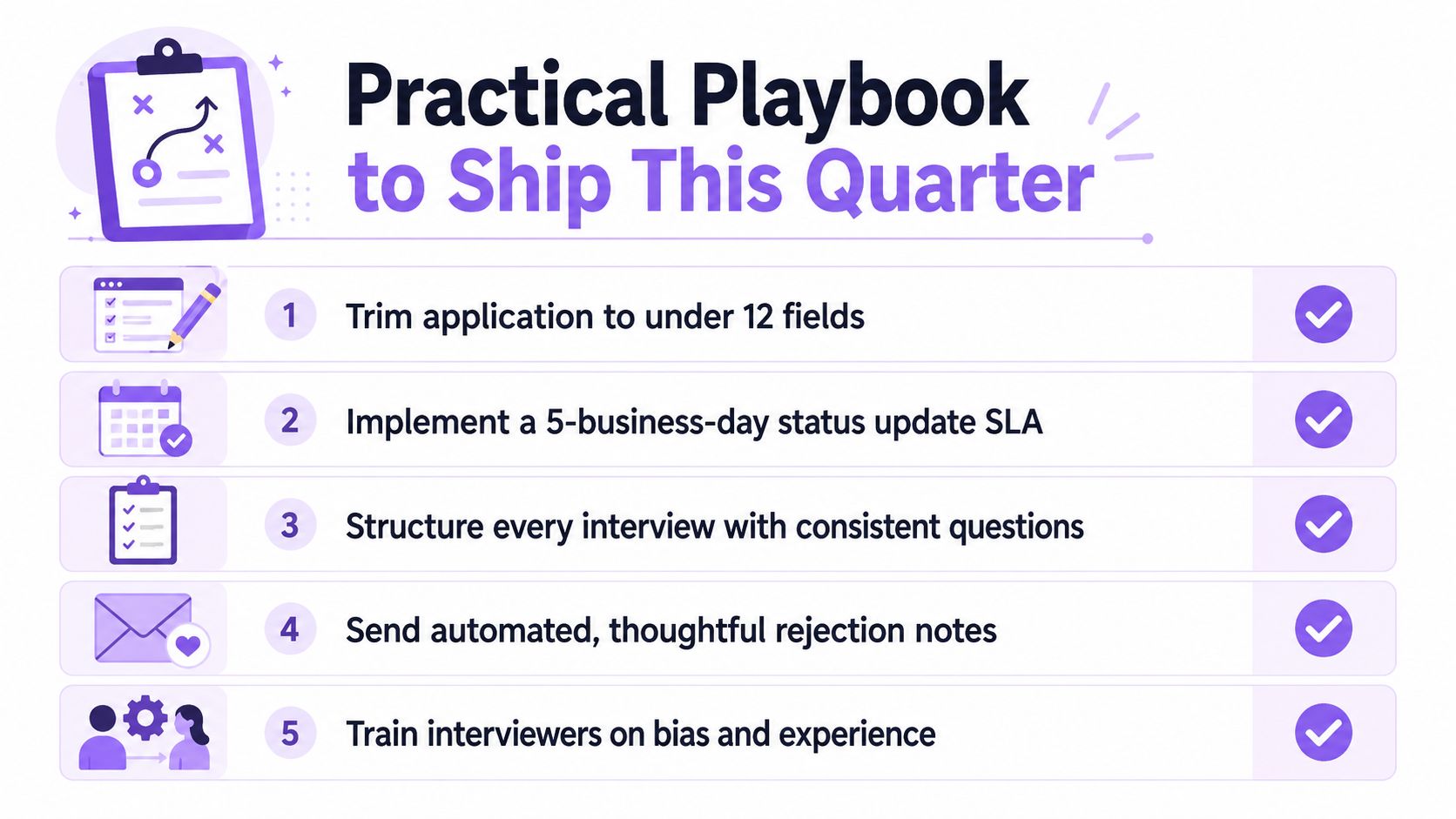
Start with the application. Keep it under a dozen fields unless there's a real reason not to. Every extra box is a tiny tax on completion, and candidates are ruthless about taxes they didn't approve.
A platform can standardize intake, keep scorecards consistent, and help route candidates through assessments and logistics more cleanly. It can also help with the important but necessary work around payroll, benefits, and compliance when you're hiring across borders. That matters because a smooth candidate experience falls apart fast if the offer stage turns into paperwork purgatory.
LatHire can fit into that workflow as one operational layer, especially when a team wants validated profiles and faster matching without building everything from scratch. But no tool can replace managerial discipline. If interviewers ignore the rubric, the platform won't save you from yourself.
For teams that want a more formal process map, this recruitment process best-practice guide is a sensible companion. And if you're thinking about employer visibility beyond direct hiring, employee advocacy tools are worth a look because candidates do notice how current employees talk about the company.
The next 90 days should feel less like a rebrand and more like cleanup. Clear, measurable, slightly boring cleanup. That's usually where the money is.
Instrument the funnel. Define where candidates drop, where responses stall, and where the application gets ugly. Ship the status-update SLA and make one person own it so “we should” doesn't become a permanent company chant.
Restructure interviews. Use consistent questions, publish the rubric, and stop letting every hiring manager freestyle their way through a process that was supposed to be fair. Send the rejection email, too. Candidates remember when you bother.
Add the post-decision survey and review the feedback by stage. If candidates keep flagging the same friction point, fix that exact thing instead of making a slide deck about “candidate sentiment.” The metric should change, not just the narrative.
Gallup reported in 2025 that among employees hired in the last year, two in three described their candidate experience as either exceptional or very good, which is a nice reminder that stronger processes can produce consistently positive perceptions. The point isn't to chase applause. It's to build a hiring system people can survive without muttering under their breath.
Candidate experience is not about being nicer. It's about removing friction and uncertainty for the people who might keep your company running, including the ones who never sign. If you want a quick next step, pick one role today, cut the application, set the update SLA, and tell your team the candidate experience is now a metric, not a mood.