
Most advice about outsourcing mobile app development starts in the wrong place. It starts with price, as if the whole game is about finding the cheapest pair of hands and praying the app doesn't catch fire later. That's how people end up mortgaging their office ping-pong table, then paying twice to clean up the mess.
The better frame is this. Outsourcing is now a mainstream delivery model, not a budget trick. One market estimate puts the global mobile apps development outsourcing solutions market at USD 756.64 million in 2024, rising to USD 1,615.22 million by 2033 with a CAGR of 8.4% global mobile apps development outsourcing solutions market. Another estimate puts the same market at USD 1.11 billion in 2024 and USD 2.78 billion by 2033, which says the same thing in a slightly different accent, this is a growing procurement category, not a fad same market trajectory, independent estimate.
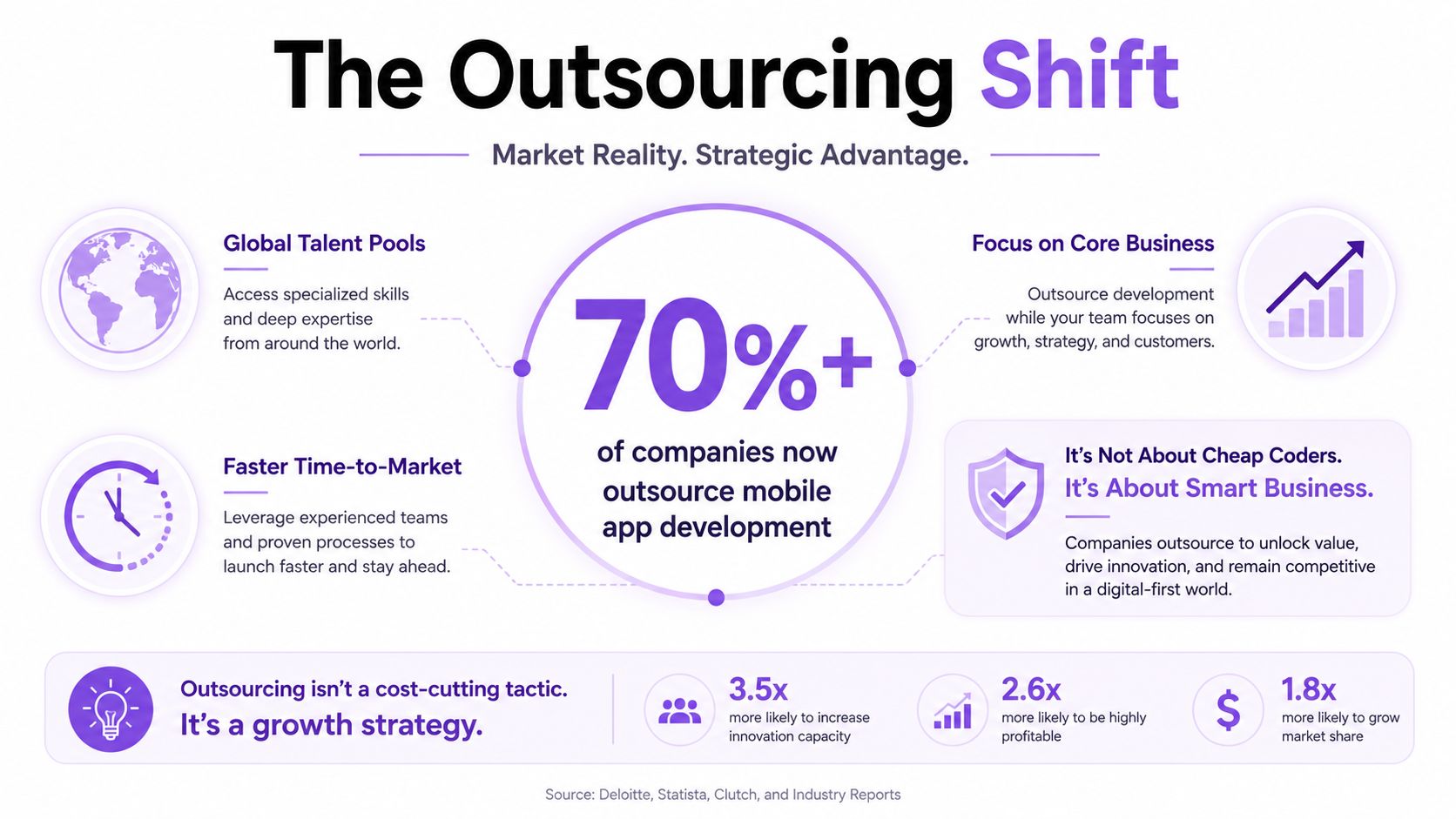
That lines up with how teams already work. More than 68% of global enterprises outsourced at least one stage of mobile app development in 2024, and 64% of organizations did at least part of their app development in 2023, up 8 percentage points from 2019 enterprise outsourcing usage. For me, the lesson was brutal and useful. If you're still debating whether to outsource, the market has already answered. The question is whether you'll do it with a plan or with vibes.
If you're still price-shopping blindly, pair this read with a sober full guide to app costs so you're comparing real delivery models, not fantasy numbers.
The old joke was that outsourcing meant “hire cheap coders somewhere else.” Cute, but wrong. What's happening now is a shift from internal-only builds to a structured global procurement model with repeatable workflows, specialized delivery, and long-term demand. The market keeps growing because companies want speed and capacity without building an entire app org from scratch.
Enterprise behavior says plenty. More than 68% of global enterprises outsourced at least one stage of mobile app development in 2024, and app work is already spread across IT services, fintech, and e-commerce enterprise outsourcing usage. That mix matters. Those teams are not outsourcing a side project. They are shipping products where release speed, security, and cross-platform execution directly affect revenue.
A separate report says 72% of companies that build mobile apps rely on third-party outsourcing partners for full or partial development outsourcing reliance. That is not a niche habit. It is the operating model for a lot of teams that need software shipped without hiring half a department and praying the new hires work out.
Practical rule: if a vendor's pitch is mostly about being cheap, keep walking. The real value is specialized engineering capacity, faster delivery, and a cost structure that does not force you into permanent headcount before the product proves itself.
Outsourcing makes sense when your internal team is already full and the app still needs to launch. It also helps when the product spans iOS, Android, backend, QA, design, and release management, because very few lean teams cover all of that in-house without turning into a mess. The hidden win is operational. Good external teams can absorb the ugly parts founders usually underestimate, like scope creep, app-store rejection, and the contract work around IP ownership that gets ignored until something breaks.
If you want a fuller look at how app budgets behave across the lifecycle, the full guide to app costs is worth your time. The point is simple. Outsourcing is not a compromise anymore. It is how serious teams buy speed, specialization, and breathing room without hiring themselves into a corner.
If you are choosing between offshore, nearshore, or other delivery setups, this offshore vs nearshore breakdown is a useful sanity check before you commit.
Pick the wrong engagement model and you'll spend months arguing about who owns what, who answers when, and why the app still isn't ready for users. Pick the right one and the whole project feels less like triage and more like an actual operating system.
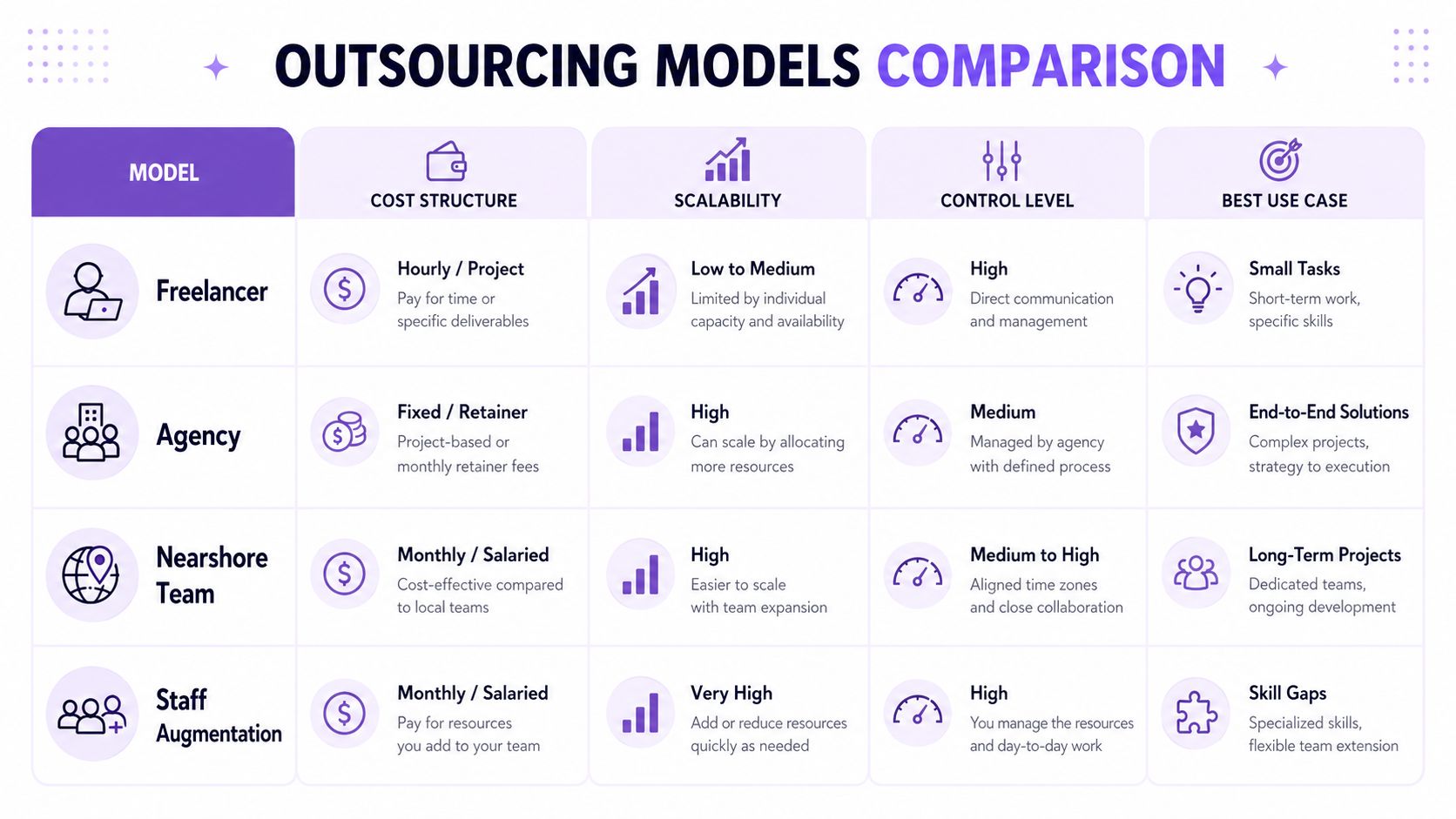
A freelancer can work for a tiny, contained task, but for a production app it's usually asking one person to be developer, tester, project manager, architect, and customer support. That's not efficient, it's a dependency disguised as flexibility. If the app matters, the solo route tends to become expensive in lost time and rework, even when the hourly rate looks friendly.
An agency is the safer default for most founders. You get broader skill coverage, a process, and backup when one person disappears on vacation or into another client fire drill. The trade-off is cost and control. Agencies can be lifesavers, and they can also become money pits if the scope isn't locked down and the relationship is run on politeness instead of discipline.
A nearshore team is often the sweet spot when you care about overlap, communication, and fewer timezone headaches. That's especially true for teams that need regular reviews, quick decisions, and enough cultural alignment that “done” means the same thing on both sides. Staff augmentation makes sense when you already have a strong internal product or engineering lead and you just need extra hands that can plug into your process without inventing a new one.
For an MVP, I'd usually pick an agency or a small nearshore team. For an enterprise app, I'd lean nearshore or staff augmentation if the in-house team already exists, because long-term integration starts to matter more than shiny sales decks. For ongoing maintenance, you want the setup that can survive release cycles, bug fixes, and platform updates without turning every patch into a new negotiation.
The model that looks cheapest on paper is often the one that makes you manage the most hidden work.
If you're still undecided, I'd treat the decision like this. Use a freelancer only for narrow, low-risk tasks. Use an agency when you need end-to-end delivery. Use nearshore when speed and collaboration matter. Use staff augmentation when you already know the architecture and just need execution muscle.
Hope you enjoy spending your afternoons fact-checking resumes and running technical interviews, because that becomes your life if the scope is loose. Write the scope document first, and make it do one job, kill ambiguity. Vague specs are where projects go to die, usually after someone says, “I thought that feature was implied.”
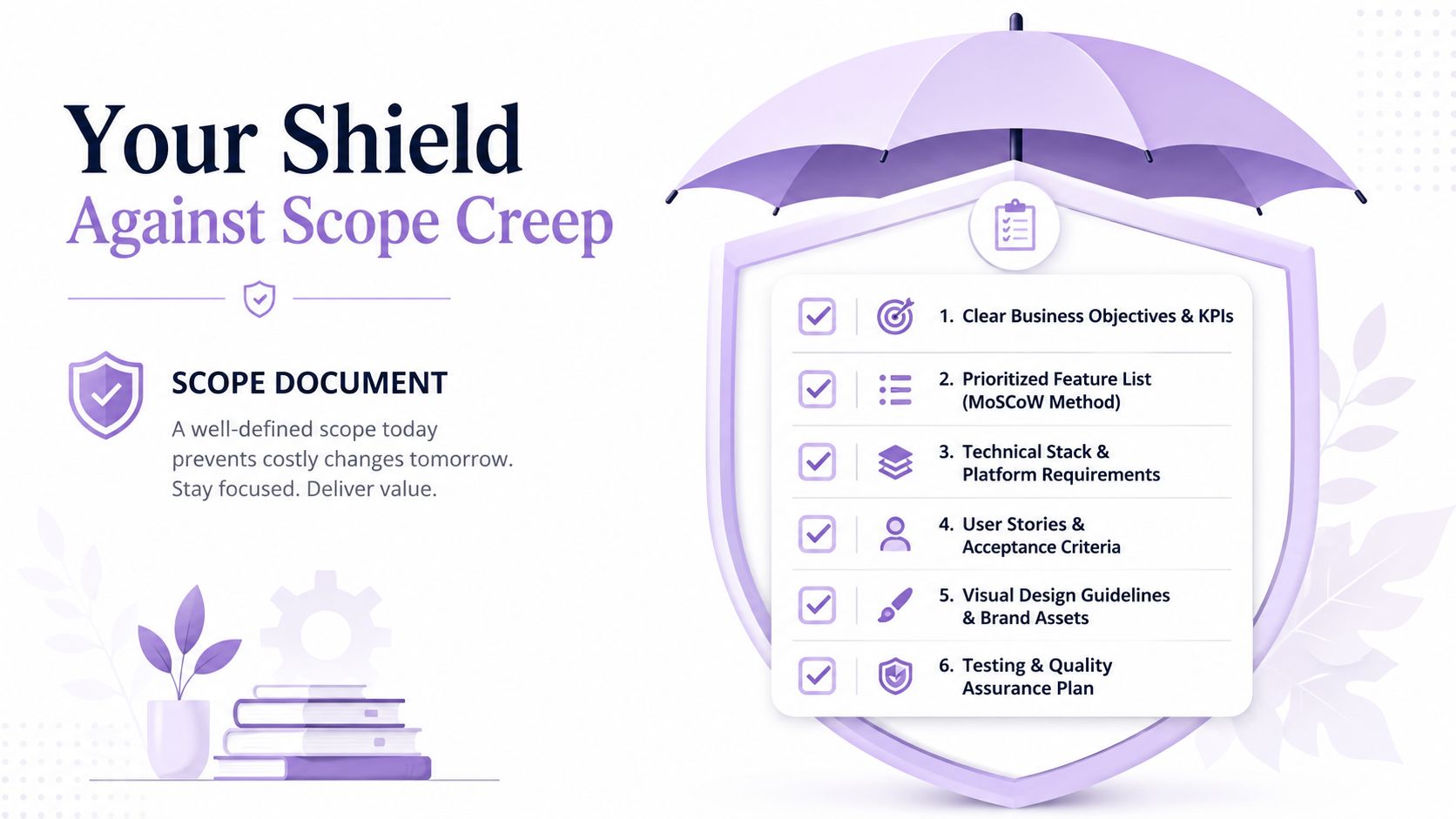
The scope document needs to define what the app does, who uses it, which platform it targets, what features matter, and how success gets measured. Turing and TatvaSoft both push that same discipline, goals and objectives first, then target audience, platform, features, budget, and vendor screening criteria vendor selection framework. That order matters because vendors cannot quote responsibly if the brief reads like a fog machine.
Good requirement language sounds like this. “Users can sign up with email, verify their account, and complete onboarding in three screens.” Bad requirement language sounds like this. “The app should feel simple and intuitive.” One is buildable. The other is how you end up in a three-hour call debating the word “modern.”
Netguru recommends setting success metrics up front, including App Store rating, activation rate, and load-time performance scope and milestones guide. That turns a fuzzy outcome into something you can accept or reject. It also makes milestone payments less awkward, since you are not paying for optimism.
A clean scope doc should include:
Good rule: if a vendor cannot repeat your requirements back in plain English, the scope is not tight enough yet.
LatHire can be one way to source pre-vetted Latin American developers if you need people who can fit into a remote build process, but the scope still has to come first or you are just matchmaking inside a mess.
Founders get burned here, usually with a smile on the vendor's face. The portfolio looks clean, the sales call sounds polished, and then the first build shows they've never had to survive a real app store review or a messy release cycle. Pretty websites don't ship apps. Teams do.
A serious vendor should be able to speak clearly about supported iOS and Android versions, language and framework versions, and device testing coverage. FullScale also flags the need to verify Privacy Manifest compliance, target API-level compliance, and staged rollout procedures technical failure modes and compliance checks. Those aren't decorative details. They're the difference between a smooth launch and a “why did Apple reject this?” Tuesday.
Ask direct questions. Which devices do they test on? How do they handle framework upgrades? What happens when a dependency breaks on a minor OS change? If they answer in slogans, they're not ready. If they answer with specifics, they've probably shipped enough scars to be useful.
The other trap is using project outsourcing for work that needs long-term integration. If the app will evolve fast, the team has to work like part of your operating rhythm, not like a drive-by delivery crew. The best early signal is communication. Do they answer precisely? Do they raise risks early? Do they explain trade-offs without hiding behind jargon?
A vendor with shallow QA habits usually leaks it in the conversation. They talk about “quality” a lot, but they can't explain test coverage, regression checks, or who signs off before release. They also tend to promise heroic timelines, which is usually code for “we haven't really scoped this yet.”
If you want a tighter way to evaluate engineering ability, the technical skill assessment resource from LatHire is useful as a screening reference. Use it to sharpen your interview process, then ask yourself one blunt question. Would I trust this team if my app hit a production bug on a Friday afternoon?
If the answer is no, keep looking.
This is the part nobody wants to read until something breaks. Then everybody suddenly cares, usually after the vendor has gone quiet and your repo access starts acting like it belongs to someone else. Contracts aren't romance. They're seat belts, and they should hold up when the project gets messy.
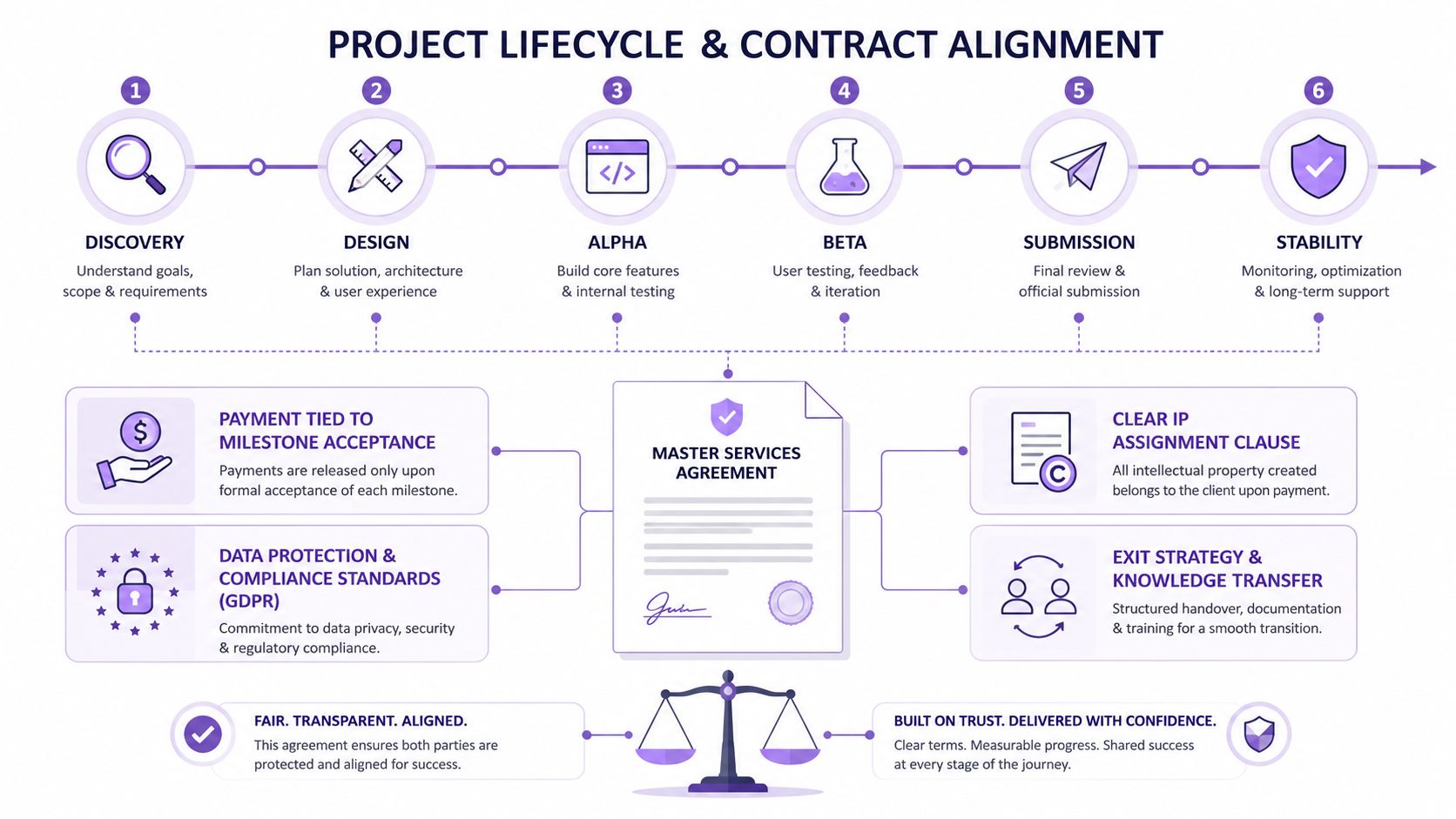
Use a milestone-based delivery framework with payments tied to discovery sign-off, design approval, alpha, beta, submission, and stability windows. That keeps both sides honest. You pay for completed, reviewable work, not for hopeful activity.
The contract should also say who owns the repository from day one, how handoff works, and what happens if the vendor disappears mid-project. My preferred clause language is blunt, because blunt is cheaper than litigation:
App work touches data handling, platform rules, and release policy. The contract needs clear references to privacy and store compliance, especially where the vendor is handling user data or release submissions. Build in app submission risk controls for Privacy Manifest compliance, target API-level compliance, and staged rollout procedures, because app-store rejection is not a theoretical risk. It is a very expensive way to learn that someone skipped the boring checklist.
If you are working on a fintech build or anything sensitive, do not rely on trust and a nice Zoom background. Use contracts, NDAs, and explicit assignment terms. If you want a cleaner way to evaluate fintech software vendors, start with ownership, access, and compliance language before you talk about features. Stern is cheaper than rebuilding an app because nobody clarified who owns what before launch.
One of my outsource wins started with a painfully boring onboarding doc. That was the point. The more boring the setup, the fewer dramatic Slack messages you get later. The disaster app skipped this part and spent launch week arguing about file names, approval flow, and who was supposed to own the final test build.
You want a single main contact, a clear review cadence, and one place where decisions live. Don't scatter updates across email, chat, and a dozen half-remembered calls. Weekly check-ins work, but only if they end with decisions, owners, and due dates. Otherwise you're just paying people to narrate confusion.
Use your onboarding to spell out what “done” means, who approves what, and what the escalation path is when something slips. The team should know where assets live, how changes get requested, and who signs off before a build moves forward. That's not micromanagement. That's basic plumbing.
Scope creep rarely arrives wearing a fake mustache. It usually shows up as “small tweaks” and “one more screen.” The fix is a change-control rule. If a request affects timeline, design, or engineering effort, it gets logged, reviewed, and priced before anyone touches code.
If you want a separate system for remote collaboration discipline, the onboarding remote workers guide is a helpful parallel. The principle is the same. Early clarity beats late heroics.
Practical rule: if a change can't be described in writing, it isn't approved.
The best remote teams don't need hovering. They need visible priorities, fast decisions, and a manager who notices drift early. Miss that, and launch day becomes a live demo of regret.
If you only keep one thing from all this, keep the checklist. Fancy vendor language is cheap. A clean evaluation process saves money, time, and a ridiculous number of headaches.
For fintech teams especially, it's worth using a partner-selection lens that's specific to regulated products. A resource like evaluate fintech software vendors can help you pressure-test what matters before you sign anything.
The ugly truth is that 20% to 25% of outsourcing relationships fail within the first two years outsourcing relationship failure rate. I'm not interested in being part of that statistic, and neither are you. Treat outsourcing like a procurement system, not a trust exercise, and your odds get a lot better.
If you're about to outsource an app, don't start with a vendor list. Start with your scope document, then run your shortlist through a hard technical interview, a milestone-based contract, and a real onboarding plan. If you want help finding vetted remote developers who can slot into that process without dragging you into recruitment hell, start there now and build the team before the app starts building problems for you.