
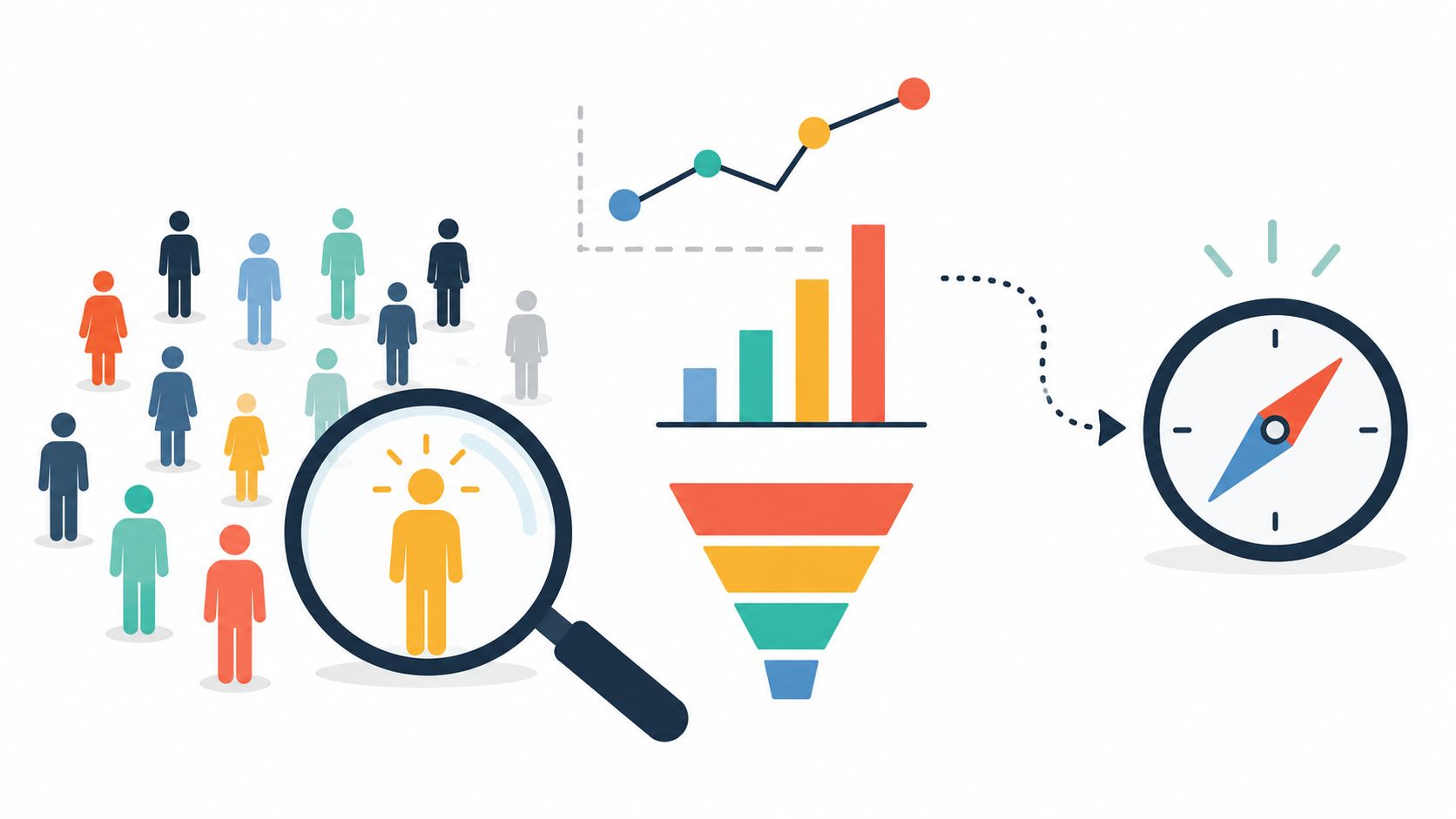
Most advice about what is talent analytics starts in the wrong place. It treats the topic like a prettier HR dashboard, which is a great way to spend a budget and change nothing. If your charts don't change who you hire, who you keep, or where you spend, you've built a museum exhibit, not a management system.
The better definition is blunt. Talent analytics is a decision-support system for people work, not a reporting toy. The discipline uses internal HR data and outside labor-market signals to help leaders make better calls about hiring, retention, performance, and planning, instead of just admiring a pile of neatly colored graphs. That distinction matters because the market around it is moving fast, one 2025 estimate put the talent management market at USD 12.85 billion and projected USD 26.40 billion by 2030 at a 15.48% CAGR according to the referenced HR report. So no, this isn't an HR side quest anymore.
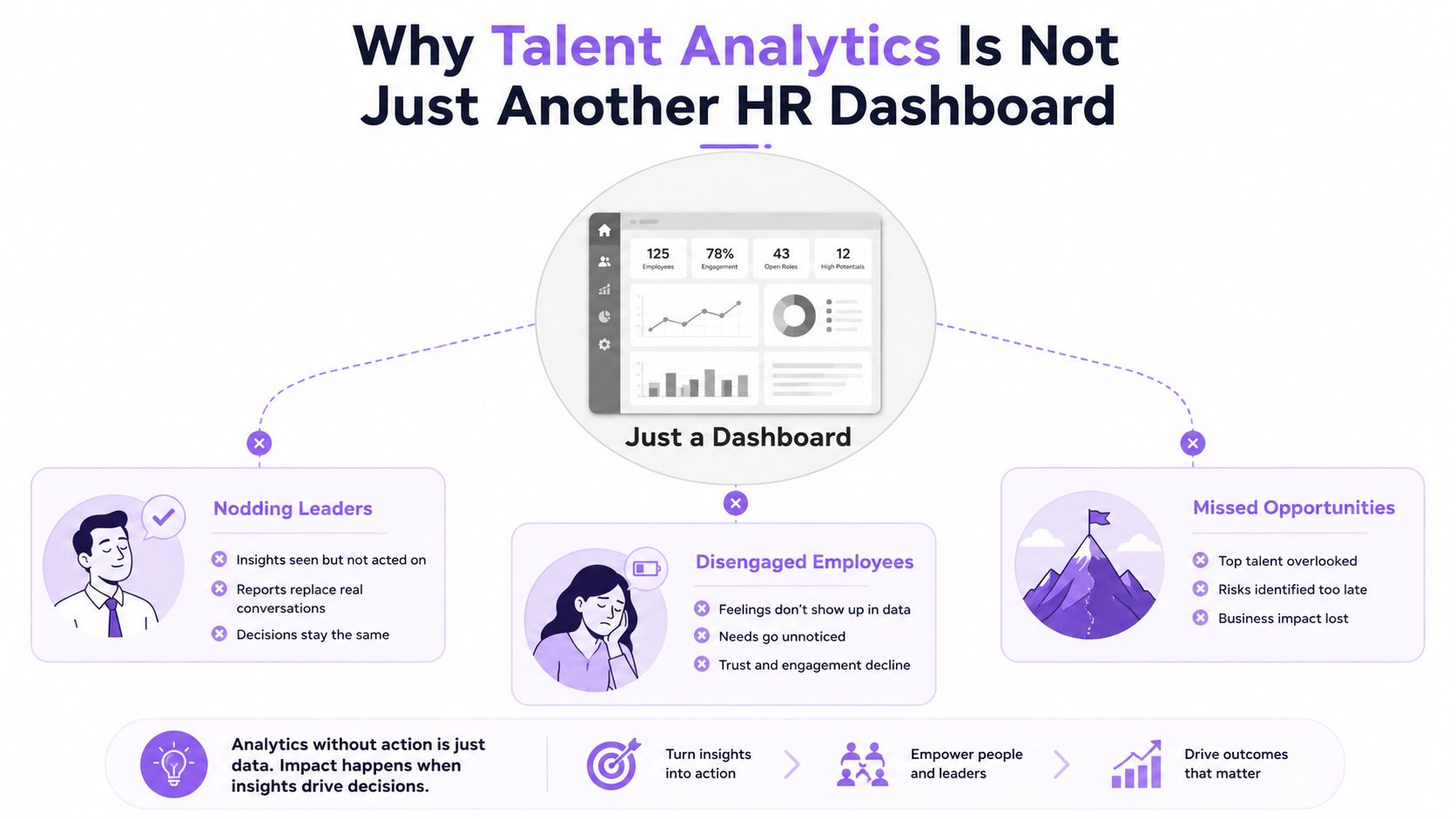
A dashboard tells you what happened. Talent analytics tells you what to do next, and that is the part many teams skip after the demo because the report never gets tied to a decision, an owner, or a deadline. I've seen leadership teams nod at time-to-hire charts, attrition graphs, and headcount snapshots, then go right back to making decisions by gut feel. Very expensive wallpaper.
The problem is maturity. One industry review found 76% of organizations have some form of HR analytics, but only 21% have advanced capabilities in the same HR report. That means many teams are still stuck in descriptive theater. They know what happened, but they never get to the part where someone changes a sourcing mix, fixes a manager issue, or rethinks a hiring process.
Real talent analytics connects data to action. It pulls from HRIS, ATS, LMS, performance records, and outside labor signals, then turns them into choices about sourcing, staffing, and retention as described in the talent intelligence guide. That is the line between “we saw turnover spike” and “we know which manager pattern is feeding it, so we can act before the next wave walks.”
Practical rule: if your report ends with a chart and no decision, it is reporting. Not analytics.
A useful gut check is whether your team can answer three questions: what happened, why it happened, and what to do now. If not, you are still decorating the dashboard. If you want a cleaner example of how this shows up in practice, ELECTE's take on AI for HR is worth a skim because it focuses on workflow value, not just automation theater.
For a more operational lens, this recruitment analytics guide shows the point even more clearly. Hiring data only matters when it changes sourcing, screening, and offer decisions, and that is the same logic LatHire uses to deliver pre-vetted candidates in 24 hours and cut hiring costs by up to 80%.
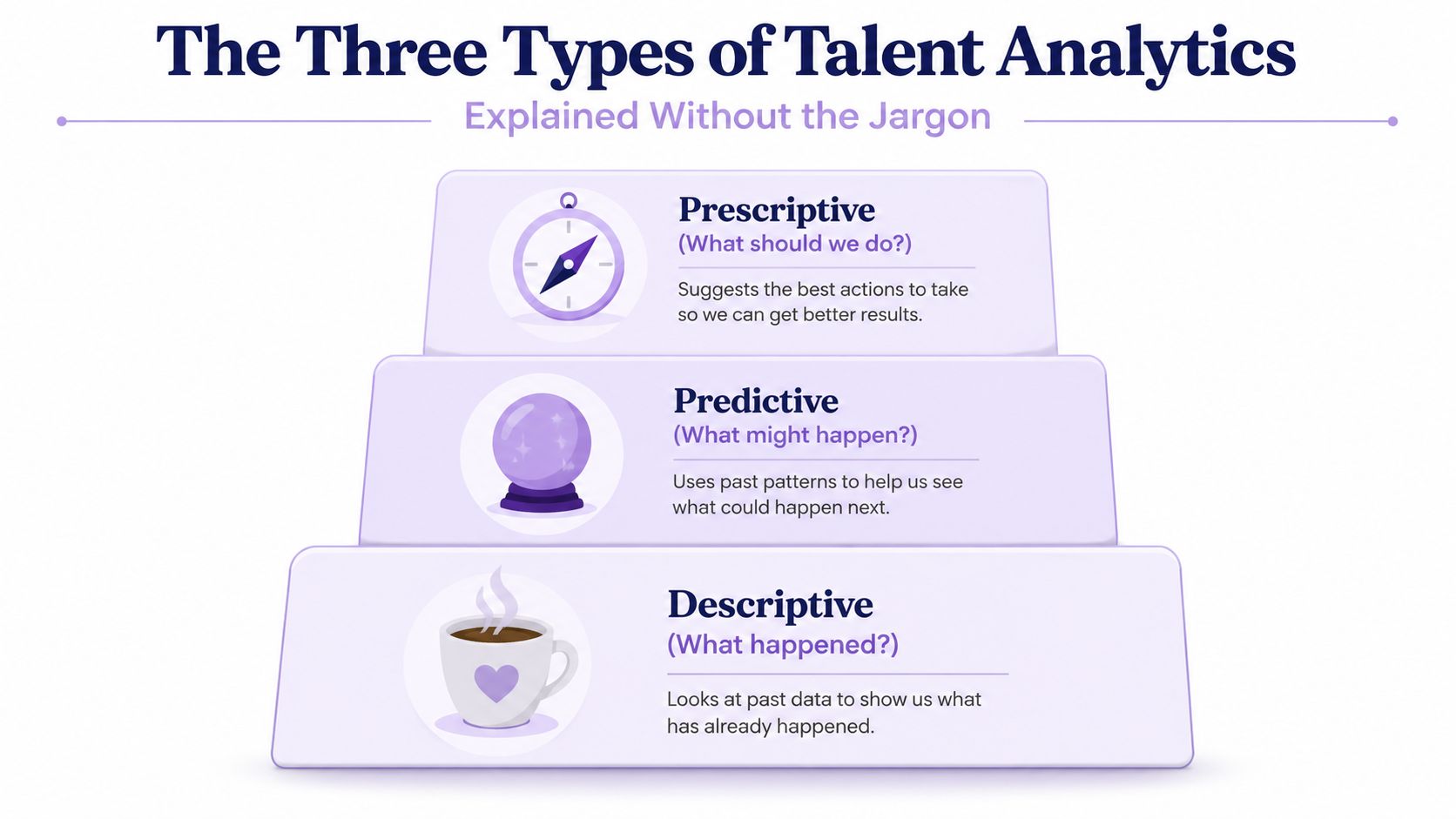
The jargon triplet, descriptive, predictive, prescriptive, sounds like it was invented by people who enjoy locking their office doors from the inside. The idea is simpler than the vocabulary. You start by looking backward, then you estimate what's likely next, then you tell leaders what to do about it.
Descriptive analytics is the rearview mirror. It tells you what happened in the pipeline, like how many candidates reached each stage or where the funnel slowed down. If your recruiter says, “We lost half the applicants after the technical screen,” that's descriptive. Useful? Absolutely. Sufficient? Not even close.
Predictive analytics is the weather forecast. It estimates what might happen next, like which candidates are likely to accept, which roles are likely to stall, or which employees may leave. The value is obvious. If you can see the storm forming, you don't wait to buy an umbrella after the roof is gone.
Prescriptive analytics is the GPS. It doesn't just forecast risk, it recommends a route. Maybe the sourcing budget shifts to a better channel. Maybe the manager gets a tighter interview loop. Maybe compensation gets reviewed before candidates ghost you for the third time this quarter. For a practical walkthrough of that progression in hiring terms, predictive hiring analytics is a sensible place to go deeper.
Most organizations stop at descriptive because it's easy to build and easy to sell. Predictive and prescriptive require cleaner data, more discipline, and a willingness to be wrong sometimes. That's the trade. The machine doesn't get to be dramatic, but it does get to be useful.
If your model can't change a weekly hiring decision, it's a science project with a login screen.
The smart move is to use descriptive for visibility, predictive for prioritization, and prescriptive for action. Skip any one of those and you're either blind, passive, or overconfident. None of those are great founder modes, trust me.
There are plenty of HR metrics floating around online, and most are decorative. The ones that matter do one thing well, they connect recruiting activity to business outcomes. That's the whole game, because a metric that doesn't change behavior is just a number wearing business casual.
Pipeline health is the first pillar. Track velocity and conversion across stages, because open roles do not fill themselves and candidates do not patiently wait while your process finds its shoes. If the top of the funnel looks healthy but conversion falls apart later, that points to a process problem, not a sourcing problem.
Source effectiveness shows where your hires come from and what they cost. Look at cost and quality by channel, not vanity volume. If one source delivers strong candidates and another delivers a flood of résumé confetti, cut the confetti.
| Pillar | Key Metrics | Business Outcome |
|---|---|---|
| Pipeline Health | Stage velocity, conversion rates | Faster fills, fewer bottlenecks |
| Source Effectiveness | Cost by channel, quality by channel | Better spend allocation |
| Hiring Quality | 90-day retention, hiring-manager satisfaction | Stronger post-hire performance |
| Capacity Planning | Req-to-recruiter ratios, forecast demand | Right-sized recruiting workload |
Hiring quality is where a lot of teams lie to themselves. Retention after 90 days and hiring-manager satisfaction are useful proxies because they show whether the hire worked in practice, not just in the interview fantasy league. Capacity planning is the unglamorous one, which usually means it gets ignored. Req-to-recruiter ratios and forecast demand tell you whether the team can keep up without burning out or bottlenecking everything through one heroic recruiter and a prayer.
The slow hiring environment makes these metrics matter even more. U.S. job openings averaged 7.6 million per month in early 2026, still above the pre-pandemic average of about 7 million, while global employer surveys found 74% of employers reported difficulty finding talent and 75% said they struggle to fill roles in the 2026 recruitment statistics brief. In a market like that, measurement is not admin work, it is survival.
Theory is lovely. Payroll is better. Talent analytics stops being a slide deck and starts looking like an operating system. LatHire uses analytics to match US and Canadian companies with pre-vetted Latin American professionals in as fast as 24 hours, drawing from a pool of more than 800,000 candidates, with full-service HR, payroll, benefits, and compliance built into the workflow.
The useful part isn't the speed alone. It's how the workflow filters for validated skills instead of résumé theater. The platform combines AI assessments, skills evaluations, and human-led profile verification, which gives hiring teams a cleaner shortlist before interviews start. That matters because the fastest way to blow up hiring is to let unstructured screening pretend it's strategy.
A company imports a job description, or generates one with AI. The system then evaluates candidate fit using skills data, language ability, real-time availability, and time-zone overlap. That creates a shortlist that's useful for pipeline health, because recruiters spend less time sorting through noise and more time making an actual decision.
A candidate profile with validated competencies is worth more than ten generic CVs with “self-starter” and “rockstar” sprinkled across them like seasoning. We've all seen that movie. It's not a good one.
The ROI angle is the part executives care about. LatHire says it can cut hiring costs by up to 80% and reduce time-to-hire by over 80%. Those numbers belong in the business case, not buried in a brochure. If you're staffing remote specialists, that kind of reduction changes what you can afford to hire, when you can hire, and how much operational drag you can avoid.
The core analytics move here is simple. Real-time candidate availability supports capacity planning, validated skills support hiring quality, and faster matching supports pipeline velocity. For US and Canadian teams building remote capability, that's not just convenience. That's a direct path to lower recruiting cost and less calendar chaos.
Founder rule: if your hiring process still depends on heroic manual screening, you're paying a tax on every open role.
For companies that want a practical example of this kind of data-driven recruitment setup, LatHire is one option among several. It's not magic. It's structured hiring with fewer lies in the funnel, which, frankly, is already a major upgrade.
Most implementation plans read like a consulting deck that accidentally grew legs. Don't do that. Start with a system that works, then make it smarter. If you polish dashboards before you fix the data, you're just decorating the mess.
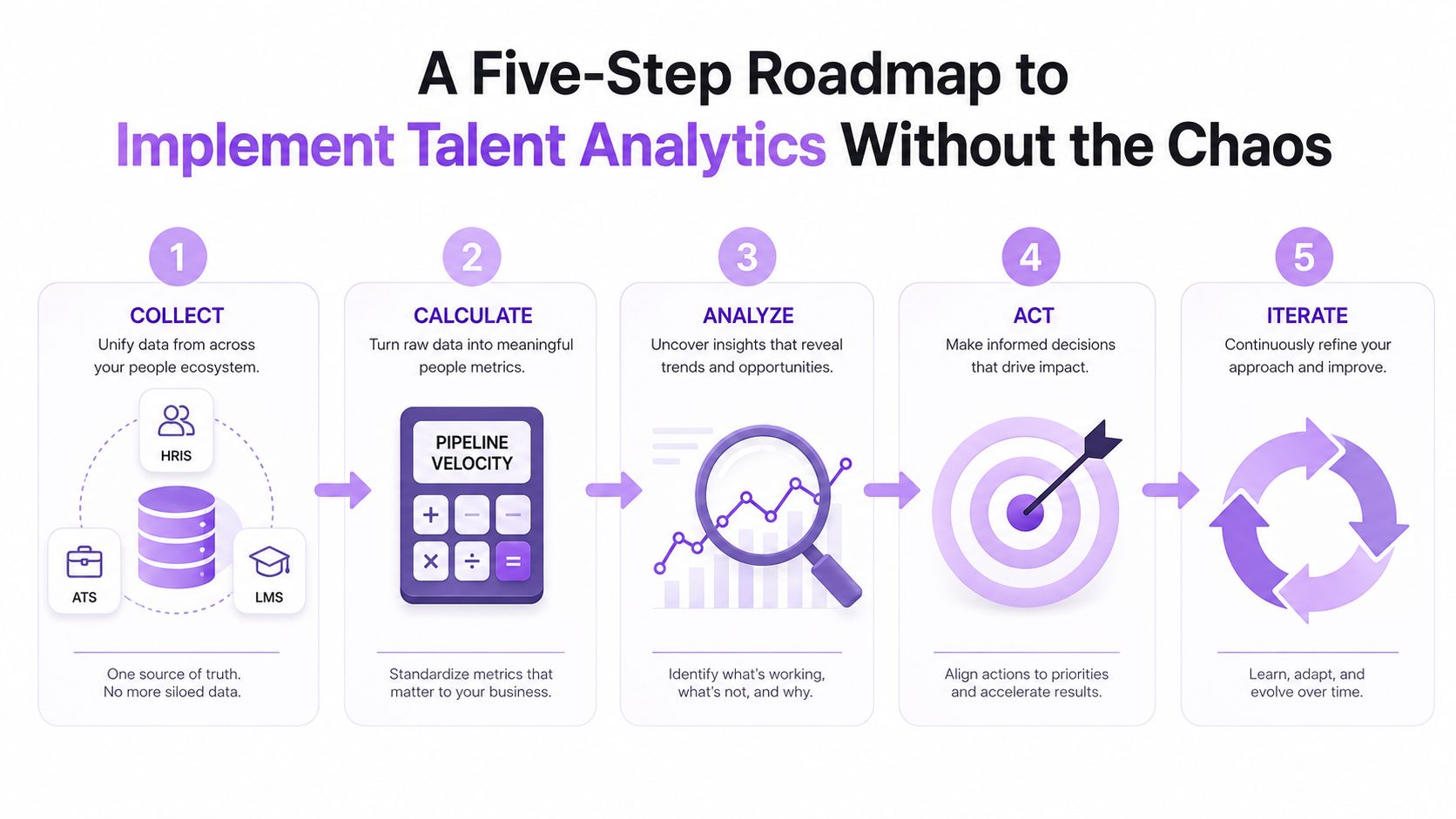
Collect. Unify HRIS, ATS, LMS, and survey data. The common failure mode is obvious, teams keep data in separate little kingdoms and then act shocked when nothing lines up. A spreadsheet can handle this at the start if the scope is small and the fields are consistent.
Calculate. Compute pipeline, quality, and capacity metrics. Teams finally stop arguing about anecdotes and start arguing about numbers, which is healthier and usually less expensive.
Analyze. Segment by channel, role, and tenure. You're looking for patterns, not just averages. A single average can hide a very expensive problem.
Predict. Model turnover risk, offer acceptance, and ramp time. Statistical discipline matters, because a gut feeling wrapped in a dashboard is still a gut feeling.
Prescribe. Trigger actions like sourcing reallocation, manager coaching, or compensation review. If the insight doesn't change behavior, it's not a decision system yet.
A simple rule helps here. Use spreadsheets for collection and early calculation, then move to modeling once the data needs to predict behavior rather than just describe it. The moment leaders ask, “What's likely to happen if we do nothing?” you've crossed into analytics that deserves more than a tab-separated shrug.
For the practical mechanics of getting security and structure right, the data security best practices guide is a sensible companion read. It keeps the plumbing from becoming the scandal.
Don't start with a perfect dashboard. Start with one decision you want to make better every week.
The cheerful analytics posts skip this part, which is adorable and reckless. The moment you start modeling people, you're dealing with privacy, bias, and compliance, and none of them care that your chart looks elegant. The legal department would like a word, and it brought receipts.
Privacy is the first landmine. Employee and candidate data can't be collected, kept, or inferred however you please. GDPR and CCPA exist for a reason, and so do internal retention policies. The smart move is data minimization. Collect only what you need, keep it only as long as you need it, and be honest about what the model is doing.
Bias is the second problem. Predictive systems trained on historical hiring data can amplify the same patterns you claim to be fixing. That's why disparate-impact testing matters. In plain English, you want to know whether a model is pushing different groups toward different outcomes without a defensible business reason.
Compliance is the third. EEOC and ADA concerns don't disappear because the decision came from software. “The algorithm said so” is not a legal defense, and it's not a strategy either. Good programs use human review, documented criteria, and audit trails so the process can survive a hard question.
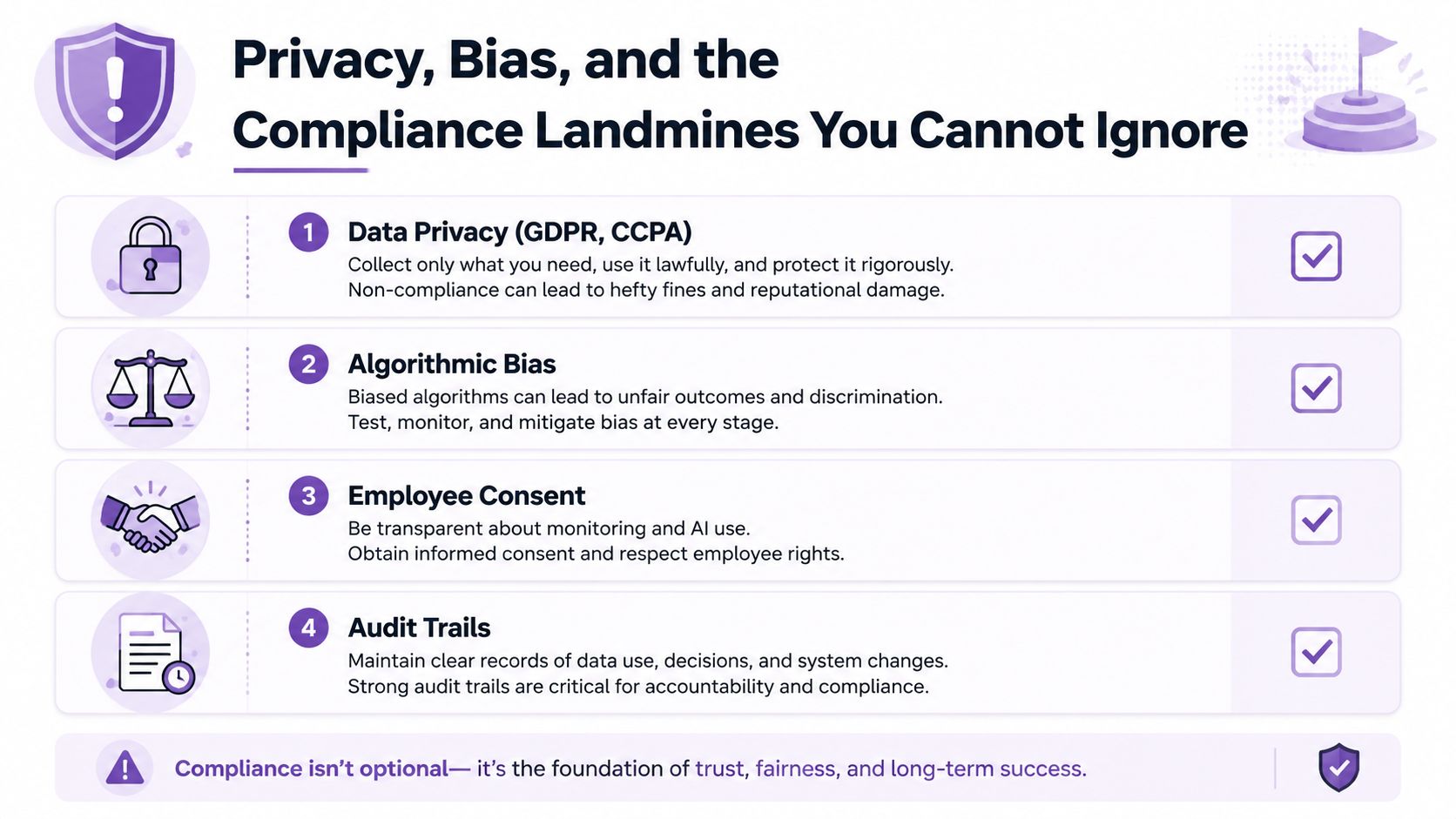
The checklist is boring, which is exactly why it works. Use transparent criteria. Keep a human in the loop. Audit the model regularly. Log who accessed what, and why. If you need a broader trust-and-safety lens, the AI Video Detector safety guide is a useful reminder that any system making judgments about people needs guardrails, not vibes.
This is also where process maturity matters more than tool swagger. If your analytics stack can't explain decisions to a manager, a candidate, and a regulator without sweating through its shirt, it's not ready. That's not paranoia. That's basic professional hygiene.
Here's the whole playbook in one sentence, stop admiring the data and start using it to make decisions. That's the difference between talent analytics and HR cosplay. Toot, toot, I'm even going to say it plainly, because the market has produced enough dashboards to wallpaper a small country.
The strongest teams do five things well. They use descriptive analytics to see the funnel, predictive analytics to spot risk, and prescriptive analytics to choose an action. They focus on the four pillars, pipeline health, source effectiveness, hiring quality, and capacity planning. They run a real implementation sequence, collect, calculate, analyze, predict, prescribe. And they keep privacy, bias, and compliance from turning a smart system into a legal headache.
That's the whole point of what is talent analytics in 2026. It's not just about measuring people. It's about making better calls with less drama and fewer expensive surprises. If the work stops at reporting, you've built a spreadsheet with better lighting.
Pick one predictive use case this week, offer acceptance, turnover risk, or source quality, and wire it into a real weekly decision. If the decision changes, the numbers matter. If it doesn't, keep digging until they do. Then document the result, share it with leadership, and keep iterating until your talent process starts shipping outcomes instead of excuses.