
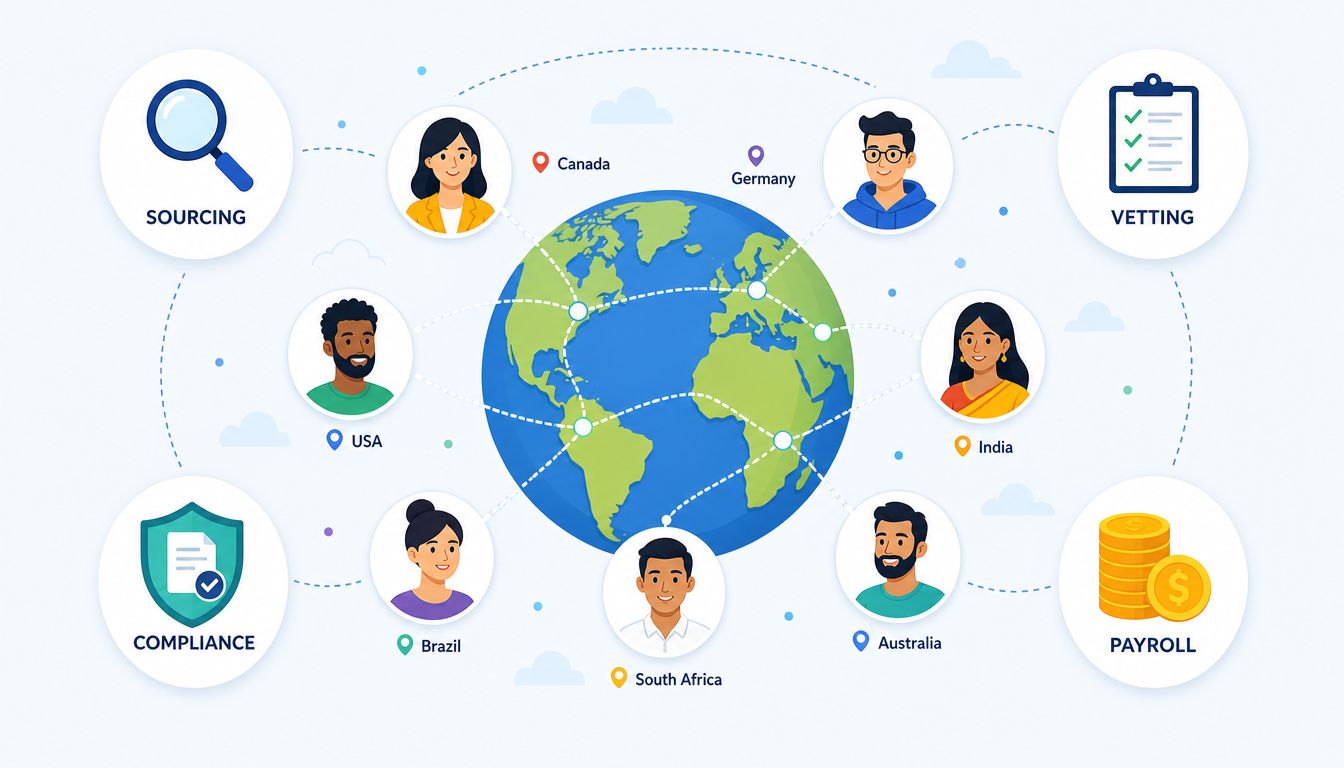
Your hiring plan looked simple on Monday. Find a senior engineer, send the offer, run payroll, and get back to building the product. By Friday, the engineer wants to work from another country, your preferred candidate lives thousands of miles away, and someone asks whether your contractor agreement creates tax exposure. Your local ATS is still cheerfully showing green checkmarks.
This is the gap between international hiring platform marketing and international hiring reality. Global access is easy to promise. Correct classification, reliable payroll, useful candidate signal, and defensible compliance are much harder.
Cross-border hiring has become a sustained channel rather than a niche workaround. Deel reported that domestic hiring on its platform grew 104% year over year, while cross-border hiring grew 42%, and 82% of workers hired through the platform were remote in 2024. Deel's 2025 global hiring report shows why distributed recruiting now belongs in workforce planning, not in the “maybe someday” folder.
The breaking point usually arrives disguised as a perfectly reasonable request.
Your best backend candidate asks to relocate. A brilliant product designer lives in Manila. Your board wants customer coverage across the day, not just during your local business hours. Suddenly, the domestic recruiting funnel that felt efficient starts behaving like a paper map in a GPS world.
The problem isn't only geography. Your recruiters know the local market, your contracts assume local employment law, and your payroll provider understands one tax system. Once the candidate, customer, or investor sits elsewhere, each assumption starts charging interest.
Talent scarcity comes first. A narrow local search can exclude people who have the skills, experience, and working style you need. Gartner-referenced findings in Oyster's 2025 global hiring report say cross-border hiring for tech roles doubled from 2020 to 2023, while 58% of organizations employ tech talent working remotely from other countries.
Cost arbitrage matters too, but it shouldn't become the entire strategy. Hiring in another market can change the economics of a team, yet the cheapest salary is worthless if communication, retention, or compliance costs swallow the difference.
Then there's time-zone coverage. A follow-the-sun operation can improve responsiveness, but only when handoffs, documentation, and management habits support it. Throwing people into distant time zones without an operating system creates more meetings, not more coverage.
Finally, product proximity gives local talent context that a remote market researcher may miss. A team member who understands a customer segment's language, buying habits, and workplace norms can contribute beyond the job description.
Founder rule: Hire internationally because the work benefits from international perspective or access, not because a spreadsheet found a cheaper hourly rate.
A practical guide to building a remote team helps with the people and process side. The platform question begins after that: who handles contracts, payroll, taxes, benefits, and worker status?
An international hiring platform is the operational layer that lets a company recruit, onboard, pay, and retain talent in another country as if it had a local employer infrastructure, without building that infrastructure from scratch. That definition is less glamorous than “global talent marketplace,” but it's the one that survives contact with payroll day.
A credible platform isn't one magical button. It's a stack of four services, and each service has a different way to fail.
A useful platform should surface candidates through curated networks, direct communities, referrals, and matching systems that understand role requirements. That differs from scraping public profiles and sorting them by keywords.
Ask how the platform finds people who are available, what evidence supports their skills, and whether a hiring manager sees a shortlist or a digital haystack. The distinction matters because large candidate volume can increase internal work rather than reduce it.
A one-hour coding test doesn't prove that an engineer can maintain production systems. A grammar quiz doesn't reveal whether a marketer can write for your audience. Strong vetting combines structured interviews, relevant work samples, skills assessments, language evaluation where necessary, and human-led reference checks.
For teams working across cultures and time zones, assess communication habits directly. Ask candidates to explain a tradeoff, document a decision, or respond to an ambiguous product brief. That's closer to the job than another multiple-choice quiz.
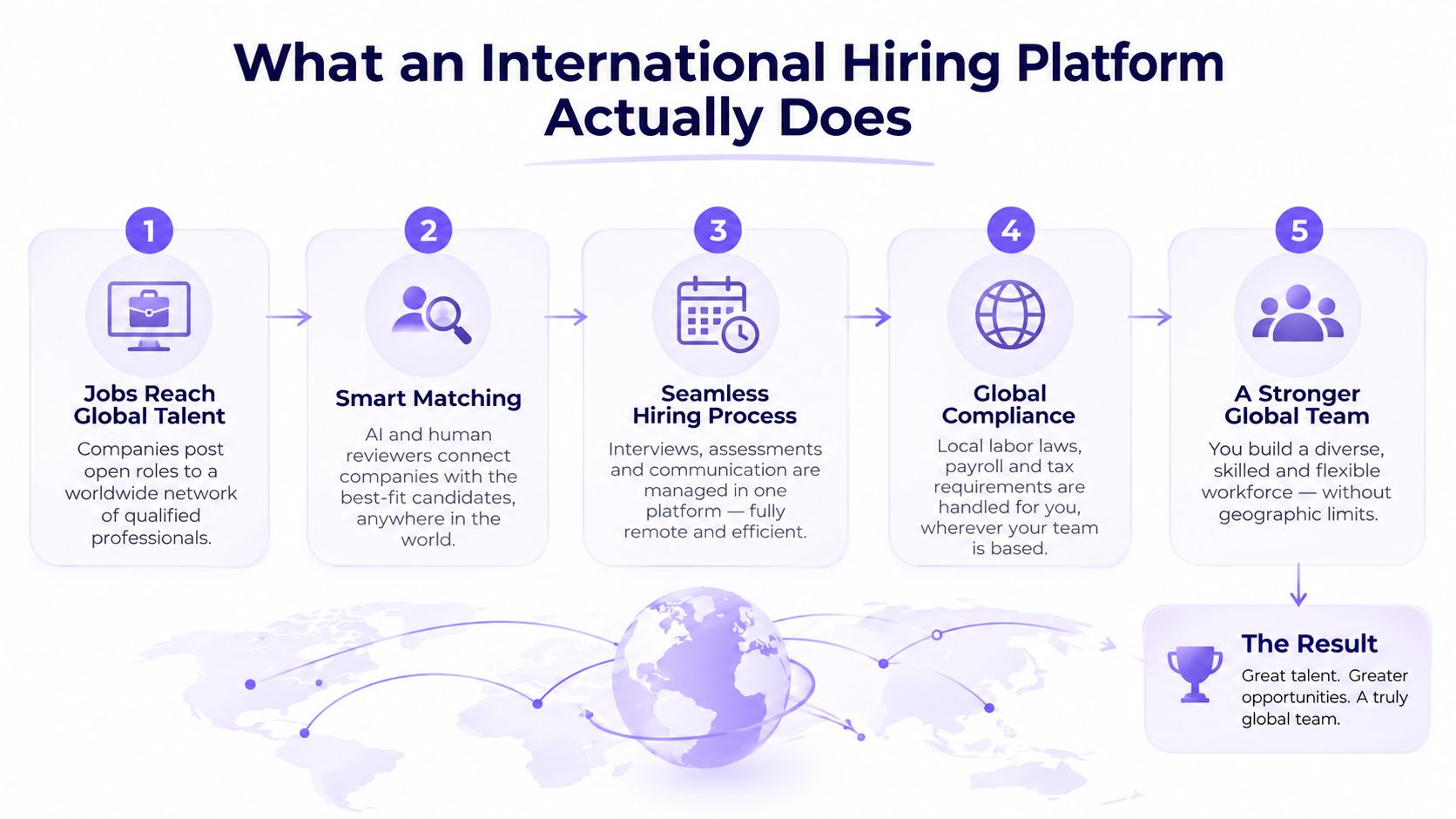
Compliance includes worker classification, locally valid employment contracts, tax registration, withholding, social insurance, benefits, reporting, and audit trails. Thomson Reuters guidance says employers expanding internationally must confirm the permissible employment structure, document worker status under local law, identify payroll and social-insurance obligations, and establish registrations before the first payroll run. Its global payroll guidance describes the work that happens before anyone gets paid.
This is also where “coverage in 150 countries” deserves interrogation. A provider may be able to quote a contractor fee in 150 countries without having the local entity, legal judgment, or operational control needed to defend a difficult case.
Payroll should handle salary delivery, currency conversion, statutory deductions, payslips, invoices, benefits, and reconciliation. Contractor payments need their own controls, especially when the engagement starts looking like employment.
Your broader remote workforce management software stack should connect payroll data with HR, accounting, and workforce records. If the platform creates another isolated spreadsheet, you haven't automated the process. You've created a more expensive spreadsheet with a login screen.
Language and local communication can also affect onboarding, contracts, and employee support. For companies operating across markets, language service providers for businesses can help handle translation and localization needs that general-purpose hiring software won't solve.
Founders often compare these models as if they're interchangeable. They aren't.
A recruitment agency specializes in finding people, particularly for difficult senior searches. An Employer of Record, or EOR, specializes in employing people legally on your behalf. An international hiring platform tries to combine candidate access with employment infrastructure and payroll.
The right choice depends on the shape of the problem. If you already know the person and need compliant employment, an EOR may be enough. If you need a confidential executive search, a specialist agency can outperform a marketplace. If you need a repeatable flow of hires across several countries, a platform usually deserves the shortlist.
| Dimension | Recruitment Agency | EOR | International Hiring Platform |
|---|---|---|---|
| Primary job | Find candidates | Employ and pay workers | Source, vet, onboard, pay, and support workers |
| Candidate pipeline | Usually strong for a defined search | Usually limited | Varies, should be curated |
| Compliance | Often limited after placement | Core responsibility | Core feature if employment infrastructure is included |
| Speed | Can be fast for specialist searches | Fast when the worker is already known | Fast when matching and compliance workflows are mature |
| Control | Hiring company controls the relationship | Hiring company manages the worker, EOR is legal employer | Depends on engagement model and contract structure |
| Hidden cost | Retainers, placement fees, replacement terms | Markups, benefits, foreign-exchange charges | Country fees, checks, offboarding, integrations |
| Best fit | One or two hard-to-find senior hires | A known hire in a new country | Repeat hiring across multiple markets |
Agency fees commonly land around 20% to 30% of salary in the market, but that figure must be verified in the proposal you receive. More important than the headline fee is what happens after the offer is signed. Many agencies stop there.
An EOR handles the legal employer role, payroll, and local employment administration. It doesn't automatically produce a strong shortlist or evaluate whether a candidate can operate in your environment. This explanation of what an Employer of Record is is useful when your team needs to separate employment infrastructure from recruiting.
Platforms sit in the middle, which is both their appeal and their danger. They can reduce vendor sprawl, but you must inspect every layer. Ask whether the provider owns the local entity or uses a partner, whether the candidate assessment is meaningful, and whether the price includes the boring events, such as leave administration, termination, and corrections.
The sales deck usually promises three things: faster hiring, lower cost, and access to more talent. All three can be true. None is automatic.
Global recruiting benchmarks put median time-to-hire at about 38 days, while remote roles average 32.4 days globally, according to SmartRecruiters' 2025 to 2026 recruiting benchmarks. That gap suggests a potential cycle-time advantage, but only when sourcing, screening, scheduling, and evaluation work together. A bigger funnel without faster decisions is just a larger queue.
| Claimed Benefit | What Usually Holds | Where It Breaks |
|---|---|---|
| Faster hiring | Curated shortlists and async coordination can reduce waiting | Poor screening creates interview overload |
| Lower compensation cost | Some markets offer different compensation expectations | FX charges, benefits, severance, and management overhead change the math |
| Global reach | Platforms can open markets your recruiters don't know | Coverage may rely on partners with limited local control |
| Flexible engagement | Contractors can suit defined project work | A long-term, controlled role may create misclassification exposure |
| Easier administration | Centralized workflows reduce scattered paperwork | Integrations and exceptions still need human ownership |
Cost savings are especially easy to exaggerate. The salary comparison may look attractive until you add foreign-exchange margins, benefits, replacement fees, onboarding time, equipment, local holidays, termination obligations, and the cost of interviewing weak candidates. If equity matters, confirm how grants, withholding, vesting, and reporting work before you use “lower cost” in a board slide.
Poor shortlists create a second-order expense. Your engineering manager loses focus, candidates wait too long, and the best applicants accept another offer while the team debates the sixth profile that never met the requirements.
Cross-border employment also creates real legal exposure. For a practical discussion of mistakes that can escalate into חשיפה משפטית בעובדים זרים, look beyond the platform's marketing language and ask who owns the response when a worker challenges the arrangement.
The useful question isn't “How much cheaper is this hire?” It's “What remains cheaper after the relationship goes wrong?”
Many buyers treat compliance like a document folder. That approach works until a worker changes location, a contractor requests employee benefits, or a local authority asks why your company is directing someone's work from another jurisdiction.
The first failure mode is misclassification. A contractor who works full time, follows your schedule, uses your systems, reports to your manager, and performs an ongoing core function may look less independent with every passing month. The contract label won't rescue a relationship that operates like employment.
The second is permanent-establishment exposure. A senior employee who negotiates or exercises authority in a country can create questions about whether your business has established a taxable presence there. Hiring one person isn't merely a payroll event. It can become a corporate tax question.
The third is local employment law. Mandatory benefits, social insurance, termination rules, employee representation, payroll deductions, and data-transfer requirements vary by country. Thomson Reuters' guidance emphasizes the need to establish the correct employment structure and registrations before payroll begins, not after an employee complains.
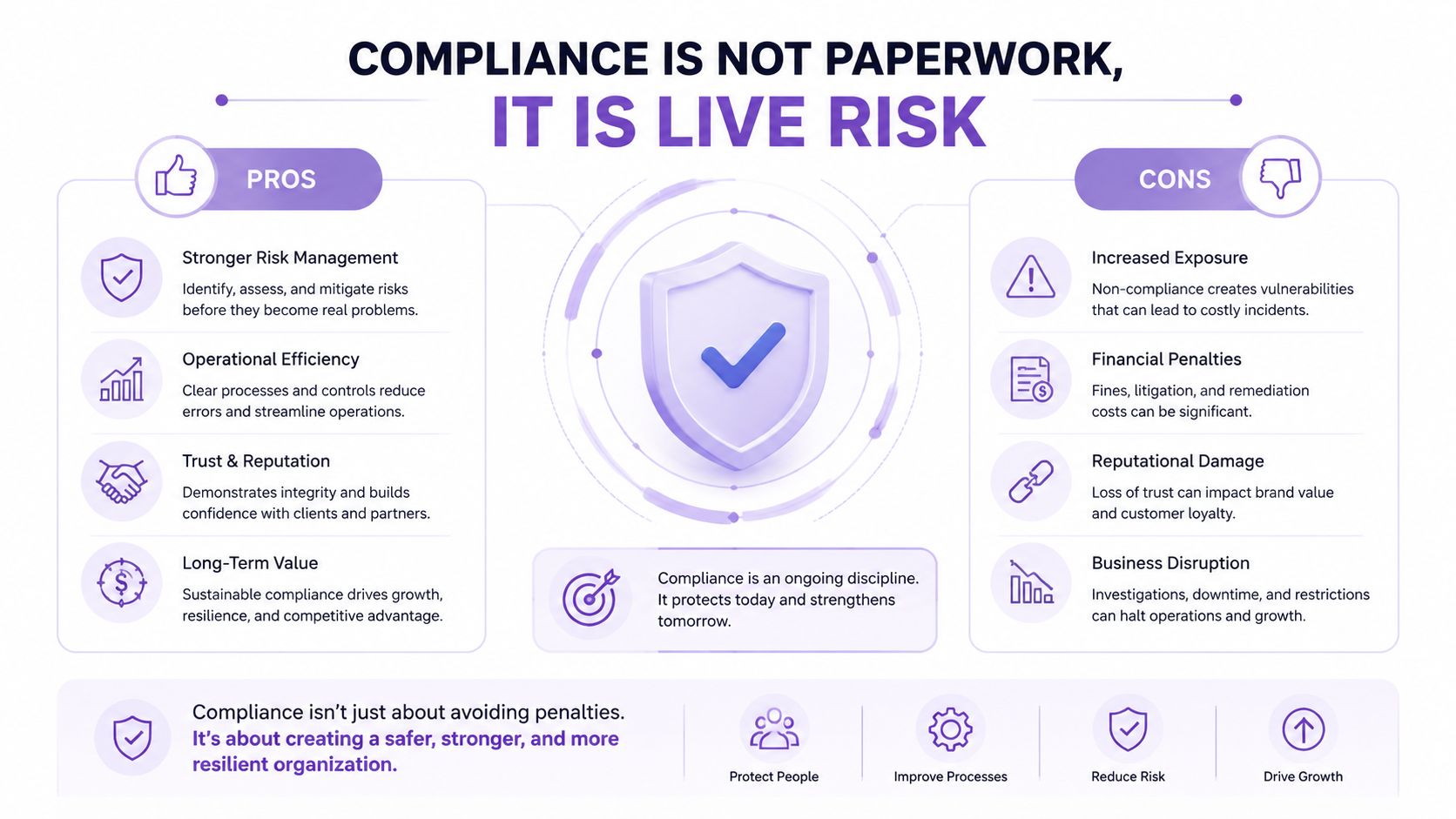
The risk is moving from static paperwork to ongoing evidence. Independent legal analysis points to stricter scrutiny of classification, payroll, and employee-data transfers, including proactive and algorithm-driven inspections in several jurisdictions. The EU Platform Work Directive requires member states to transpose employment-presumption rules by December 2026, while the EU Pay Transparency Directive increases pressure for consistent salary and job-level practices across borders. The International Bar Association's analysis of cross-border employment trends explains why buyers need more than a locally formatted contract.
A provider should explain how it tracks location changes, role adjustments, reporting structures, and classification signals. It should also detail its response to local law changes, not just display a compliance badge in the demo.
Country examples make the point. Brazil, Germany, and India don't present the same employment questions, and a generic workflow won't handle their differences reliably. Don't choose the cheapest provider. Choose the one that can explain the legal reasoning behind the recommendation and produce an audit trail when challenged.
Run the demo like a hostile procurement meeting, minus the fluorescent lighting and sad biscuits.
Start by scoring four areas. I'd weight vetting depth at 35%, country infrastructure at 30%, payroll reliability at 20%, and integration and security at 15%. Those weights are an editorial framework, not an industry benchmark, but they reflect where platforms create or destroy operational value.
| Criterion | Weight | What Good Looks Like | Red Flags |
|---|---|---|---|
| Vetting depth | 35% | Structured interviews, relevant work samples, references, availability checks | Keyword matching, generic quizzes, huge unfiltered pools |
| Country infrastructure | 30% | Clear entity ownership, local experts, documented escalation paths | “Coverage” with no explanation of who employs the worker |
| Payroll reliability | 20% | Accurate deductions, timely payments, payslips, multi-currency support | Manual corrections, unclear FX margins, support-ticket dependency |
| Integration and security | 15% | ATS and HRIS connections, accounting flow, access controls, clear security posture | CSV exports, duplicate records, vague data-retention answers |
Ask who holds the local entity. If the answer is “our partner,” ask who signs the employment contract, who handles a dispute, and who has authority to correct payroll.
Ask what happens if a worker challenges classification. A credible provider should explain investigation, legal review, communication, and financial responsibility. “Our standard terms apply” isn't an answer. It's a smoke machine.
Ask how replacement guarantees work. Does the guarantee cover a failed match, a voluntary resignation, a termination for cause, or only a narrow set of circumstances? Ask for the process in writing.
Then test the workflow with a real role. Import the job description, review the candidate evidence, inspect the contract, follow the approval chain, and request a payroll estimate. Demos are theatre. A live workflow is an audition.
Disqualifier: If the sales representative can't introduce the person responsible for compliance after the contract is signed, keep shopping.
The cheapest quote almost never remains the cheapest after you score evidence quality, entity control, payroll corrections, offboarding, and integration work.
The strongest use case is a technical role with clear output and a talent market that already works remotely.
A DevOps engineer can demonstrate infrastructure knowledge through practical work. A backend engineer can discuss architecture, testing, and tradeoffs. An ML engineer can explain model decisions and show relevant projects. These roles travel well because the work product is inspectable, interviews can happen remotely, and managers can evaluate outcomes without pretending geography is a qualification.
Customer support, sales development, and content teams can also work well when the operating model is clear and hiring volume justifies a repeatable process. Support leaders should test written communication, escalation judgment, and schedule fit. Sales teams need role-play, CRM discipline, and evidence of consistent follow-up. Content candidates need samples that match the actual audience, not just polished portfolio pieces.
Senior executive searches need confidentiality, political judgment, and nuanced reference work. A high-volume platform may produce profiles, but it won't necessarily understand the board dynamics or reputation risk involved.
Regulated roles are another trap. Healthcare, financial services, and markets with licensing requirements demand local interpretation that a general matching engine can't provide. The same applies to countries with strict in-person labor rules or unusual employee consultation obligations.
One example makes the distinction clear. If you need an AI engineer who can work asynchronously and ship documented code, a platform can create useful signal quickly. If you need a country manager who will sign commercial agreements and represent the business locally, you need deeper legal and executive evaluation.
LatHire, for example, connects U.S. and Canadian companies with pre-vetted Latin American professionals and combines matching with HR, international payroll, benefits, and compliance support. That model fits teams seeking technical, marketing, sales, or operations talent in Latin America, but every buyer should still validate the specific role, country, and employment arrangement.
Don't launch a global hiring spree. Start with one country and one role.
That first hire is a systems test disguised as recruitment. You're testing the contract, payroll calculation, employee questions, approval flow, benefits, reporting, and offboarding process with real consequences. If the provider can't handle one hire cleanly, adding ten more won't reveal scale. It will reveal a bonfire.
Ask for a 30-day pilot clause with a clear exit path. Request a complete fee breakdown that separates platform fees, employment costs, benefits, foreign-exchange charges, background checks, equipment, and termination. Buried FX margins are still fees, even when the proposal uses friendly pastel colors.
Name a compliance contact before signing. A shared inbox can handle routine questions, but you need a person or team with authority when a worker changes country, disputes a deduction, or asks to convert from contractor to employee.
Check the integration bill too. HRIS, accounting, ATS, identity, and single sign-on connections can require implementation work that never appeared in the sales demo. Confirm data ownership, export rights, access controls, and what happens when you leave.
Avoid three traps:
The single question I'd ask before signing is this:
“Walk me through a recent failed hire or compliance audit, including what went wrong, who owned the response, how long it took to resolve, and what changed afterward.”
A polished sales deck tells you what the provider wants you to believe. A failure story tells you how the provider behaves when reality stops cooperating.
Start small, inspect every handoff, and expand only after the platform has earned trust through actual payroll, actual contracts, and actual employee support. If you're comparing providers now, request a country-specific proposal, run the scorecard above, and make the failed-case walkthrough a condition of moving forward.
Choose the international hiring platform that can show its work, not merely its map. Your next cross-border hire should arrive with a defensible employment structure, reliable payroll, and enough evidence to make your hiring manager say, “Yes,” before the legal team says, “Wait.”

