
You hired a contractor who looked like a rockstar on paper, only to find yourself buried in missed deadlines, confusing invoices, and a time-zone mess that makes your calendar weep. Sound familiar? We've all been there. The promise of scaling with a global, flexible workforce quickly turns into a full-time job of herding cats, chasing down deliverables, and hoping you aren't accidentally breaking three international labor laws at once. The chaos isn't just frustrating; it's costing you real money, wasted hours, and momentum you can't get back.
The truth is, effective contractor management isn't about luck or finding a unicorn. It's about having a system, a repeatable, ironclad process that turns potential chaos into a competitive advantage. Forget the vague, generic advice you've read a dozen times. This isn't a theoretical lecture. It's a field guide from the trenches, packed with actionable contractor management best practices designed for companies building remote and international teams.
We’re going to walk through ten specific, battle-tested pillars of a world-class contractor program. You’ll learn how to master everything from vetting and legal compliance to performance tracking and intellectual property protection. This guide will give you the exact workflows and frameworks to stop managing problems and start building a high-performance, independent workforce. No more guesswork, no more "I hope this works out." Just a clear, straightforward plan to get it right from day one. Let's dive in.
Hiring a contractor without deep vetting is like giving a stranger your house keys and a credit card. You're betting your project’s success on a PDF resume and a charming Zoom call. Hope you enjoy spending your afternoons fact-checking credentials and re-doing shoddy work, because that just became your full-time job. The alternative is building a systematic pre-engagement gauntlet that filters out the noise from the start.

Think of this as spending $500 on a lock for a $50,000 door. It's the cheapest, most effective insurance you'll ever buy for your project. This isn't just a background check; it’s a multi-stage process designed to ensure zero surprises on day one. For technical roles, this means rigorous, multi-round skills assessments. For creative roles, it means portfolio deep dives and paid test projects. The goal is to verify, not just trust.
A strong vetting system is a core pillar of effective contractor management best practices. It saves you from costly hiring mistakes and ensures you engage talent that can deliver immediately.
Relying on a verbal agreement or a one-page "contract" you found on Google is the business equivalent of using a sticky note to secure a bank vault. It’s a recipe for scope creep, payment disputes, and a messy legal headache that will make you wish you’d paid a lawyer. If your contract doesn't have a crystal-clear Scope of Work (SOW), you haven't hired a contractor; you've hired a future problem.

Think of your contract as the operating system for the entire engagement. A well-drafted agreement isn't about mistrust; it’s about creating mutual clarity that protects both you and the contractor. It defines success before the work even begins, outlining every deliverable, timeline, and payment milestone so there’s zero ambiguity. Enterprise companies like Accenture don't wing it with global contractors; they use meticulously detailed SOW templates for this very reason.
A strong contract is a foundational element of any effective contractor management best practices program. It prevents misunderstandings and provides a clear framework for accountability.
Managing contractors based on "good vibes" and weekly check-ins is a one-way ticket to missed deadlines and budget overruns. You think they’re crushing it, but the project is slowly sinking. Relying on subjective feedback is like navigating a ship with a broken compass; you’re moving, but probably in the wrong direction. The only way to know for sure is to let the data do the talking.
This isn't about micromanagement; it's about mutual clarity. Establishing clear, measurable Key Performance Indicators (KPIs) from day one removes ambiguity and sets a universal standard for success. For a developer, this could be code commit frequency and bug-fix turnaround time. For a marketer, it might be lead generation targets and conversion rates. When everyone knows what the scoreboard looks like, they know how to win.
A data-driven approach is a cornerstone of effective contractor management best practices, turning subjective assessments into objective, actionable insights. It empowers both you and your contractors to focus on what truly moves the needle.
Hiring a contractor and then going silent is the business equivalent of a ghosting. You wouldn't do it on a dating app, so why do it when your project's success is on the line? Treating contractors like vending machines where you insert a task and expect a perfect result is a recipe for missed deadlines, scope creep, and work that completely misses the mark. The alternative is intentional, structured communication that builds a partnership, not just a transaction.
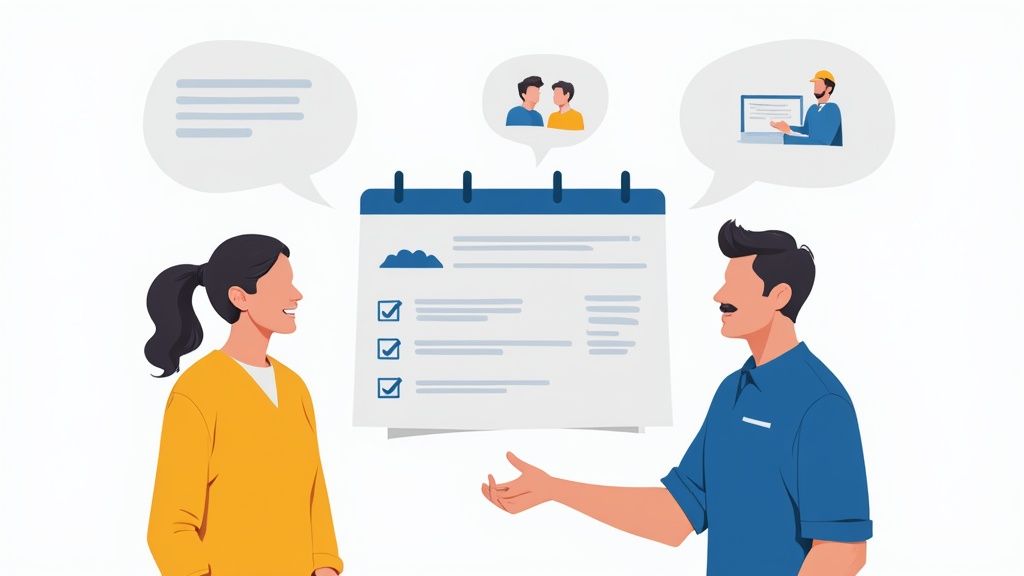
Think of it as the difference between sending a text and having a conversation. One is a one-way command; the other is a two-way street for alignment and problem-solving. This isn't about micromanagement or endless meetings. It's about creating a predictable rhythm of interaction that keeps everyone on the same page, identifies roadblocks before they become disasters, and makes the contractor feel like a valued part of the team.
Building a robust communication framework is a cornerstone of contractor management best practices, ensuring alignment and preventing costly misunderstandings.
Picking the first contractor who slides into your DMs is a recipe for overpaying for mediocre work. You're essentially letting them set the price and the terms, hoping their LinkedIn profile isn't a work of fiction. Congratulations, you just played yourself. The alternative is to create a structured arena where qualified vendors fight for your project, forcing them to bring their A-game on price, quality, and innovation.
Think of it as the project management equivalent of The Hunger Games, but with fewer pointy objects and more detailed RFPs. This isn't just about squeezing vendors for the lowest price; it's a strategic process to uncover the best possible value. When contractors know they are up against 3-5 competitors, they stop giving you their "rack rate" and start showing you their most efficient, well-thought-out proposals. This is a fundamental contractor management best practice for any significant project.
A structured selection process removes ambiguity and ensures you're comparing apples to apples, not apples to a surprisingly convincing rock. It's how government agencies and large enterprises avoid favoritism and secure optimal outcomes.
Ignoring contractor compliance is like jaywalking on a highway blindfolded. You might get away with it once or twice, but eventually, you're going to meet the front bumper of a multi-million-dollar lawsuit from a tax agency. You assume your contractor has their legal ducks in a row, but when the auditor comes knocking, that assumption becomes your liability.
This isn’t just about filling out a W-9. It's about building a fortress of documentation that proves you did everything by the book, from verifying work eligibility to managing licensing requirements. This is one of the most critical contractor management best practices because it directly shields your company from crippling fines, legal battles, and reputational damage. Getting this wrong can invalidate your business model overnight.
A proactive compliance system isn't a "nice to have"; it's a non-negotiable part of scaling with a contingent workforce. It protects you from the very real risks of misclassification, tax fraud, and unauthorized work.
Managing contractors with spreadsheets, email threads, and a folder full of PDFs is a masterclass in organized chaos. You’ll spend more time hunting for that W-9 form or the latest SOW than actually managing the work. This digital scavenger hunt isn't just inefficient; it's a massive blind spot for compliance, performance, and budget overruns.
Think of a centralized system as your mission control for your entire external workforce. It's the one place where every contract, invoice, performance review, and piece of compliance documentation lives. Large enterprises use robust platforms like SAP Fieldglass for this, but you don't need an enterprise budget to stop the madness. The goal is to create a single, reliable source of truth that gives you instant visibility and control.
Implementing a system is a core component of modern contractor management best practices, transforming administrative burdens into strategic assets. It provides the data you need to make smarter decisions about your blended workforce.
Hiring a contractor without verifying their insurance is like letting someone juggle chainsaws in your server room. You're one clumsy moment away from a catastrophic mess that becomes your expensive problem. You assume they're covered, they assume you're covered, and suddenly you’re in a legal standoff over who pays for a data breach caused by their unsecured laptop.
Think of proper insurance management as a firewall for your finances. It ensures that when something inevitably goes wrong, the financial fallout is contained to the responsible party, not your company's balance sheet. This isn't just about ticking a box; it's about actively transferring risk so you can sleep at night.
A robust liability framework is a non-negotiable part of effective contractor management best practices, protecting your organization from preventable financial and legal disasters. It defines who is responsible before an incident ever occurs.
Treating contractors as disposable, short-term assets is a rookie mistake. It leaves you in a constant, exhausting cycle of sourcing and onboarding. The smart move is to treat your contractor pool as a strategic talent pipeline, actively cultivating diversity and investing in their skills. It's not charity; it's building a resilient, innovative, and loyal external workforce that grows with you.
Think of it this way: are you renting a power tool for a single job, or are you building a full-service workshop? Investing in your contractors turns them from a temporary fix into a long-term capability multiplier. Programs like Microsoft's Supplier Diversity initiative show that this isn't just a feel-good policy; it's a competitive advantage that opens doors to new ideas and untapped talent pools.
Building a robust, diverse contractor network is a core component of advanced contractor management best practices. It creates a more dynamic and capable talent ecosystem that directly benefits your bottom line through innovation and resilience.
Giving a contractor access to your codebase or client list without an ironclad IP agreement is like posting your bank password on a public forum. You’re just hoping nobody with bad intentions stumbles upon it. When that contractor builds your "secret sauce" algorithm and then launches a competing product six months later, you'll have no one to blame but the flimsy one-pager you called a contract.
Protecting your intellectual property isn't about distrust; it’s about professional clarity. It’s the framework that ensures the brilliant work you paid for actually belongs to you. This means deploying precise legal instruments like Non-Disclosure Agreements (NDAs) and IP assignment clauses before a single line of code is written or a single strategy document is shared. Tech companies live and die by this, baking IP assignment directly into every work-for-hire agreement to prevent ownership chaos down the road.
A proactive approach to confidentiality is a non-negotiable component of modern contractor management best practices. It prevents disputes, secures your competitive advantage, and ensures your trade secrets remain secret.
| Practice | Implementation complexity | Resource requirements | Expected outcomes | Ideal use cases | Key advantages |
|---|---|---|---|---|---|
| Comprehensive Contractor Vetting and Onboarding | Medium — multi‑stage, time‑consuming | HR time, background‑check vendors, verification tools | Reduced liability; higher initial quality | Regulated industries, safety‑critical projects, long‑term hires | Ensures qualifications; reduces risk; protects reputation |
| Clear and Detailed Contracts with Defined Scope of Work | Medium–High — legal drafting and negotiation | Legal counsel, contract templates, review time | Fewer disputes; clear deliverables and payment terms | Complex deliverables, IP work, large budgets | Legal protection; clarity; IP protection |
| Performance Metrics and KPI Tracking | Medium — define metrics, build dashboards | Tracking tools (Workday/Procore), analyst time, reporting systems | Objective performance assessment; earlier issue detection | Ongoing projects, measurable outputs, program management | Accountability; data‑driven decisions; continuous improvement |
| Regular Communication and Relationship Management | Low–Medium — scheduling and governance | Manager time, collaboration tools (Slack/Teams), documented processes | Better alignment; fewer misunderstandings; higher satisfaction | Remote teams, cross‑functional or iterative work | Builds trust; enables early problem resolution |
| Competitive Bidding and Vendor Selection Processes | High — RFPs, formal evaluation panels | Procurement team, evaluation committees, time to run bids | Better pricing; comparative quality selection | Major procurements, non‑urgent engagements, public sector | Cost effectiveness; reduces vendor lock‑in; negotiation leverage |
| Work Authorization and Compliance Management | High — jurisdictional and regulatory complexity | Legal/compliance experts, verification systems, ongoing audits | Legal compliance; reduced misclassification and audit risk | Cross‑border contracting, regulated industries | Mitigates legal penalties; protects company liability |
| Centralized Contractor Management System and Database | High — integration and change management | Software licenses, IT integration, training, maintenance | Improved visibility; streamlined processes; analytics | Large organizations, many contractors, centralized procurement | Centralized data; operational efficiency; compliance tracking |
| Insurance and Liability Management | Medium — policy setting and verification | Risk management, insurance verification tools, legal review | Transferred financial risk; clearer liability allocation | Construction, high‑risk field work, cyber/IT engagements | Reduces financial exposure; protects assets; clarifies responsibility |
| Contractor Diversity and Skills Development Programs | Medium — program design and long‑term investment | Training budget, partnerships, program managers | Broader supplier base; improved skills over time | Strategic sourcing, diversity goals, workforce development | Increases resilience; drives innovation; supports social goals |
| Confidentiality and Intellectual Property Protection | Medium–High — legal drafting and enforcement | Legal counsel, NDAs, security controls, access policies | Protected IP; reduced ownership disputes and leaks | R&D, software development, sensitive data projects | Maintains competitive advantage; clarifies IP ownership |
We've just walked through ten critical contractor management best practices, from bulletproof vetting and onboarding to ironclad IP protection. Let's be honest, it’s a lot to take in. You might be staring at this list feeling like you need to hire a contractor just to manage your contractors. I get it. The temptation to just wing it, to hire fast and hope for the best, is strong. But hope isn't a strategy, especially when compliance, security, and your company's bottom line are on the line.
The truth is, managing a global team of contractors isn't just an HR function; it's a strategic advantage. When done right, it unlocks access to a global talent pool, drives innovation, and gives you the operational agility to scale on your terms. When done wrong, it becomes a chaotic money pit of missed deadlines, legal risks, and work that needs to be redone. The difference between those two outcomes isn't luck. It's having a system.
If you only remember one thing from this entire article, let it be this: proactive, intentional management is the only way to win with contractors. Stop reacting to problems as they pop up. Stop treating contractor hiring like a quick fix. Instead, start building a deliberate framework.
Think back to the key pillars we discussed:
Mastering these contractor management best practices transforms your external workforce from a logistical nightmare into a well-oiled machine. You'll spend less time putting out fires and more time leveraging the incredible talent you’ve brought on board. You’ll know exactly who is working on what, how they’re performing, and whether you’re getting the ROI you expected.
So, what's the next step? You have two clear paths forward.
The first is the DIY route. Use this article as your playbook. Create a checklist, build your templates, and assign ownership within your team. It’s a heavy lift, but it’s absolutely achievable if you commit the resources. Start small. Pick the one or two areas causing you the most pain right now, maybe it’s your onboarding process or your lack of performance tracking, and fix those first.
The second path? You can lean on a partner who has already built the system for you. Platforms like LatHire exist specifically to handle the heavy lifting: the vetting, the global compliance, the international payroll, and the administrative chaos. This lets you tap into the benefits of a global contractor workforce without having to become an expert in international labor law overnight.
Whichever path you choose, the key is to choose one. The era of treating contractors as an afterthought is over. The companies that thrive in this new world of work will be the ones that build a deliberate, strategic, and scalable system for managing their distributed teams. The chaos is optional. The control is yours to claim. Your future self, the one who isn’t stuck in a late-night meeting about a contractor's missed deadline, will thank you.